



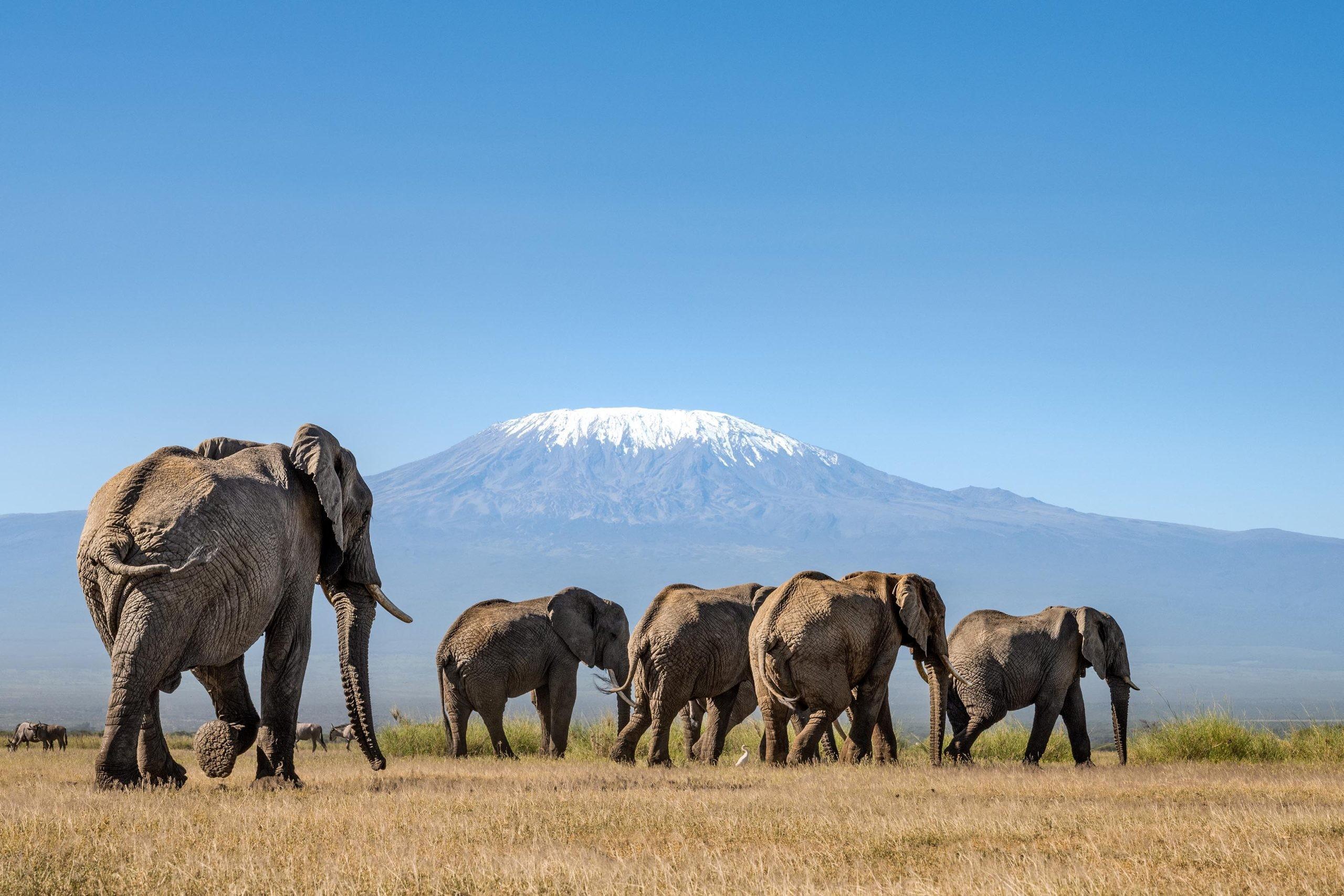
There is a moment that happens on nearly every private guided safari in Amboseli. Your vehicle has stopped on the open pan, engine off. A family of elephants — fourteen, perhaps fifteen individuals — moves in a slow diagonal across the cracked earth thirty metres away. The matriarch leads. A calf, days old, stumbles close to its mother’s legs. Behind them, framed so perfectly it feels staged, Kilimanjaro fills the horizon from base to summit, the snow catching the early light.
Your guide says nothing. There is nothing to say.
That moment — unhurried, unshared, unscheduled — is what a private guided safari in Amboseli delivers that no group tour can replicate. Not because the wildlife is different. Not because the park changes. But because you are there on your own terms, in your own vehicle, with a guide whose entire focus is your experience and no one else’s.
This is the guide to planning that experience.
Why Amboseli for a Private Safari?
Amboseli National Park sits in southern Kenya, on the border with Tanzania, at the foot of Africa’s highest mountain. It covers approximately 392 km², compact by East African standards, which matters. In Amboseli, you are never far from wildlife. There are no vast empty stretches to cross before the action starts.
What Amboseli offers, specifically and uniquely, is this:
The elephant population. Amboseli’s elephants are among the most studied in the world — the long-term Amboseli Elephant Research Project, begun in 1972 by Cynthia Moss, has documented every individual and every family across more than five decades. The elephants here are not merely present; they are known. Your guide can introduce them by family, by matriarch, by the calves born in the last season. That depth of knowledge transforms a wildlife encounter into something closer to an introduction.
The Kilimanjaro backdrop. No other park in Kenya — possibly no other park in Africa — offers wildlife viewing against a backdrop of this scale. On clear mornings (and Amboseli mornings are frequently clear, particularly between June and October), Kilimanjaro dominates the southern horizon with an authority that photographers and non-photographers alike find genuinely disorienting. The mountain is so large, so close, and so unexpected that it takes time to accept as real.
The open terrain. Amboseli’s landscape is a mosaic of open pan, dust bowl, acacia woodland, and permanent papyrus swamp — all within a small, navigable area. The openness delivers exceptional wildlife visibility. No vegetation barrier between you and the animals. What happens, happens in full view.
The intimacy. Amboseli is not the Maasai Mara in terms of sheer wildlife volume. It is quieter, more contemplative, and — particularly on a private safari — remarkably uncrowded outside the main lodge areas. You can spend a morning with an elephant family and see no other vehicle.
Private vs Group Safari: What Is the Actual Difference?
This is worth addressing directly because the gap is larger than most first-time safari visitors anticipate.
A group safari (shared vehicle):
- 6–8 passengers per vehicle, often from different countries with different interests and photography requirements
- Game drives depart and return on fixed schedules; the vehicle returns when the majority want to leave, not when you do
- Stops are determined by group consensus — the couple in the back who have seen enough lions want to move on; you want to stay
- Your guide manages multiple guests with different levels of knowledge, different questions, and different expectations simultaneously
- Seating position in the vehicle is shared and rotated — window access varies
- Cost per person is lower
A private guided safari:
- You, your travel companion(s), and your guide — no one else
- Game drive timing is entirely your own: leave earlier, stay later, extend a sighting for as long as you want
- Your guide is focused entirely on you — your interests, your photography setup, your questions, your pace
- You stop where you want, for as long as you want, and move when you are ready
- The vehicle is yours: every window seat, every roof hatch, every angle is accessible
- Your guide can explain, teach, interpret, and narrate without managing competing interests
- Cost per person is higher — but split between two or four people, the gap narrows considerably
The practical result: private safari game drives routinely produce richer sightings, more relaxed encounters, and more complete experiences than shared vehicles covering identical terrain. The guide’s undivided attention is the multiplier.
What a Private Guided Safari in Amboseli Actually Looks Like
Day One: Arrival
Your charter flight from Wilson Airport, Nairobi lands at Amboseli’s airstrip in approximately 45–50 minutes. Your private guide meets you at the strip — this is the first meeting, and it matters. A good private guide introduces themselves not with a script but with a question: What are you hoping to see? What would make this trip extraordinary for you?
That conversation shapes everything that follows.
The drive from the airstrip to your camp is your first game drive, even if no one calls it that. Your guide is already reading the landscape — the direction a dust column is moving, the posture of a giraffe on the tree line, the particular quality of the light on the pan. They are already working.
After settling in, a late lunch and a short rest before your first proper game drive — departing around 3:30 PM and running until the park’s closing time near dusk.
The Dawn Drive
The alarm sounds at 5:15 AM. The Amboseli dawn is cold — genuinely cold, particularly between June and September — and the sky is that specific deep blue that exists only in the twenty minutes before sunrise. Your guide has the vehicle warm and waiting.
You drive into the park in near-darkness, arriving at the areas your guide scouted the previous evening before the light fully breaks. When it does — when the first horizontal light catches the dust raised by an elephant herd moving from the swamp to the open pan, and Kilimanjaro appears above the mist in the south — you understand immediately why you set the alarm.
The first two hours of a private dawn drive in Amboseli are the finest two hours the park offers. Lions finishing a night, cheetah scanning from termite mounds, elephants in the golden light, a thousand birds beginning to call across the swamp. Your guide is narrating softly — not performing, but sharing knowledge in the way that a person who genuinely loves a place shares it with someone they want to understand it.
The Extended Elephant Encounter
On a shared game drive, a thirty-minute elephant sighting is generous. On a private safari, your guide can sit with a family for as long as the encounter rewards it — which, in Amboseli, is often very long indeed.
Your guide knows these families. They can tell you which matriarch leads this group, what her history is, whether the calf running between the adults is male or female, how old it is, and what the rumbling vocalization you can feel as much as hear actually means in elephant communication. The encounter moves from observation to understanding. That is the difference a private guide makes.
Bush Breakfast
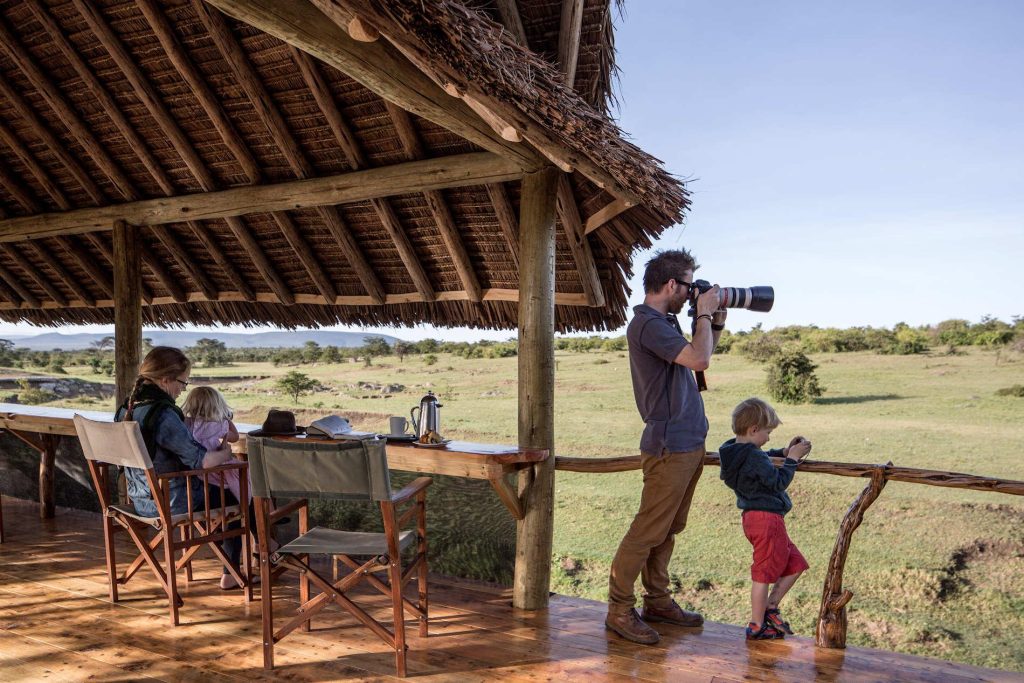
One of the signature private safari moments in Amboseli: your guide pulls the vehicle to a stop on a rise overlooking the swamp, kills the engine, and produces a breakfast — flasks of coffee and tea, fruit, fresh bread, eggs — laid on the vehicle bonnet or a portable table in the bush. No camp dining room. No other guests. Just the swamp, the elephants, the birds, and the mountain.
This is not a logistical detail. It is the kind of experience that people talk about for years.
Observation Hill
Amboseli’s Observation Hill is the only point in the park where your vehicle stops and you get out. A short walk to the summit delivers a 360° panorama — the swamps, the open pan, the elephant herds below moving like slow ships through still water, Kilimanjaro above. Your guide walks with you and explains what you are looking at: the hydrology of the swamp system fed by underground water from Kilimanjaro’s glaciers, the territories of the resident lion prides, the direction the wind is carrying the herds.
The view from Observation Hill at first light or late afternoon is one of the finest in Kenya.
Afternoon: Predator Focus
Amboseli’s predator population — lions, cheetahs, and the occasional leopard — concentrates in the western areas of the park and along the swamp edges. Your private guide uses the afternoon drive for a focused search, drawing on the morning’s radio network reports from other guides and rangers.
On a private safari, if a cheetah is located and your guide knows the terrain, you can position the vehicle for optimal light before other vehicles arrive — because you set your own schedule. This is not a trivial advantage for wildlife photographers.
Sundowner in the Bush
Your guide finds a spot. Engine off. A cold drink appears from the vehicle’s cool box. The sky performs.
Amboseli sunsets, with the mountain turning shades of pink and orange above the darkening plain, are among the most reliably spectacular in East Africa. On a private safari, the sundowner stop is wherever your guide judges the view and the light to be best that evening — not a fixed location shared with three other vehicles.
Night at Camp
Return to camp as dark falls. Dinner under canvas or on an open deck, a fire, the sounds of the bush at night — the hippos moving from the swamp, the distant whoop of a hyena, the extraordinary silence between. An early night. The alarm is set for 5:15 again. You will not resent it.
Choosing Your Private Guide
On a private Amboseli safari, your guide is the experience. Everything else — the camp, the vehicle, the food — sets the stage. The guide delivers the performance.
What separates an exceptional private guide from a merely competent one:
Depth of knowledge: An expert guide does not just identify species. They understand behaviour, ecology, territory, family history, and the interconnections between species that make a landscape live. They see things you do not — the subtle freezing of an impala that signals a predator nearby, the alarm calls of birds that tell a story from 300 metres away.
Silence: The finest guides know when not to speak. They read the moment and understand that sometimes the most powerful thing a guide can do is let the encounter happen without narration. Novice guides fill silence; expert guides inhabit it.
Adaptability: A private guide adjusts to you — your pace, your interest, your energy levels. They remember that you mentioned leopards at breakfast and spend the afternoon systematically working the riverine woodland where leopard are occasionally seen. They notice when you are photographically frustrated and reposition the vehicle without being asked.
Local relationships: A guide who has worked Amboseli for years knows the rangers, the trackers, and the other guides. That network delivers real-time intelligence about wildlife movements that no app or radio scanner can replicate.
At Pride of Africa Adventures & Safaris, every private guide we assign has extensive Amboseli experience and is personally known to our team. We do not assign guides from a pool we have never worked with.
Best Lodges for a Private Safari in Amboseli
Your camp is your base, your refuge between drives, and part of the experience itself. These are Amboseli’s finest properties for a private safari, at two tiers:
Luxury
Tortilis Camp — One of Amboseli’s most celebrated properties. Fourteen spacious tents set among yellow-barked acacia trees, with extraordinary Kilimanjaro views from the main area and most tents. The camp’s elevated position delivers one of the finest sunrise views in the park. All-inclusive options available. Exceptional guiding team.
Elewana Tortilis Camp — Sister property managed under the Elewana Collection. Beautiful design, intimate scale, and an outstanding position in the private Kitirua Conservancy adjacent to the national park — providing after-dark driving rights and walking that the national park itself does not permit.
ol Donyo Lodge — Technically in the Chyulu Hills rather than Amboseli proper but commands extraordinary views of both Kilimanjaro and the Amboseli ecosystem. Exceptionally designed, private plunge pools, and a riding safari option that is unique in the region. The wider Amboseli–Tsavo–Chyulu ecosystem visible from the lodge’s elevated position is one of Kenya’s most dramatic landscapes.
Mid-Range
Amboseli Serena Safari Lodge — Well-positioned within the park, consistently reliable service, and an excellent guiding team. The lodge’s waterhole attracts elephants regularly — sometimes at close range from the main terrace. Good value for the Amboseli circuit.
Tawi Lodge — A family-owned property with a warm, personal feel that larger lodges cannot replicate. Set in its own private conservancy adjacent to Amboseli, with private game-viewing rights. The Tawi team has deep knowledge of the local elephant families.
Ol Tukai Lodge — Centrally located within the park, offering excellent wildlife access and straightforward comfort. The main area’s views of Kilimanjaro are among the best of any lodge in Amboseli. A solid mid-range choice with good guide quality.
When to Visit Amboseli on a Private Safari
Amboseli rewards visits year-round, but two windows stand above the rest:
June – October (Dry Season) — Best Overall
The long dry season concentrates wildlife around the permanent swamps and water sources. Vegetation thins, making game viewing easier. Kilimanjaro is most reliably visible in the morning hours of this period. Dust in the afternoons can be significant — embrace it as part of the atmosphere rather than a frustration. This is Amboseli at its most cinematic.
January – March (Short Dry Season) — Excellent
The short rains finish in December, leaving the landscape lush and green into January and February. Wildlife is abundant, calves born in the wet season are still young, and the mountain can be clear in the mornings. February is one of the finest months in Amboseli, consistently underrated by travellers who concentrate on the Mara migration window.
April – May (Long Rains)
Rain makes the landscape beautiful but game viewing harder — thick vegetation reduces visibility, and some tracks become impassable after heavy rain. Elephant viewing remains excellent regardless. Permit availability is easy, lodge rates drop, and the park is nearly empty. A rewarding window for the experienced safari traveller.
November – December (Short Rains)
Unpredictable but often beautiful. Newborn wildlife, migrant birds arriving, and a landscape greening rapidly after the dry season. Rates are lower in November; December picks up again with holiday travellers.
Combining Amboseli With Other Kenya Destinations
Amboseli works best as part of a broader Kenya circuit. Here are the natural combinations:
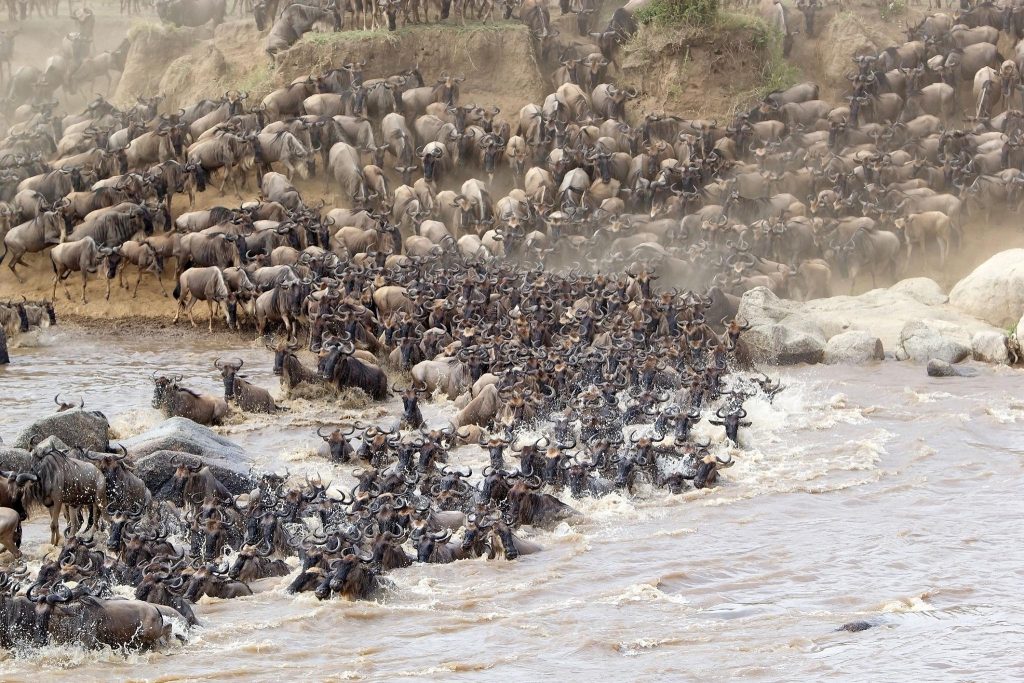
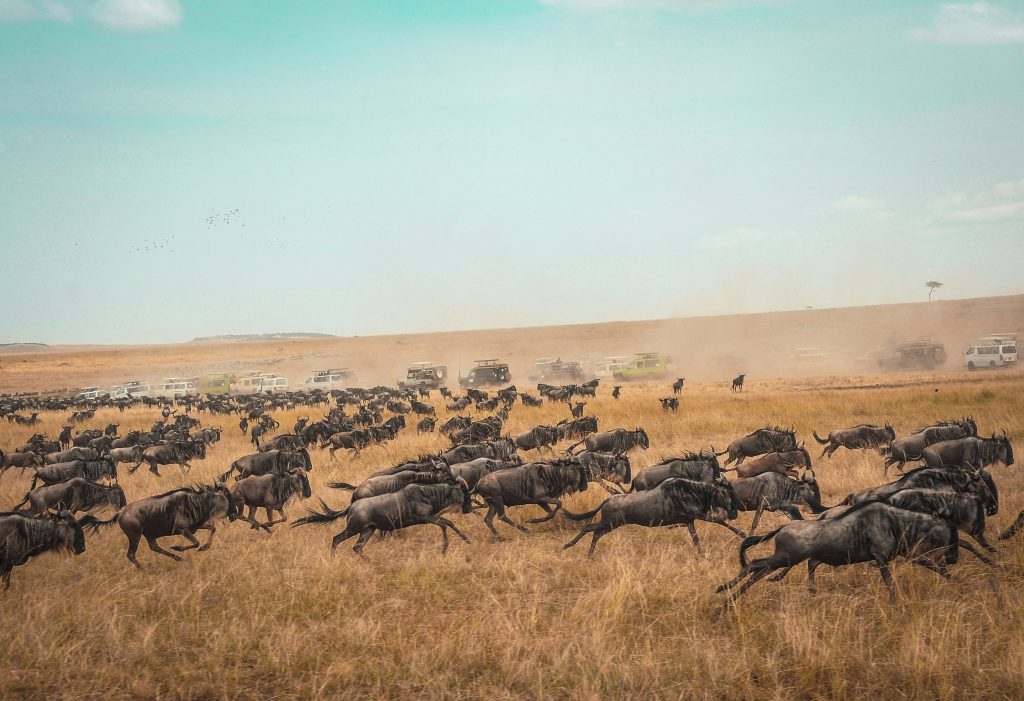
Amboseli + Maasai Mara (5–7 days): The classic Kenya safari. Amboseli delivers the elephant and mountain experience; the Mara delivers big cat density and the migration. These two parks complement each other perfectly and form the foundation of our most popular Kenya itinerary. See our 5-Day Kenya Safari Itinerary for a worked example.
Amboseli + Tsavo East and West (5–6 days): Tsavo’s big red elephants, classic old-Africa feel, and enormous scale pair naturally with Amboseli’s intimacy and mountain backdrop. A road transfer between Amboseli and Tsavo takes approximately 2.5 hours on a good day — manageable and scenic.
Amboseli + Chyulu Hills (4–5 days): The Chyulu Hills, rising between Amboseli and Tsavo, offer one of Kenya’s most atmospheric landscapes — ancient lava flows, cave systems, and private conservancy game viewing. Ol Donyo Lodge makes this combination seamless, sitting on the boundary between all three ecosystems.
Amboseli + Diani Beach / Mombasa (6–8 days): Fly from Amboseli south to the coast. End the safari with three nights of Indian Ocean water and Swahili culture. This is the Kenya beach-and-bush combination at its most logical: the Amboseli–coast combination involves one charter flight and delivers two completely different Kenyas in a single trip.
What a Private Guided Amboseli Safari Costs
A private guided safari in Amboseli is priced per vehicle per day rather than per person — which means the cost per person drops significantly as your group grows.
| Group Size | Per Person Per Day (Mid-Range) | Per Person Per Day (Luxury) |
|---|---|---|
| Solo traveller | $600–$900 | $1,200–$2,000+ |
| Couple (2 people) | $380–$550 | $750–$1,400 |
| Small family / group (4) | $260–$380 | $500–$900 |
These figures are indicative for full-board accommodation, private 4WD vehicle and guide, park fees, and twice-daily game drives. Internal charter flights, international flights, visas, and gratuities are additional.
For a detailed breakdown of every cost line in a Kenya safari, see our Kenya Safari Cost Guide.
What to Bring on Your Amboseli Private Safari
Your guide will brief you before every drive. The following items make a consistent difference:
Non-negotiables:
- Binoculars — 8×42 or 10×42; this is the single most important item after your camera
- Sunscreen SPF 50+ and a wide-brimmed hat — the Amboseli sun is intense, even in a vehicle
- Insect repellent — apply at dawn and dusk
- Warm layers for early morning drives — Amboseli mornings between June and September are genuinely cold (12–16°C)
- Dust-proof bag or dry bag for cameras and electronics
Strongly recommended:
- Camera with a 300mm+ telephoto lens for wildlife photography; a 70–200mm covers most situations well
- Power bank — lodges charge devices but outlets vary
- Neutral clothing (khaki, olive, sand) — not for camouflage but to avoid creating visual disruption for wildlife at close range
- Personal medication including antimalarials, antihistamines, and any prescription drugs in carry-on luggage
Leave behind:
- Bright-coloured or white clothing
- Heavy hard-sided luggage — charter flights enforce a 15 kg soft-bag limit strictly
- Expectations about schedule — the best private safari moments are unplanned
The Honest Case for Going Private
Group safaris have their place. They are more affordable, they connect you with other travellers, and in terms of raw wildlife access, they cover the same ground.
But a private guided safari in Amboseli is a different kind of experience. It is the difference between reading about a place and being present in it. When you are sitting in a vehicle with one guide whose only purpose is to show you this particular landscape as deeply as possible, something shifts. You stop being a tourist passing through. You start being a witness.
The elephants in Amboseli have been studied for over fifty years. The matriarchs have names. The calves have histories. Your guide knows them. And in a private vehicle, with time and silence and no competing interests, they can share that knowledge in a way that changes how you see the animal in front of you.
That is what you are paying for. That is what makes it worth it.
Plan Your Private Amboseli Safari
We have guided private safaris in Amboseli across all seasons and across all tiers of the market. We know the families by name, the guides by reputation, and the lodges by genuine experience rather than brochure copy.
Tell us your dates, your group size, and what matters most to you. We will build the itinerary around it.
All park fees quoted are indicative and subject to revision by Kenya Wildlife Service. Private vehicle rates vary by operator and season. All Pride of Africa itineraries are quoted individually based on travel dates, group size, and accommodation preferences.
Written by the Pride of Africa Adventures & Safaris travel team — Kenya safari specialists with extensive Amboseli experience across all seasons.
Request a Private Amboseli Safari Quote
Browse Kenya Safari Packages
Speak to a Safari Specialist

Comments
No comments yet. Be the first to share your experience.
Leave a Comment
Your comment will appear after it has been reviewed by our team.