Author: B. Ogak

  • Ngorongoro Crater: A Complete Visitor’s Guide

    Ngorongoro Crater: A Complete Visitor’s Guide

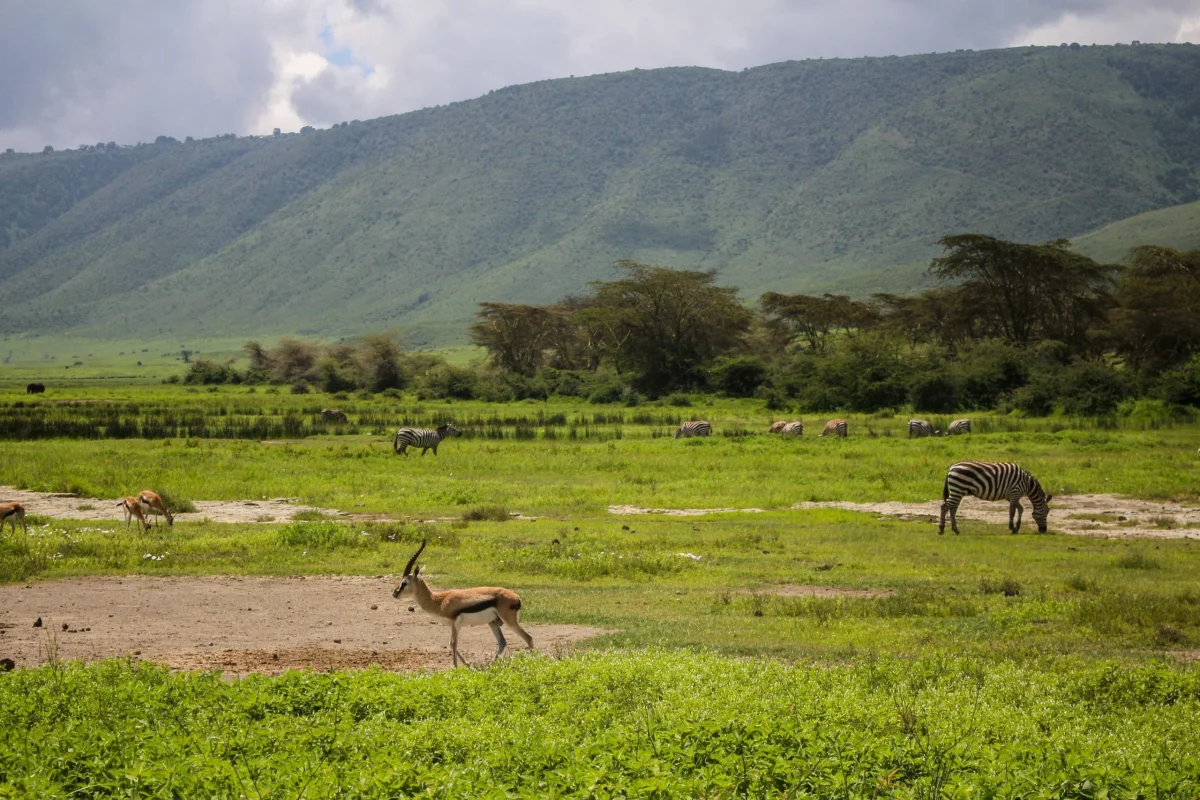
    The first view of the Ngorongoro Crater stops people in their tracks. You drive up through misty highland forest, reach the rim, and suddenly the ground falls away: below you lies a vast, green bowl, ringed by steep walls, with a lake shining on its floor and dark specks that turn out to be buffalo, zebra and elephants. Then you realise you are going down into it.

    This guide covers everything you need to know about visiting the Ngorongoro Crater — what it is, what you will see, and how to fit it into a safari.

    What Is the Ngorongoro Crater?

    The Ngorongoro Crater is a volcanic caldera in northern Tanzania, formed when a huge volcano collapsed in on itself millions of years ago. It is often described as the largest unbroken, unflooded caldera in the world. The crater floor covers roughly 260 square kilometres, enclosed by walls around 600 metres high.

    The crater sits within the much larger Ngorongoro Conservation Area, a UNESCO World Heritage Site where wildlife shares the land with Maasai pastoralists — one of the few places in Africa where people and wildlife are managed together on this scale.

    The Wildlife on the Crater Floor

    The crater walls create a natural sanctuary, and its floor holds one of the densest concentrations of large mammals in Africa:

    • Lions — the crater is one of the most reliable places in Tanzania to see them.
    • Black rhino — a small, protected population, one of the best chances to see this rare animal in Tanzania.
    • Elephants — often big old bulls, wandering the swamps and forest.
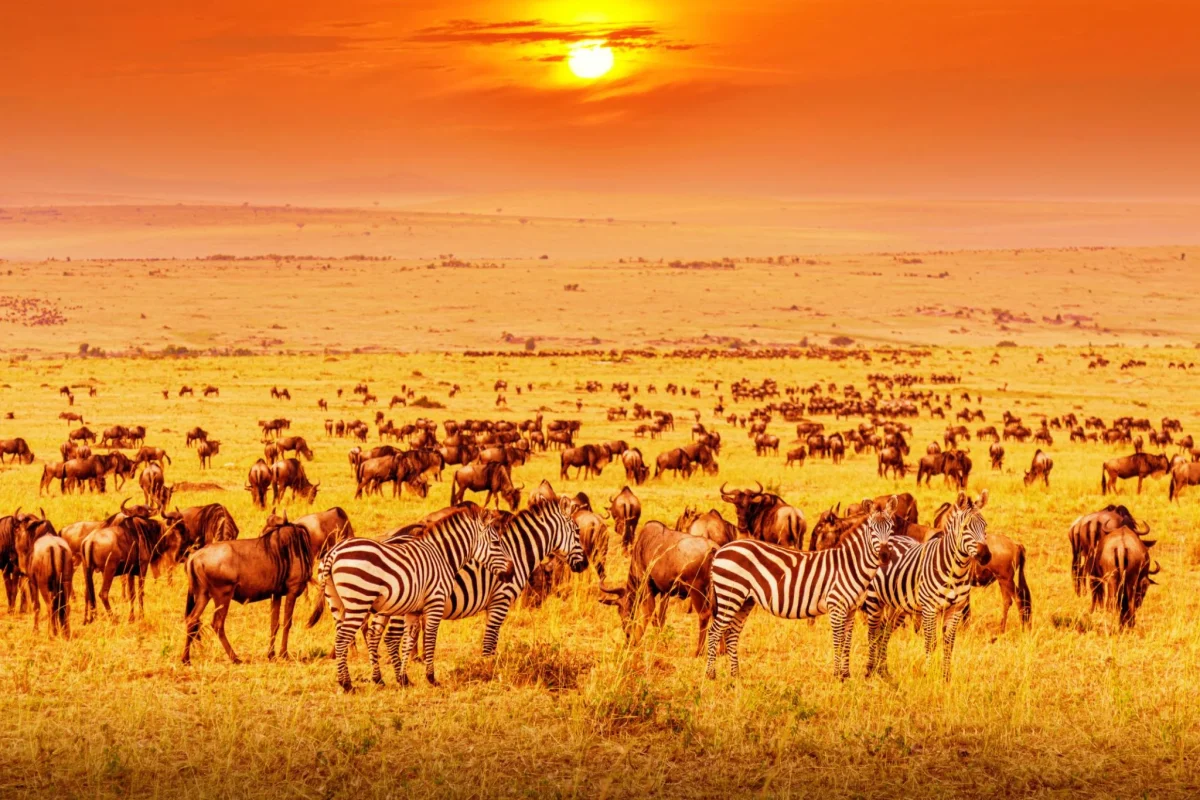
    • Buffalo, wildebeest, zebra, gazelles and hippos — in large numbers on the grassland and around the water.
    • Hyenas, jackals and flamingos on the soda lake when conditions are right.

    One animal you will not see on the crater floor is the giraffe — the steep walls keep them out.

    What a Crater Day Looks Like

    On our itineraries, the crater day starts early. You descend to the floor in your safari vehicle, spend the day exploring with a packed lunch — often by a hippo pool or picnic site — and climb back up to the rim in the afternoon. Time on the crater floor is limited by park rules, so an early start makes the most of it, and the morning light is the best for photographs.

    Combining Ngorongoro with the Serengeti

    Ngorongoro sits on the road between Arusha and the Serengeti, so the two are almost always visited together:

    Tips for Your Visit

    • Pack warm clothes. The crater rim is high, and nights and early mornings are surprisingly cold — bring a fleece or jacket.
    • Bring binoculars. The crater floor is open and wide; binoculars bring distant rhinos and lions much closer.
    • Protect your camera from dust. The crater floor can be dusty in the dry season.
    • Be ready for an early start. It is worth it for the light, the wildlife and your time on the floor.

    Plan Your Ngorongoro Safari

    Every safari we run is tailor-made. Tell us your travel dates and group size, and we will prepare a free quote for a Ngorongoro and Serengeti safari or a full Kenya and Tanzania journey — prices are on request.
  • Sweetwaters & Ol Pejeta: Rhinos, Chimpanzees and Mount Kenya Views

    Sweetwaters & Ol Pejeta: Rhinos, Chimpanzees and Mount Kenya Views

    Most Kenya safaris head south-west to the Masai Mara. Fewer travellers go north into the highlands of Laikipia — and they miss one of the most varied wildlife experiences in the country. At Sweetwaters, on the Ol Pejeta Conservancy, you can see rhinos up close, meet rescued chimpanzees and watch the sun rise over the snow-capped peaks of Mount Kenya, all in the same day.

    Where Are Sweetwaters and Ol Pejeta?

    Ol Pejeta Conservancy lies on the Laikipia plateau, between the Aberdare range and Mount Kenya, and straddles the equator. Sweetwaters is a tented camp and private reserve within this landscape. It is a few hours’ drive north of Nairobi through farmland and tea and coffee country — far enough to feel remote, close enough to reach comfortably in a morning.

    The area is home to all of the Big Five — lion, leopard, rhino, elephant and buffalo — set against wide views of Mount Kenya.

    Rhinos: A Conservation Success Story

    Ol Pejeta is one of the most important rhino conservation areas in Africa. It protects a large population of black rhino, as well as southern white rhino, and it is internationally known as the home of the last two northern white rhinos on Earth — both females, cared for around the clock by a dedicated team as scientists work to save the subspecies.

    Visiting supports this work directly. Ask your guide about the conservation programmes; the stories behind the animals make the sightings even more meaningful.

    The Chimpanzee Sanctuary

    Chimpanzees are not native to Kenya, which is what makes the Sweet Waters Chimpanzee Sanctuary so special. It was established to give a permanent home to orphaned and rescued chimpanzees from elsewhere in Africa, many of them saved from the illegal pet and bushmeat trades. Here they live in large natural enclosures by the river, and you can watch them from viewing platforms while keepers explain their stories.

    It is one of the very few places in Kenya where you can see chimpanzees, and a visit is included on our itinerary.

    Mount Kenya Views and the Equator

    On a clear morning, the jagged peaks of Mount Kenya — Africa’s second-highest mountain — rise above the plains. Early mornings and late afternoons usually give the clearest views, so keep your camera ready on game drives. The equator runs through this part of Kenya too, and crossing it is a popular photo stop.

    How It Fits into Our 9-Day Safari

    Our 9 Days Sweet Waters / Mara / Nakuru / Naivasha / Amboseli Private Safari builds the highlands into a complete Kenyan circuit:

    • Day 1: Lake Elementaita. Via the Great Rift Valley viewpoint, with a game drive in Soysambu Conservancy, home to Rothschild’s giraffe.
    • Day 2: Sweetwaters and Ol Pejeta. Through tea and coffee country to Sweetwaters Tented Camp, with a visit to the chimpanzee sanctuary.
    • Day 3: Lake Nakuru via Thomson’s Falls. A stop at the waterfall, then game drives for leopard and the park’s two rhino species.
    • Days 4–5: Masai Mara. Including a full day with a packed lunch by the Mara River.
    • Day 6: Lake Naivasha. A bush breakfast beside a hippo pool on the Mara River before you leave.
    • Days 7–9: Amboseli. Elephants beneath Kilimanjaro, then the drive back to Nairobi.

    Tips for Visiting the Highlands

    • Bring warm layers. The Laikipia plateau is high, and mornings and evenings can be cold.
    • Keep your camera ready for Mount Kenya. The clouds often clear early in the day.
    • Listen to the keepers at the sanctuary. Each chimpanzee has its own story and personality.

    Plan Your Highlands Safari

    See the full plan in our 9-day itinerary. Every safari is tailor-made — tell us your dates and group size and we will prepare a free quote. Prices are on request.

  • From the Mara to the Beach: Ending Your Safari on the Kenyan Coast

    From the Mara to the Beach: Ending Your Safari on the Kenyan Coast

    After a week of 6am wake-up calls, dusty tracks and long days scanning the plains for lions, there is something perfect about waking up to the sound of the Indian Ocean. Ending a Kenya safari on the coast gives you the best of both worlds: the wildlife adventure first, then time to rest, swim and let the memories settle on a white-sand beach.

    Here is how a safari-and-beach holiday works in Kenya, and what to expect from the coastal part of the trip.

    Why End a Safari on the Beach?

    A safari is wonderful, but it is not a restful holiday. Early starts, long game drives and moving between parks every day or two can be tiring. A few days on the coast at the end turn the trip into a proper holiday — and Kenya is one of the few safari countries where the beach is a short journey from the parks.

    It also makes practical sense: you finish your safari in Amboseli or Tsavo country, which is already on the way to the coast.

    The Safari Part: Kenya’s Highlights

    Our 10 Days Best of Kenya Private Safaris with Beach spends its first six days on safari:

    • Masai Mara — two days, including a full day with a packed lunch by the Mara River, and an optional early-morning hot-air balloon flight.
    • Lake Nakuru — leopard, the park’s two rhino species and the flamingos of the lake.
    • Lake Naivasha and Hell’s Gate — a game drive in a park where you can walk and cycle, then a boat ride among hippos and birds.
    • Amboseli — a full day among the elephants with views of Mount Kilimanjaro.

    From Amboseli to the Coast by Train

    One of the highlights of this itinerary is the journey itself. From Amboseli you are dropped at Mtito Andei station to board the train to Mombasa — booked and paid for by us — and watch the landscape change from dry savannah to the green coastal belt. At Mombasa you are met and driven south to Diani Beach.

    Diani Beach: What to Expect

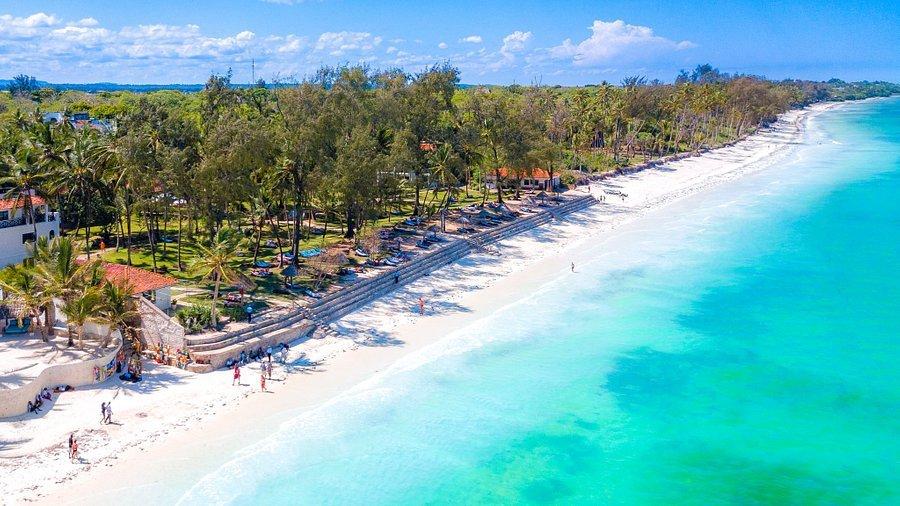
    Diani, on Kenya’s south coast, is known for its long stretch of white sand, palm trees and warm, clear water protected by an offshore reef. It is a relaxed place to unwind after a safari.

    • Glass-bottom boat and snorkelling. Your first full day includes an excursion over the reef to see coral and tropical fish.
    • Time to relax. The next day is yours — the pool, the beach, a massage or simply a book under the palms.
    • Swahili coast culture. Diani is part of the Swahili coast, with its own food, history and character, which makes a striking contrast with the safari.

    Accommodation on the coast is at Swahili Beach Resort on a bed-and-breakfast basis, so you are free to explore restaurants and beach bars for your other meals.

    On the final day you fly from the coast back to Nairobi, ready for your onward journey.

    Tips for a Safari and Beach Holiday

    • Pack in two layers. Neutral colours and a warm fleece for early game drives; swimwear, sandals and light clothing for the coast. Our safari packing guide covers both.
    • Use reef-safe sun cream. It protects you and the coral you will be snorkelling over.
    • Do the safari first. Ending on the beach means you go home rested, not exhausted.
    • Want more beach time? We can add nights at the coast or tailor the safari section — just ask.

    Plan Your Safari and Beach Holiday

    See the full day-by-day plan in our 10 Days Best of Kenya Private Safaris with Beach itinerary. Tell us your dates and group size and we will prepare a free, tailor-made quote — prices are on request.

  • Kenya Safari and Ethiopia in One Holiday: Danakil, Lalibela and the Simien Mountains

    Kenya Safari and Ethiopia in One Holiday: Danakil, Lalibela and the Simien Mountains

    In the morning you are watching lions in the Masai Mara. A week later you are standing on the rim of a volcano in the Danakil Depression, then walking through churches carved out of solid rock in Lalibela. Few holidays move between two worlds as completely as a Kenya safari combined with Ethiopia.

    Our 14-day Kenya and Ethiopia journey pairs Kenya’s classic wildlife parks with northern Ethiopia’s extraordinary landscapes and ancient history. This guide explains what each part of the trip involves and who it suits.

    Part One: Five Days of Kenyan Safari

    The trip begins in Nairobi and heads straight into the wildlife:

    • Masai Mara — an afternoon game drive on arrival, then a full day in the reserve with a packed lunch by the Mara River.
    • Lake Naivasha — a boat trip among hippos and water birds.
    • Hell’s Gate National Park — an early morning game drive in one of the few parks where you can cycle and walk among wildlife.
    • Lake Nakuru — leopard, both black and white rhino, Rothschild’s giraffe and the birdlife of the lake, with lunch at the cliff viewpoint.

    On the evening of day five you fly from Nairobi to Addis Ababa — and the second half of the holiday begins.

    Part Two: The Danakil Depression

    From Addis Ababa you fly north to Mekele and drive into the Danakil Depression, one of the lowest and hottest places on Earth. This is the most adventurous part of the trip, and it is not for everyone — but for travellers who want something truly different, it is unforgettable.

    • Erta Ale. You trek up the volcano in the evening to see its crater, one of the few places in the world where a lava lake has been visible. Volcanic activity changes over time, so what you see on the night varies.
    • Hamad Ela and Lake Assale. Camel caravans, salt flats and a sunset over the shallow salt lake.
    • Salt mining. Watch local miners cut slabs of salt from the ground and load them onto camels, as they have done for centuries.
    • Dallol. A surreal landscape of coloured mineral pools, salt formations and volcanic features unlike anywhere else on the planet.

    Be prepared: the roads are rough, the heat is intense and the camping is basic. Good health and a sense of adventure matter more here than anywhere else on the trip.

    Part Three: Ethiopia’s Historic North

    The final days follow some of Ethiopia’s most remarkable historic and natural sites:

    • The rock-hewn churches of Tigray. Including Abune Yemata, reached by footholds and handholds in a cliff face, with a sheer drop beside the entrance ledge — and Mariam Korkor and Daniel Korkor in the afternoon.
    • Axum. A short visit to see the ancient obelisks before the flight to Lalibela.
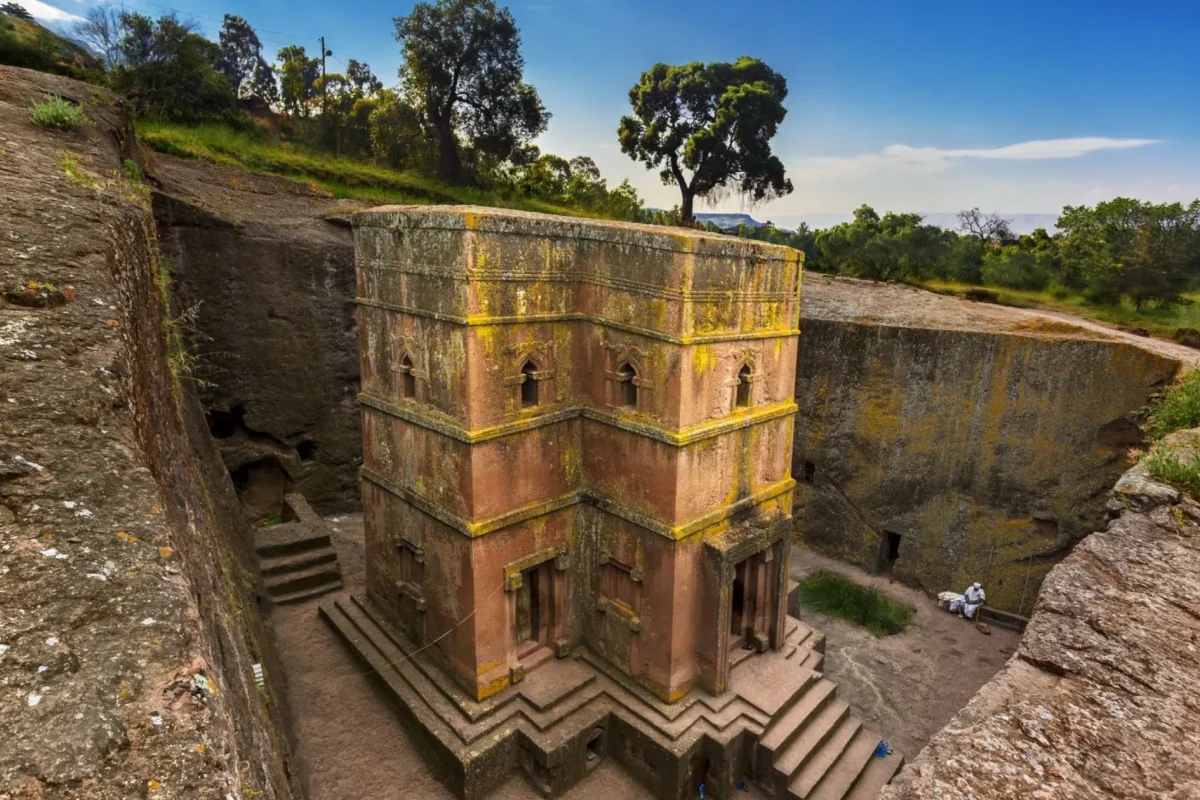
    • Lalibela. A full day among the rock-hewn churches, carved downward into the rock, finishing with Bet Giyorgis, the cross-shaped church dedicated to Saint George. Lalibela is a UNESCO World Heritage Site and still an active place of worship.
    • Gondar. The Royal Enclosure and its castles, Fasilidas’ Pool and the famous painted ceiling of Debre Birhan Selassie church.
    • The Simien Mountains. A day trip into the national park for dramatic escarpment views, a walk to see Jinbar Waterfall and the chance to see gelada monkeys.
    • Lake Tana and the Blue Nile Falls. A boat trip to island monasteries, then a short hike at the falls and sunset over the lake in Bahir Dar.

    On the final day you fly from Bahir Dar to Addis Ababa to connect with your flight home.

    Who Is This Trip For?

    This itinerary suits travellers who want more than a wildlife holiday: people who enjoy history and culture, are comfortable with early starts and long travel days, and are excited rather than put off by the idea of camping in the desert. If the Danakil section sounds too demanding, tell us — we can tailor the Ethiopian part of the journey around the historic sites.

    Safety and Travel Advice

    Parts of northern Ethiopia have been affected by unrest in recent years, and government travel advice for the Afar and Tigray regions changes. Before confirming any Ethiopia itinerary we check the current situation and official advisories, and we will discuss them openly with you. Please also check your own government’s travel advice and make sure your travel insurance covers the regions you will visit — see our travel insurance information page.

    Plan Your Kenya and Ethiopia Holiday

    See the full day-by-day plan in our 14 Days Kenya and Ethiopia Combine itinerary. Send us your dates and group size and we will prepare a free, tailor-made quote — prices are on request.

  • Kenya & Tanzania in One Trip: How a Cross-Border Safari Works

    Kenya & Tanzania in One Trip: How a Cross-Border Safari Works

    The Masai Mara and the Serengeti are one ecosystem. The wildebeest do not stop at the border, and neither do the lions, the zebras or the plains themselves. A Kenya and Tanzania safari lets you follow that landscape across the line — from the Mara to Amboseli in Kenya, then over the border to Lake Manyara, the Serengeti and the Ngorongoro Crater in Tanzania.

    It sounds complicated. In practice, with the right planning, it is one of the smoothest and most rewarding safaris in Africa. Here is how it works.

    Why Combine Kenya and Tanzania?

    Each country has parks that the other simply does not. Kenya gives you the Masai Mara’s big cats and river crossings, Lake Nakuru’s rhinos and Amboseli’s elephants with Kilimanjaro behind them. Tanzania gives you the endless Serengeti plains, the tree-climbing lions of Lake Manyara and the Ngorongoro Crater — a collapsed volcano with a world of wildlife on its floor.

    Combined in one trip, they show you the full range of East African safari landscapes: savannah, Rift Valley lakes, volcanic highlands and some of the most famous wildlife areas on Earth.

    The Route: How a Cross-Border Safari Flows

    Our 10 Days Kenya Tanzania Combine itinerary follows a logical road route, so you spend your time on game drives rather than doubling back:

    • Days 1–2: Masai Mara. Arrive through the Great Rift Valley, then a full day exploring the reserve with a packed lunch by the Mara River.
    • Day 3: Lake Nakuru. A visit to a Maasai village, then game drives looking for leopard and the park’s two rhino species.
    • Days 4–5: Amboseli. Elephants on the open plains with snow-capped Kilimanjaro dominating the skyline.
    • Day 6: Across the border to Lake Manyara. You leave Amboseli, cross into Tanzania at Namanga and continue through Arusha to Lake Manyara.
    • Days 7–8: Serengeti. Game viewing on the way in, then a full day in Tanzania’s most famous park.
    • Day 9: Ngorongoro Crater. A full day on the crater floor with a packed lunch.
    • Day 10: Arusha. An early game drive, then the drive to Arusha, with a shuttle back to Nairobi the next morning.

    Crossing the Border at Namanga

    Namanga is the main road crossing between southern Kenya and northern Tanzania, and it sits conveniently between Amboseli and Arusha. The crossing itself is a short stop: you leave Kenya, walk through to the Tanzanian side and complete your entry formalities, and then continue your journey. Your guide will brief you beforehand and walk you through each step on the day.

    Two things make the day go smoothly:

    • Have your documents ready. Keep your passport, any travel authorisation or visa, and your yellow fever certificate if required, together in your hand luggage.
    • Check entry requirements before you travel. Kenya and Tanzania have separate entry rules, and they do change. See our visa information page and confirm the current requirements for your nationality well before departure.

    When Is the Best Time to Go?

    We run this itinerary all year round. The Great Migration moves in a loop between the Serengeti and the Masai Mara through the year, so the herds are always somewhere in this ecosystem — the question is where. Tell us your travel dates and we will explain what you can expect in each park at that time.

    What About the Accommodation?

    Our Kenya–Tanzania itinerary uses lodges and camps chosen for their locations close to the action, with options at each stop. In the Serengeti and at Ngorongoro, staying inside or close to the parks means more time on game drives and less time on the road. If you prefer a different style — more luxurious, or simpler — we tailor the accommodation to you.

    Is It Too Much for One Trip?

    Ten days covers a lot of ground, but the route is designed so that the long driving days come with game drives along the way, and the big parks get full days. If you would like a slower pace, we can add nights in the Mara or the Serengeti, or split the trip into a Kenya safari and a separate Tanzania extension.

    Plan Your Kenya and Tanzania Safari

    Start with our 10 Days Kenya Tanzania Combine itinerary, or look at our 3-Day Ngorongoro & Serengeti Camping trip if you are already in northern Tanzania. Send us your dates and group size and we will prepare a free, tailor-made quote — prices are on request.

  • Lake Nakuru National Park: Flamingos, Rhinos and What to Expect

    Lake Nakuru National Park: Flamingos, Rhinos and What to Expect

    The game drive at Lake Nakuru starts almost before you are through the gate. Colobus monkeys watch from the yellow fever trees, a waterbuck lifts its head from the grass, and somewhere beyond the woodland a pink shimmer on the water tells you the birds are in. Within the hour your guide may be pointing out the broad, square-lipped shape of a white rhino grazing in the open — the reason so many travellers say Nakuru surprised them more than any other park on their safari.

    Lake Nakuru is small, easy to reach and remarkably rich. This guide explains what makes it special, what you are likely to see, and how it fits into a Kenya safari.

    Where Lake Nakuru Is — and Why It Is So Easy to Include

    Lake Nakuru National Park lies on the floor of the Great Rift Valley, a few hours’ drive north-west of Nairobi. It sits neatly between the capital and the Masai Mara, which is why it appears in so many Kenyan itineraries: it breaks up the long drive and adds a completely different landscape to your trip.

    The park wraps around an alkaline lake ringed by acacia woodland, grassy plains, rocky escarpments and forest. Because it is compact, you cover a lot of ground in a single game drive, and you rarely spend long stretches without seeing wildlife.

    The Flamingos: What to Expect

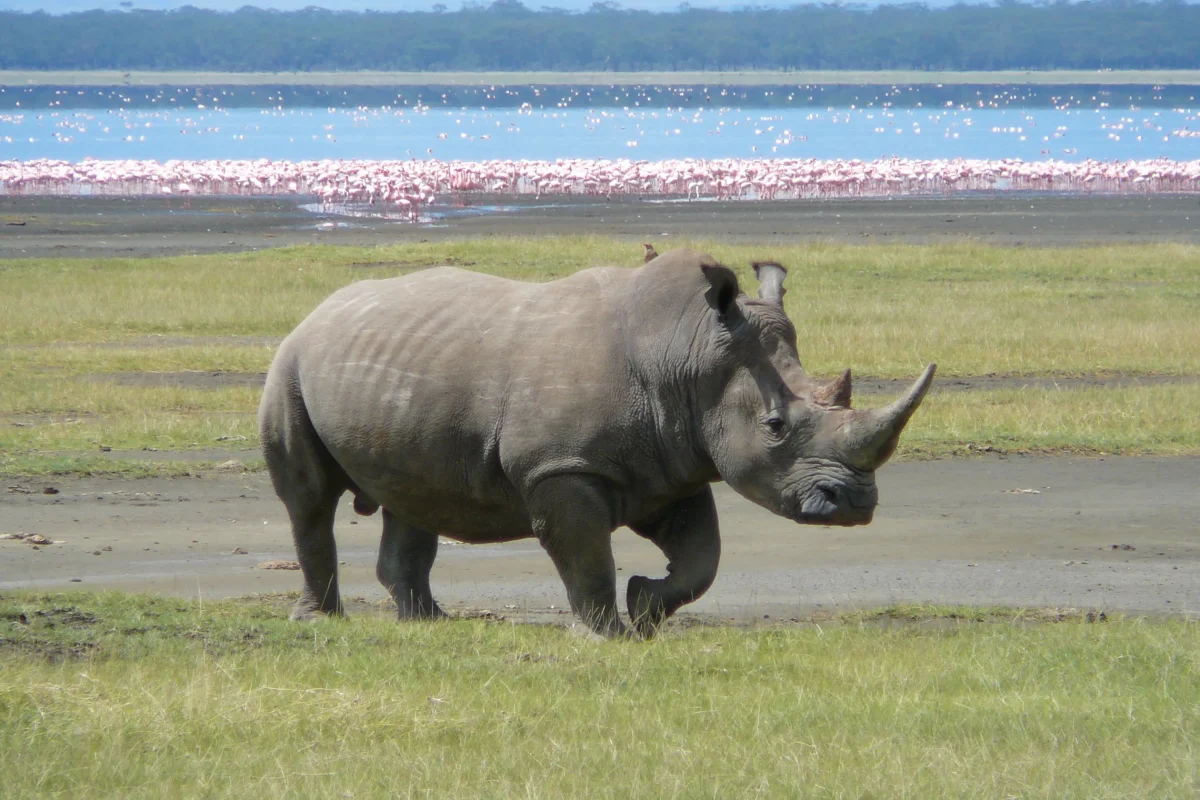
    Nakuru made its name as one of the great flamingo lakes of the Rift Valley. Lesser and greater flamingos feed on the algae and small crustaceans of its alkaline water, and at times the shoreline turns pink with birds.

    It is worth being honest about one thing: flamingo numbers at Nakuru rise and fall. The birds move between the Rift Valley lakes depending on water levels and food, so the size of the flocks varies from season to season and even month to month. Some visits bring thousands; others bring smaller groups along the shore. Your guide will know where the birds have been feeding recently and will take you to the best viewpoints.

    Flamingos are only part of the picture. Lake Nakuru is home to more than 400 recorded bird species, including pelicans, fish eagles, kingfishers, storks and herons — a real highlight even if birdwatching was never on your list.

    A Sanctuary for Rhinos

    For many travellers, the rhinos are the main event. Lake Nakuru is a fenced rhino sanctuary and one of the best places in Kenya to see both black and white rhinos. White rhinos graze in the open grassland and are often seen at close range; the more secretive black rhino browses in thicker bush and takes more patience.

    Seeing rhinos in the wild is a privilege. Both species were driven close to extinction by poaching, and sanctuaries like Nakuru have been central to their recovery in Kenya.

    Other Wildlife to Look Out For

    • Rothschild’s giraffe — one of the rarest giraffe subspecies, identified by its pale legs that look as if it is wearing white stockings.
    • Leopard — Nakuru’s woodlands are known for leopard sightings, and our itineraries include game drives timed to look for them.
    • Lion — prides move through the acacia woodland and are sometimes seen resting in the trees.
    • Buffalo, waterbuck, zebra, impala and baboons — the everyday cast of a Nakuru game drive.

    The View from the Cliff

    Ask your guide to stop at the viewpoints on the escarpment above the lake. From the cliff top you look down over the whole park — the woodland, the plains, the lake edge and, when the birds are in, the pink line of flamingos along the shore. On our itineraries this is often where we stop for lunch, and it is one of the best photographs of the whole safari.

    How Lake Nakuru Fits into a Kenya Safari

    Nakuru works best as part of a circuit rather than on its own. In our itineraries it is paired with:

    • The Masai Mara — big cats, vast herds and, in season, the Great Migration.
    • Lake Naivasha and Hell’s Gate — a boat trip among hippos and a park where you can walk and cycle among wildlife.
    • Amboseli — elephants beneath Mount Kilimanjaro.

    Our 4 Days Mara / Nakuru Safari is the classic short combination: two days in the Masai Mara, then an afternoon game drive at Nakuru and a full day in the park before returning to Nairobi. If you have longer, our 9 Days Sweet Waters / Mara / Nakuru / Naivasha / Amboseli Private Safari includes Nakuru as part of a wider journey through Kenya’s highlights.

    Practical Tips for Your Visit

    • Bring binoculars. They make a huge difference for birds and for spotting rhinos at a distance.
    • Do not feed the monkeys. Baboons and monkeys near the gate are used to people — keep windows up when your guide advises it.
    • Pack a warm layer. Mornings in the Rift Valley can be cool, especially on early game drives.
    • Be patient with the rhinos. The black rhino in particular can take time — a good guide reads the landscape and the tracks.

    Plan Your Lake Nakuru Safari

    Every one of our safaris is tailor-made. Tell us your travel dates, group size and the kind of accommodation you prefer, and we will prepare a free quote — prices are always on request, so you only pay for the safari you actually want.