Author: B. Ogak

  • Serengeti vs Maasai Mara: Which Safari Destination Is Right for You?

    Serengeti vs Maasai Mara: Which Safari Destination Is Right for You?

    Two plains. One legendary migration. A decision that has kept safari lovers awake at night for decades.

    The Serengeti and the Maasai Mara are arguably the two greatest wildlife destinations on earth — and they share the same sweeping grassland ecosystem, separated only by the Kenya–Tanzania border. Yet choosing between them is anything but a coin toss. The right answer depends on when you travel, what wildlife moments you want, how you like to experience the bush, and the kind of journey that genuinely moves you.

    This guide breaks it all down — honestly, and in detail — so you can arrive at the decision that suits your safari perfectly.

    The Big Picture: What Are We Comparing?

    The Serengeti National Park sits in northern Tanzania and covers approximately 14,763 km². It is one of the oldest and most celebrated ecosystems on the planet, a UNESCO World Heritage Site, and the stage for the longest overland wildlife migration on earth.

    The Maasai Mara National Reserve lies in southwestern Kenya, covering around 1,510 km². Smaller, more concentrated, and exceptionally rich in wildlife density, the Mara forms the northern tip of the same Serengeti–Mara ecosystem. The two parks are ecologically inseparable — the wildebeest don’t recognise the border, and neither should you when planning your trip.

    What does set them apart is everything else: experience, access, timing, cost, and feel.

    Wildlife: Who Has the Edge?

    Both destinations deliver some of the most spectacular wildlife viewing in Africa. But there are real differences.

    The Serengeti

    The Serengeti is vast, which means game drives feel wild and unhurried. Wildlife is spread across different zones — the Seronera Valley in the central Serengeti is one of Africa’s most reliable year-round game-viewing areas, famous for its resident leopards and lion prides. The northern Serengeti (Lamai and Kogatende) and the western corridor each offer distinctive ecosystems and seasonal wildlife concentrations.

    You’re virtually guaranteed sightings of: lion, leopard, cheetah, elephant, buffalo, giraffe, hippo, crocodile, zebra, wildebeest, and a staggering diversity of bird life across more than 500 species.

    The Maasai Mara

    The Mara punches well above its weight for its size. Wildlife density is exceptional — the resident big cat population is one of the highest in Africa, and the open savannah makes for outstanding visibility. Big Five sightings are nearly guaranteed on most game drives. The Mara River itself is a permanent feature of the landscape, supporting year-round hippo and crocodile populations.

    The Mara is also home to large Maasai communities whose cattle have coexisted with wildlife for generations — adding a cultural dimension that is uniquely compelling.

    Verdict: Both are world-class. The Serengeti wins on scale and variety of ecosystems; the Mara wins on wildlife density and accessibility within a smaller area.

    The Great Migration: Timing Is Everything

    This is the centrepiece of both destinations — and the single biggest factor in your decision.

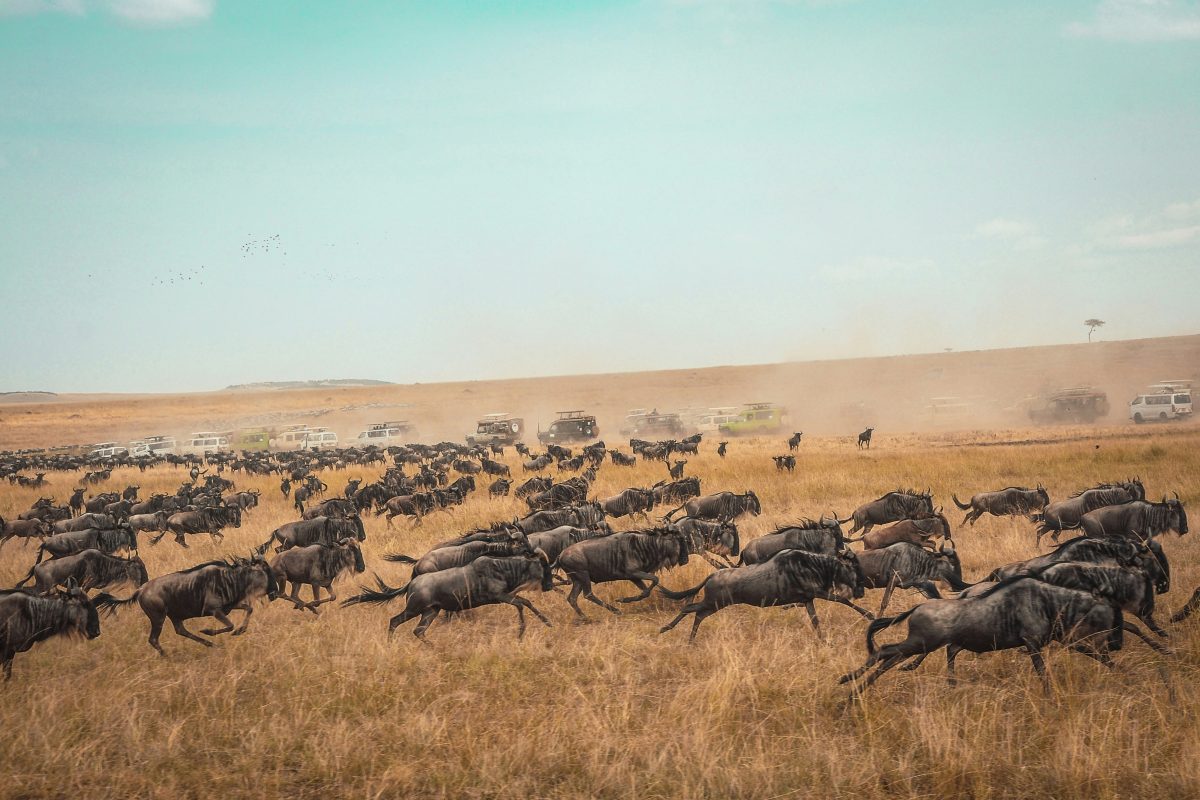
    The Great Migration involves approximately 1.5 million wildebeest, 200,000 zebra, and 500,000 Thomson’s gazelle moving in a continuous loop across the Serengeti–Mara ecosystem, driven by rainfall and the growth of fresh grass.

    Here is where each destination shines by season:

    January – March: Serengeti (Southern)

    The calving season unfolds in the southern Serengeti, near Ndutu. Around 500,000 calves are born in a matter of weeks — a jaw-dropping spectacle. Predator activity is extraordinary, with cheetah, lion, and hyena following the herds closely. This is one of the most underrated migration experiences of the year.

    April – May: Serengeti (Western Corridor)

    The herds move northwest through the western corridor, crossing the Grumeti River. The Grumeti crocodiles are formidable, and the crossings here are intense, though less photographed than the Mara crossings. The green season brings lush landscapes and very few tourists.

    June – July: Serengeti (Northern) — The Migration Arrives

    By June, the herds have moved north. Game viewing in the northern Serengeti reaches fever pitch as the wildebeest mass along the Mara River, and the first dramatic river crossings begin.

    July – October: Maasai Mara — Peak River Crossings

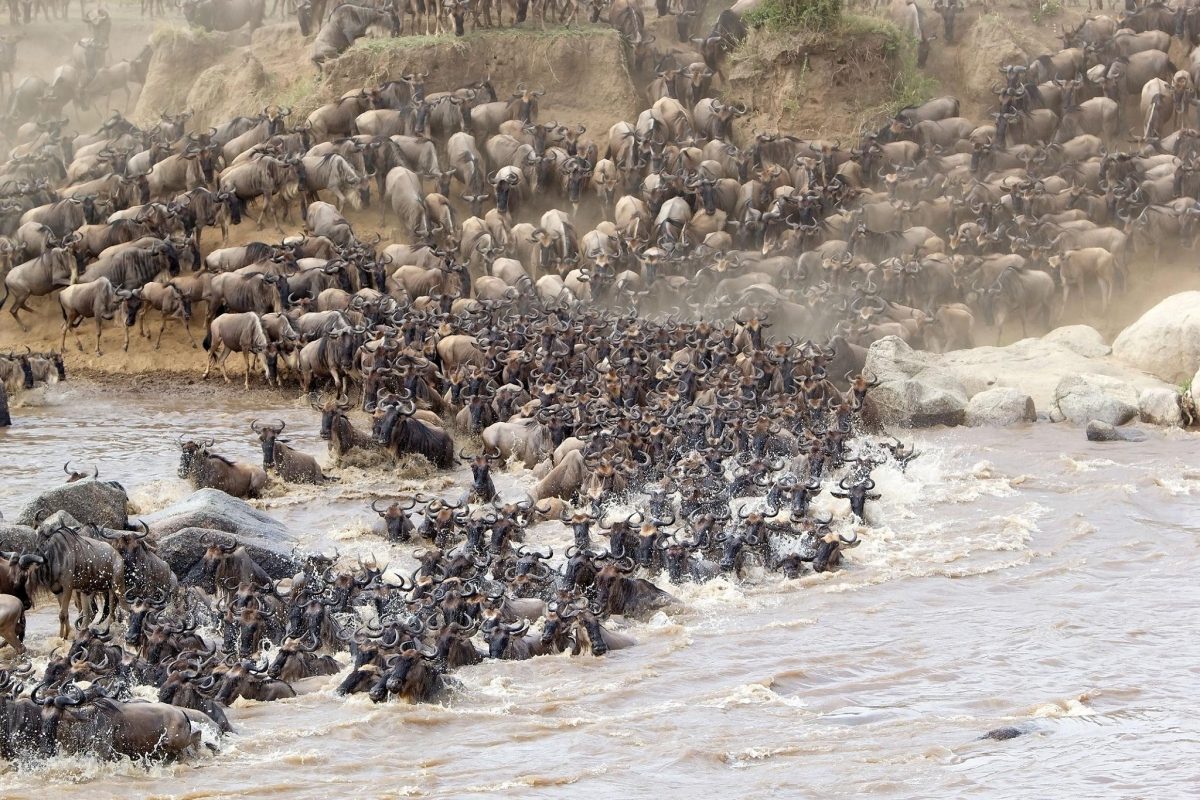
    This is the window that defines the Maasai Mara globally. Between July and October, the wildebeest pour across the Mara River in their millions — sometimes in a single explosive crossing, sometimes in a hesitant trickle that suddenly explodes into chaos. The crocodiles are waiting. The lion prides are positioned. The whole drama plays out at the river’s edge, and no wildlife experience on earth quite matches it.

    October brings the return journey south, with another round of crossings.

    November – December: Serengeti (Eastern & Southern)

    The herds move back south through the eastern Serengeti toward the Ndutu plains, where the cycle begins again.

    Verdict: If witnessing the river crossings is your primary goal, travel to the Maasai Mara between July and October. For calving season or a less crowded migration experience, the southern Serengeti from January to March is extraordinary.

    Crowds and Exclusivity

    This is where the two destinations diverge most sharply.

    The Maasai Mara, being a national reserve rather than a national park, allows private conservancies to operate on community land surrounding the reserve itself. These conservancies — including Naboisho, Olare Motorogi, Ol Kinyei, and others — offer exclusive game viewing with far lower visitor numbers, night game drives, off-road driving, and walking safaris. They are among the finest safari experiences in Africa and a compelling reason to choose the Mara.

    Inside the reserve itself, peak season (July–October) can feel busy around the most popular river crossing points, particularly with minibus game-viewing vehicles. This is the trade-off for accessibility and world-class wildlife.

    The Serengeti offers more space by sheer size — 14,763 km² absorbs visitors differently. The northern Serengeti camps in particular are remote and uncrowded even during peak season, delivering a wilderness experience that feels genuinely untouched.

    Verdict: For exclusivity and solitude, the northern Serengeti and the Mara conservancies are both exceptional. The Mara conservancies edge ahead for the combination of exclusivity and proximity to the river crossings.

    Safari Lodges and Accommodation

    Serengeti

    The Serengeti has some of Africa’s most celebrated properties — from mobile tented camps that follow the migration to permanent lodges with spectacular views across the plains. Styles range from intimate six-tent bush camps to grand lodges with infinity pools overlooking the savannah. The northern Serengeti in particular has seen a wave of exceptional, sensitively designed properties open in recent years.

    Maasai Mara

    The Mara and its conservancies host some of the continent’s most lauded luxury camps — intimate, owner-operated, deeply knowledgeable about their landscape. Many conservancy camps offer all-inclusive rates with twice-daily game drives, walking, and night drives included. The level of personalised guiding in the Mara’s best properties is hard to match anywhere in Africa.

    Verdict: Both are outstanding. Your choice will depend on whether you prefer the bold scale of Serengeti lodges or the intimate, conservancy-style hosting of the Mara’s finest camps.

    Getting There: Logistics and Access

    Maasai Mara

    Fly into Nairobi’s Jomo Kenyatta International Airport (NBO), then connect via a 45-minute charter flight to one of several bush airstrips inside the Mara or the surrounding conservancies. Alternatively, a road transfer from Nairobi takes approximately 5–6 hours, passing through the Great Rift Valley — scenic but long.

    Serengeti

    Fly into Kilimanjaro International Airport (JRO) or Julius Nyerere International Airport in Dar es Salaam (DAR), then connect to Arusha before a charter flight to one of the Serengeti’s many airstrips (Seronera, Kogatende, Grumeti, and others). The Serengeti is generally a longer, more involved journey to reach — but the remoteness is part of the experience.

    Verdict: The Maasai Mara is logistically easier to reach, especially on shorter itineraries. The Serengeti rewards those with more time.

    Cost Comparison

    Both destinations sit in the premium tier of African safari travel, though with meaningful differences.

    • Tanzania levies higher park fees than Kenya — Serengeti fees for non-residents run significantly higher per person per day, which flows through into lodge pricing.
    • Serengeti mobile camps following the migration command premium rates, especially in July–October.
    • Maasai Mara conservancies often include all activities in the rate, which can make the all-in cost competitive once everything is counted.
    • Green season (April–June in the Mara; April–May in the Serengeti) offers meaningful savings at both destinations, often 20–30% below peak rates, with the added bonus of lush landscapes and very few other visitors.

    Verdict: The Serengeti tends to be marginally more expensive at comparable luxury tiers, primarily due to park fees. Both represent excellent value for the calibre of experience delivered. See our Kenya Safari Cost Guide for a full Kenya-side breakdown.

    The Honest Side-by-Side

    Factor Maasai Mara Serengeti
    Best migration window July – October (river crossings) Year-round (varies by zone)
    Wildlife density Very high High (varies by zone)
    Size ~1,510 km² ~14,763 km²
    Exclusivity options Private conservancies Remote northern camps
    Ease of access Easier (Nairobi hub) More involved (Arusha/JRO)
    Night drives Yes (in conservancies) Yes (in private concessions)
    Walking safaris Yes (conservancies) Yes (select camps)
    Peak season crowds Higher inside reserve Lower, spread over larger area
    Cost High High (marginally higher fees)
    Cultural experience Strong Maasai presence Maasai and other communities

    So, Which Should You Choose?

    Choose the Maasai Mara if:

    • You want to witness the dramatic Mara River crossings (travel July–October)
    • You have a shorter trip and want maximum impact quickly
    • You want exclusive conservancy guiding with night drives and walks included
    • You are flying in and out of Nairobi
    • Cultural immersion with Maasai communities matters to you

    Choose the Serengeti if:

    • You want the calving season (January–March in the south)
    • You want a vast, remote wilderness with multiple distinct ecosystems
    • You are combining your safari with Ngorongoro Crater, Tarangire, or Zanzibar
    • You want to experience the migration across its full annual cycle
    • You are travelling with more time and want to go deep

    Consider both if:

    • You have 10 or more days and want to experience the ecosystem from both sides of the border
    • You want a Tanzania–Kenya combined itinerary — crossing from the Serengeti into the Mara, or vice versa — an experience that is genuinely unmatched

    Our Recommendation

    At Pride of Africa Adventures & Safaris, we believe the best safari is the one built around your timeline, your interests, and the wildlife moments that matter most to you. We have guided families, honeymooners, photographers, and first-time safari goers across both the Serengeti and the Maasai Mara — and we have a deep, genuine knowledge of what each destination delivers in every season.

    If you’re unsure, tell us when you want to travel and what kind of experience you’re after. We’ll tell you exactly where to be and why — and we’ll build the itinerary around it.

    Written by the Pride of Africa travel team — East Africa safari specialists with years of field experience across Kenya, Tanzania, Uganda, and Rwanda.

    Request a Free Safari Quote
    Browse Our Kenya Safari Packages
    Browse Our Tanzania Safari Packages
  • Is Kenya Safe for Tourists? Everything You Need to Know

    Is Kenya Safe for Tourists? Everything You Need to Know

    It is one of the first questions every first-time visitor asks — and one of the most important ones to answer honestly.

    Kenya is safe for tourists. That is the short answer. Every year, hundreds of thousands of international visitors travel to Kenya for safaris, beach holidays, mountain treks, and cultural experiences — and the overwhelming majority return home with nothing but extraordinary memories.

    But “safe” is not the same as “without risk.” No destination on earth is. Kenya, like any country, has areas and situations that require awareness, common sense, and good planning. The goal of this guide is not to alarm you or to dismiss your concerns — it is to give you a clear, honest, grounded picture of what safety in Kenya actually looks like for a tourist today.

    Frequently Asked Questions About Safety in Kenya

    Is Kenya safe to visit right now?

    Yes, for the vast majority of tourist destinations and safari circuits, Kenya is safe to visit. The country has a well-established tourism infrastructure, experienced operators, and a hospitality industry that has been welcoming international visitors for decades.

    Kenya’s primary tourist areas — the Maasai Mara, Amboseli, Samburu, Diani Beach, Lamu, and the Laikipia Plateau — have strong safety records and operate to high professional standards. Millions of visitors travel through these areas each year without incident.

    As with any destination, it is worth checking your government’s current travel advisory before departure. The UK Foreign Commonwealth & Development Office (FCDO), the US State Department, and Australia’s Smartraveller all publish regularly updated Kenya advisories. Read them, note the specific areas flagged, and plan accordingly.

    Is Nairobi safe for tourists?

    Nairobi has a reputation that precedes it — not entirely undeserved, but significantly overstated for visitors who are sensible about where they go and when.

    The neighbourhoods where tourists stay and spend time — Karen, Westlands, Gigiri, Kilimani, and the CBD business district — are reasonably safe, particularly during the day. Nairobi’s restaurant scene, shopping centres, and cultural attractions are visited by thousands of expats, business travellers, and tourists daily without issue.

    Where the risk increases is in areas not on the tourist trail, particularly at night, on foot in unfamiliar neighbourhoods, or when displaying valuables openly. Petty crime — phone snatching, bag theft, opportunistic pickpocketing — is the most common issue tourists encounter, and it is largely avoidable with basic precautions.

    Practical tips for Nairobi:

    • Use reputable ride-hailing apps (Uber and Bolt operate widely in Nairobi) rather than unmarked taxis
    • Avoid walking alone after dark in unfamiliar areas
    • Keep phones and cameras out of sight in busy public areas
    • Store valuables in your hotel safe
    • Confirm your safari operator or hotel is sending a clearly identified vehicle and driver for airport transfers
    • Most tourists spend only one or two nights in Nairobi before flying to their safari destinations — keep it brief and purposeful if the city makes you nervous

    Is the Maasai Mara safe?

    The Maasai Mara is one of the safest safari destinations in Africa. The reserve and the surrounding conservancies are managed professionally, well-patrolled, and have decades of experience hosting international visitors.

    Your days in the Mara will be spent in the company of experienced guides, in and around your camp or lodge, and on game drives in a private 4WD vehicle. The rhythm of a safari day — early morning drive, breakfast, midday rest, afternoon drive, sundowner, dinner, bed — leaves very little exposure to risk of any kind.

    Camps and lodges in the Mara take security seriously. Most have fenced perimeters, askari (guards) on night duty, and strict protocols for guests moving between tents and communal areas after dark, particularly given the presence of wildlife inside and around camps.

    The wildlife consideration: This is worth saying plainly. The animals in the Maasai Mara are wild. They are not dangerous in the Hollywood sense — unprovoked attacks on safari vehicles are extraordinarily rare — but they deserve respect. Always follow your guide’s instructions. Do not lean out of vehicle windows near predators. Do not walk outside camp boundaries unescorted. These are not dramatic warnings; they are the same common sense you would apply in any wild environment.

    Are there areas of Kenya to avoid?

    Yes, and it is important to name them clearly.

    The Kenya–Somalia border region (northeastern Kenya): The area near the Somali border, including parts of Garissa and Mandera counties, carries genuine security risks related to cross-border incursions. This region is not on any standard tourist itinerary, and visitors have no reason to travel there.

    The Kenya–South Sudan and Kenya–Ethiopia border areas: Remote border regions in the north carry risks from banditry and instability in neighbouring countries. Again, these are not tourist areas.

    Coastal areas near the Somali maritime border: Parts of the far northern Kenyan coast have historically had elevated risk. Lamu — while worth visiting — requires awareness and should be visited with a reputable local operator who knows the current situation on the ground.

    Low-income urban areas in Nairobi and Mombasa at night: As noted above, not because of political or security threats but because of elevated petty crime risk.

    Areas under active government travel advisories: Check your national government’s current advisory map for Kenya before departure. The advisories are specific — they name districts and border regions rather than painting the whole country with the same brush. Read them carefully.

    The key point: Kenya’s main safari circuits — the Mara, Amboseli, Tsavo, Samburu, Laikipia, Lake Nakuru, and the southern coast — are not in or near any of these areas. Standard tourist Kenya and risk-elevated Kenya are geographically separate.

    What about terrorism risk in Kenya?

    Kenya has experienced terrorist incidents in the past, including the 2013 Westgate Mall attack and the 2019 DusitD2 Hotel attack in Nairobi, both carried out by Al-Shabaab, the Somalia-based militant group. These incidents are part of Kenya’s security history and should not be dismissed.

    However, context matters. Kenya’s security forces have significantly strengthened their counter-terrorism capacity since 2013. Nairobi’s major hotels, malls, and public venues employ visible security measures — bag scanning, vehicle checks, armed security personnel. These measures are routine and do not dominate the visitor experience; they are simply present.

    The risk of being caught in a terrorist incident as a tourist in Kenya is very low — comparable to the risk level in many major European cities that receive no such warnings. The tourism infrastructure is designed to minimise exposure. Your time on safari — in the bush, at your lodge, on game drives — is entirely removed from any such risk environment.

    Stay informed, avoid large crowded events if there is any elevated advisory in place, and follow the advice of your tour operator, who is monitoring the situation on the ground continuously.

    Is Kenya safe for solo travellers?

    Yes, with appropriate precautions. Kenya is visited by a significant number of solo travellers each year, including solo women. The safari circuit is particularly well-suited to solo travel because you are never truly alone — you are hosted by your camp, guided by an expert, and surrounded by the infrastructure of a professional operation.

    For solo women travellers specifically: The vast majority of solo female safari travellers have positive experiences in Kenya. The safari environment is structured and supported, and guide-to-guest relationships in reputable camps are professional and respectful. Standard urban precautions apply in Nairobi — travel by app-based taxi, avoid walking alone at night, dress modestly in Muslim-majority areas like Lamu.

    Some solo travellers find that joining a small group safari reduces both cost and any sense of vulnerability during their Nairobi time. Others prefer the full private experience. Both work well.

    Is Kenya safe for families with children?

    Kenya is an outstanding family destination, and many of our most enthusiastic returning clients are families. Children who experience a Kenya safari — watching lion cubs play, elephants crossing a road at sunrise, a cheetah scanning the plains from a termite mound — are marked by it for life.

    Families should look for child-friendly lodges and camps that offer age-appropriate game drives, bush education programmes, and proper child safety protocols. Many lodges welcome children from age 5 or 6 upward; a smaller number accommodate younger children with the right supervision.

    Health precautions are particularly important for children: malaria prophylaxis, sun protection, and ensuring children are drinking enough water in the heat. Work with your doctor well in advance of travel.

    What health precautions do I need for Kenya?

    This is a safety question as much as a health question, so it belongs here.

    Malaria: Kenya is a malaria zone. Consult your doctor or a travel medicine clinic 6–8 weeks before departure. Antimalarial medication (most commonly atovaquone/proguanil, doxycycline, or mefloquine) is recommended for all visitors. Use insect repellent, wear long sleeves and trousers at dawn and dusk, and ensure your accommodation uses mosquito nets or has adequate screening.

    Yellow Fever: A Yellow Fever vaccination certificate is required if you are arriving from or transiting through a yellow fever endemic country. Check the current requirements for your specific routing.

    Food and water: Drink bottled or filtered water at all times. Reputable lodges and camps provide safe drinking water as standard. Avoid ice from unknown sources and be cautious with street food in urban areas.

    Altitude: If your itinerary includes Mount Kenya or high-altitude areas in the Aberdares, allow proper acclimatisation time.

    Travel insurance with medical evacuation cover: This is non-negotiable. Remote safari locations require air evacuation in a medical emergency. AMREF (Flying Doctors) operates across Kenya and provides emergency evacuation services — some operators include temporary AMREF membership in their packages, or you can purchase it separately for approximately $25 for a two-week period. Make sure your travel insurance also covers emergency medical evacuation to a higher-standard facility.

    Do I need vaccinations to visit Kenya?

    The following vaccinations are commonly recommended for Kenya. Confirm with your doctor or travel health clinic:

    • Yellow Fever — required if transiting through endemic countries; generally recommended for Kenya
    • Typhoid — recommended
    • Hepatitis A and B — recommended
    • Tetanus/Diphtheria/Polio — ensure you are up to date
    • Rabies — recommended for extended stays or those likely to be in contact with animals
    • Meningococcal Meningitis — recommended, particularly for travel to northern regions

    Start this process at least 6–8 weeks before departure to allow adequate time for multi-dose vaccines.

    Is it safe to drive in Kenya?

    Road safety is one of the more genuine risks for visitors who are self-driving. Kenya’s highway fatality rate is high by international standards, and driving after dark on unfamiliar roads carries real risk. For most safari visitors, this is not an issue — you fly between destinations or travel with a professional driver.

    If you are renting a vehicle for a self-drive safari (common in Amboseli and Tsavo), drive only in daylight, stick to well-maintained routes, and carry a spare tyre and adequate fuel. The Nairobi–Mombasa highway (A109) is the country’s busiest road — it is driveable but demands attention, especially around Mtito Andei and the escarpment sections.

    For urban travel in Nairobi, always use Uber or Bolt. Agree on fares with unmarked taxis before entering the vehicle if you use them.

    What do experienced safari operators say about safety in Kenya?

    They say what we have said here: Kenya is safe for tourists who plan carefully, use reputable operators, follow local advice, and apply the same common sense they would use in any unfamiliar city or wild environment.

    They also say this: the vast majority of things that go wrong on Kenya safaris are not security incidents. They are missed flights, forgotten medication, underestimating distances, or itineraries that tried to do too much in too little time. Good planning — with an operator who knows the country in depth — removes almost all of these risks entirely.

    The Bottom Line

    Kenya is safe for tourists. It is visited by hundreds of thousands of international travellers each year who return home having witnessed some of the greatest wildlife spectacles on earth, been hosted with remarkable warmth, and experienced a country that earns its place among the world’s finest travel destinations.

    No destination is without risk. Kenya asks you to be informed, not fearful. To know which areas to avoid and which ones to embrace fully. To travel with professionals who know their country and take your experience seriously.

    That is what we do at Pride of Africa Adventures & Safaris. Every itinerary we build is planned with safety, logistics, and deep local knowledge at its foundation — so that when you are sitting in that open 4WD, watching a lioness lead her cubs through the golden grass of the Mara, safety is the furthest thing from your mind.

    Because by then, you will simply be present. And that is exactly where you should be.

    Plan Your Kenya Safari With Confidence

    Our team is based in East Africa. We know this country, its seasons, its roads, its camps, and its communities. If you have specific safety questions about a destination or itinerary you are considering, contact us directly — we will give you a straight answer.

    *Travel advisories change. Always verify current conditions with your national government’s travel advisory service before departure — UK: gov.uk/foreign-travel-advice/kenya US: travel.state.gov Australia: smartraveller.gov.au*

    Written by the Pride of Africa Adventures & Safaris travel team. We are based in East Africa and operate Kenya safaris year-round.

    Request a Free Kenya Safari Quote
    Browse Our Kenya Safari Packages
    Speak to a Safari Specialist

  • The Perfect 5-Day Kenya Safari Itinerary

    The Perfect 5-Day Kenya Safari Itinerary

    Five days is not a long time. But in Kenya, five days is enough to change you.

    A well-designed 5-day Kenya safari is one of the most efficient, rewarding itineraries in African travel — tight enough to be accessible for those with limited annual leave, yet long enough to go deep into two of the continent’s finest wildlife destinations. Done right, you return home having witnessed the Maasai Mara’s legendary big cat country, stood in the shadow of Kilimanjaro, watched elephants at close range across open plains, and felt the particular stillness of an African morning that no photograph has ever quite managed to capture.

    This is that itinerary. Built from years of guiding guests through Kenya’s seasons and landscapes, it represents the best 5-day circuit available — balancing wildlife richness, logistics, experience variety, and the pace that lets you actually absorb what you are seeing.

    Before You Arrive: Key Planning Notes

    Best time to run this itinerary: Year-round, with two outstanding windows — July to October for the Great Migration river crossings in the Mara, and January to March for calving season and excellent dry-season conditions in Amboseli.

    Who this itinerary suits: First-time Kenya safari visitors, couples, honeymooners, small families, and anyone with 5–7 days available. It works across mid-range and luxury tiers; the experience scales with your accommodation choice, not the route.

    How to get here: Fly into Jomo Kenyatta International Airport, Nairobi (NBO). Kenya Airways flies direct from London, Amsterdam, and several Asian hubs. Emirates, Qatar Airways, and Ethiopian Airlines offer competitive connections via their respective hubs. Arrive a day before Day 1 if your international flight lands late — a Nairobi airport hotel night is cheap insurance against a missed morning departure.

    Internal travel: This itinerary uses charter flights between destinations (Wilson Airport, Nairobi → Amboseli → Maasai Mara → Wilson Airport). Flight times are short — 40 to 55 minutes — and the views of the Rift Valley and Kilimanjaro from the air are spectacular in their own right. Road transfers are possible but consume significant time that is better spent in the bush.

    The Itinerary at a Glance

    Day Location Highlights
    Day 1 Nairobi → Amboseli Afternoon arrival, first game drive, Kilimanjaro sunset
    Day 2 Amboseli Full day — elephant herds, predator search, Observation Hill
    Day 3 Amboseli → Maasai Mara Morning drive, fly to Mara, afternoon arrival game drive
    Day 4 Maasai Mara Full day — big cats, wildebeest, Mara River (seasonal)
    Day 5 Maasai Mara → Nairobi Final dawn drive, fly back, Nairobi departure

    Day 1: Nairobi → Amboseli National Park

    Morning: Nairobi Departure

    Your safari begins at Wilson Airport, Nairobi’s domestic terminal, a 20-minute drive from the city centre and most airport hotels. Your charter flight departs between 8:00 and 10:00 AM depending on your operator’s schedule — confirm the exact time the evening before and allow adequate transfer time from your hotel.

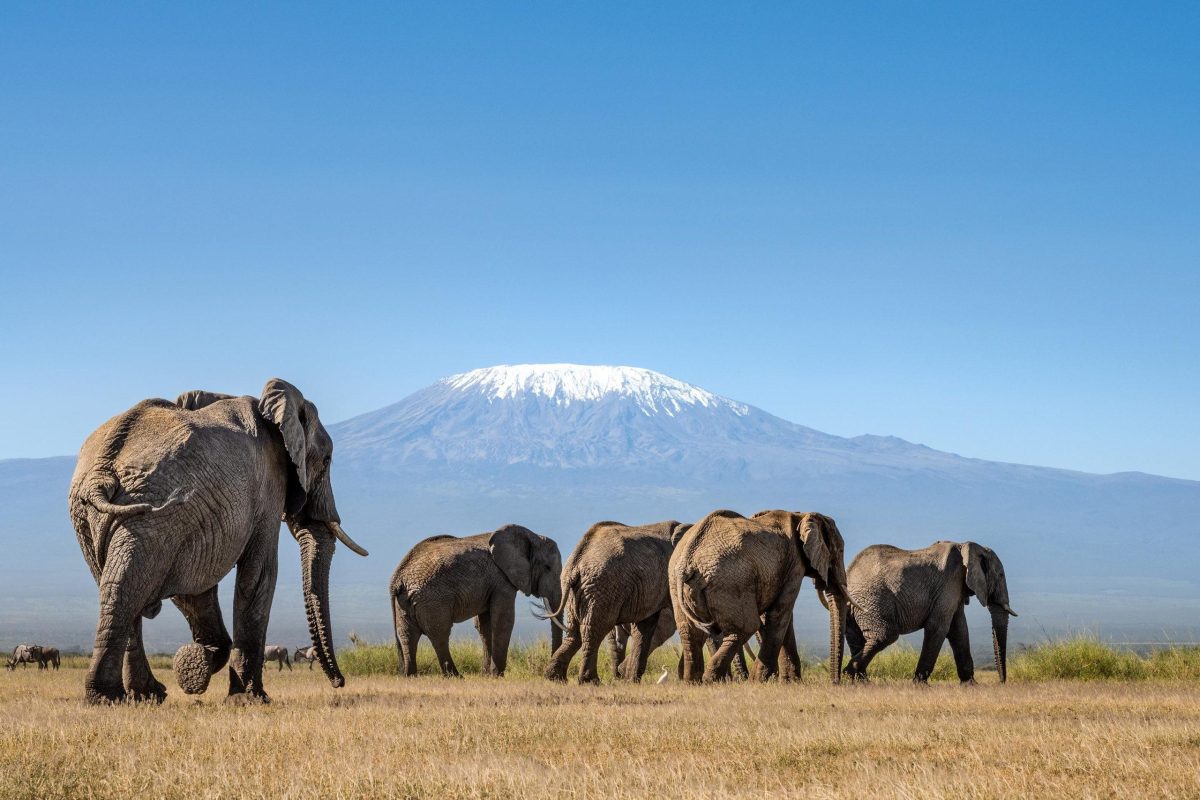
    The flight to Amboseli takes approximately 45–50 minutes, skirting the edge of the Rift Valley and descending toward the flat Amboseli basin. On a clear morning — and Amboseli mornings are frequently clear — Kilimanjaro fills the horizon as you approach the airstrip: a full, snow-capped volcanic cone rising 5,895 metres from the surrounding plains. It is an arrival that sets the register for the days ahead.

    Afternoon: First Game Drive

    After meeting your guide and checking into camp, take a short rest before your afternoon game drive — typically departing at 3:30–4:00 PM and running until just before dark, around 6:30 PM.

    Amboseli’s signature wildlife experience is its elephant herds — some of the largest and most studied in Africa. The park has been home to a long-term elephant research project for over five decades, meaning many of the elephants here have been observed and documented for generations. Your guide will know the family groups, the matriarchs, the young bulls. You will not simply see elephants in Amboseli; you will meet them.

    The late afternoon light in Amboseli — the elephants moving across cracked earth with Kilimanjaro glowing pink behind them — is one of the most photographed scenes in Africa. It deserves every frame.

    What else to look for on Day 1: Buffalo herds, zebra, wildebeest, giraffe, and the park’s healthy population of lions. Amboseli’s swamps (fed by underground water from Kilimanjaro) attract enormous concentrations of birds — over 600 species have been recorded — and the papyrus-fringed pools are worth time even if wildlife elsewhere is the priority.

    Evening: Sundowner and Camp

    Return to camp for a sundowner — gin and tonic, local Tusker beer, or fresh juice — as the light fades across the plains. Dinner under canvas or on an open deck. An early night. You have earned it.

    Recommended Amboseli Camps:

    • Mid-range: Tawi Lodge, Amboseli Serena Safari Lodge, Ol Tukai Lodge
    • Luxury: Tortilis Camp, Elewana Tortilis Camp, &Beyond Kichwa Tembo (sister property in Mara)

    Day 2: Amboseli — Full Immersion

    Dawn Game Drive

    Your guide knocks before sunrise. This is not negotiable and it is not a hardship — the hour before and after dawn in Amboseli is when the park belongs entirely to its animals, and to you.

    Depart camp by 6:00–6:15 AM. The light is horizontal and golden, the air cool, and the wildlife at its most active. Lions may still be finishing a night’s hunt; cheetahs begin scanning the open plains for prey; elephants move from the swamps toward higher ground. This is the game drive that justifies early nights.

    Morning: Observation Hill and Swamp Exploration

    After a bush breakfast — brought by your guide to a scenic spot in the park — spend the late morning at Observation Hill, the only point in Amboseli where you are permitted to leave your vehicle and walk. The 360° view across the park, the swamps, the elephant herds below, and Kilimanjaro above is Amboseli’s defining panorama. Take your time here.

    Spend the remainder of the morning exploring the Enkongo Narok swamp — a permanent water source that draws extraordinary concentrations of wildlife. Hippos wallow in large pools; African fish eagles call from fever trees; yellow-billed storks wade through the shallows; and buffalo herds move through the papyrus in slow, purposeful columns.

    Midday: Rest at Camp

    Return to camp for a late brunch and a proper midday rest. Between 11:00 AM and 3:00 PM, the African sun is at its most intense, wildlife rests in shade, and the most sensible thing a safari traveller can do is follow their lead. Sleep. Read. Sit on your tent deck. This rhythm — two game drives framing a midday rest — is one of the things that makes safari feel genuinely restorative rather than exhausting.

    Afternoon: Predator Focus

    The afternoon drive — departing 3:30–4:00 PM — centres on Amboseli’s resident predators. The park has healthy lion and cheetah populations, and your guide will be tracking sightings from the morning radio network. Leopard are present but elusive; any sighting is a genuine gift.

    Before the return to camp, your guide will find a spot for sundowners in the bush — vehicle stopped, engine off, drinks poured, the silence of the plains settling around you. This is the moment many guests describe as their first true understanding of what a safari is.

    Day 3: Amboseli → Maasai Mara

    Morning: Final Amboseli Drive

    One last early morning game drive in Amboseli before your departure. Keep expectations relaxed — this is a bonus hour, not a day’s work. But Amboseli has a habit of producing its finest sightings on departure mornings, as if the park knows you are leaving.

    Return to camp for a full breakfast, pack your bags (soft-sided bags only for charter flights — maximum 15 kg per person), and transfer to the Amboseli airstrip for your 11:00–12:00 AM departure to the Maasai Mara.

    Midday: Into the Mara

    The charter flight from Amboseli to the Maasai Mara takes approximately 55 minutes, crossing the floor of the southern Rift Valley and arriving over the vast tawny plains of the Mara from the air — which gives you your first real sense of its scale. The Mara stretches in every direction, broken by the silver thread of the Mara River, scattered acacia lines, and the dark moving shapes of wildlife below.

    Land at your camp’s dedicated airstrip, meet your Mara guide, and transfer directly to your accommodation for lunch and a short rest.

    Afternoon: First Mara Game Drive

    No safari visitor experiences the Mara and feels nothing. The density of wildlife here — the sheer number of animals visible from any elevated point in the reserve — is unlike anywhere else in Africa.

    Your first afternoon drive should be exploratory: orient yourself to the landscape, locate the resident lion prides your guide has been tracking, find the cheetah coalition that territories this area of the Mara. Let the first drive be wide rather than deep. There is time.

    During July–October: Your guide will take you to the Mara River on this first afternoon drive to assess crossing activity. The wildebeest mass on both banks in their tens of thousands. The crossing itself — if it happens — is one of wildlife’s great spectacles. But it cannot be predicted or guaranteed. The wildebeest decide. Your guide reads the signs. You wait, attentively.

    During other months: Resident wildlife in the Mara is exceptional year-round. The migration is a bonus, not the full story — the big cat density, the elephant herds, the buffalo and giraffe and a cast of supporting wildlife that most national parks would consider headline acts, is present in all seasons.

    Recommended Maasai Mara Camps:

    • Mid-range: Mara Serena Safari Lodge, Fig Tree Camp, Governors’ Il Moran
    • Luxury: Angama Mara, Mahali Mzuri, Sanctuary Olonana, Rekero Camp, Cottar’s 1920s Camp
    • Conservancy (most exclusive): Naboisho Camp, Basecamp Masai Mara, Ol Seki Hemingways, Mara Plains Camp

    Day 4: Maasai Mara — The Full Day

    This is the day the Maasai Mara delivers everything it has promised.

    Dawn: The Mara at First Light

    Depart camp at 5:45–6:00 AM — as early as your camp permits — and drive into the reserve as the light breaks. The Mara at dawn is a different world from any hour that follows: mist sits in the valleys, lions may still be visible from a night hunt, and the plains are alive with movement before the heat arrives.

    Spend the first two hours following your guide’s leads — checking in with resident lion prides, scanning for cheetah on termite mounds, working the riverine forest edges for leopard. The Maasai Mara has more resident leopards than most people realise; sightings are more common here than in many larger parks.

    Morning: The River and the Herds (July–October)

    If you are visiting during the migration window, mid-morning is the time your guide will position you at the Mara River crossing points. This requires patience — real patience, sometimes hours of it — but the experience of watching the first wildebeest step toward the bank, the herd building behind them, the crocodiles repositioning in the water below, and then the explosive, thundering panic of the crossing itself is something that cannot be replicated in any other medium.

    The crossing lasts minutes. The memory lasts a lifetime.

    Midday: Optional Hot Air Balloon Safari

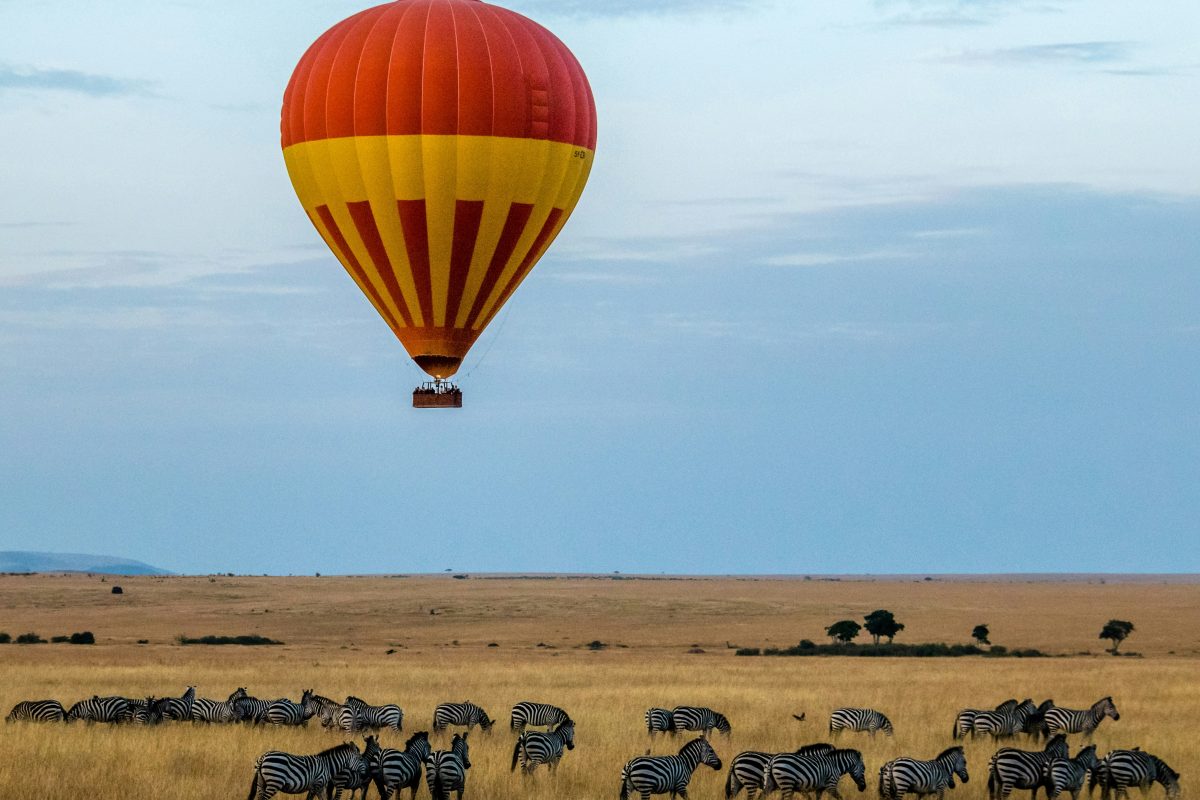
    For those who booked in advance, a hot air balloon safari over the Maasai Mara is the morning’s alternative — or the perfect addition to a river morning if the crossing happened early. Balloons launch at dawn and drift for approximately one hour above the plains, with a champagne bush breakfast on landing. The aerial perspective — the scale of the migration from above, the sinuous Mara River, the endless plains — is completely different from anything seen from a vehicle and worth every cent of the approximately $500–$600 per person cost. See our Balloon Safari Cost Guide for the full breakdown.

    This must be pre-booked; confirm with your operator before departure.

    Afternoon: Big Cat Focus

    The Maasai Mara’s afternoon drives centre on what the reserve does better than almost anywhere else: big cat watching. Your guide will position the vehicle for the best light and angles — watching a cheetah stalk through the grass as the sun drops toward the Mara horizon is the kind of scene that makes wildlife photographers weep with gratitude.

    The Mara big cat roster:

    • Lions: Multiple resident prides; some of Africa’s most studied and photographed individuals
    • Cheetah: Several resident coalitions and females with cubs in good years
    • Leopard: Present and increasingly visible, particularly in riverine woodland
    • Serval: Often seen in the tall grass at dusk — exquisite and underappreciated

    End the day with a sundowner on the plains — your guide will find a spot with a view that stretches uninterrupted to the horizon. The Mara sunset turns the sky colours that feel implausible from a distance.

    Day 5: Final Dawn Drive → Nairobi Departure

    Dawn: Last Hour in the Bush

    Your final morning game drive is always, somehow, emotional. The Mara at dawn on your last day is the same as it was on your first — the lions do not know you are leaving, and the plains do not pause — but you see it differently now.

    Depart camp at 6:00 AM for a final two-hour drive before returning for breakfast and the transfer to the airstrip. Ask your guide to take you somewhere particular — a favourite viewpoint, a tree where the fig-tree figs are ripe and the birds are congregating, a stretch of river they love. Let the last hour be theirs to choose.

    Midday: Return to Nairobi

    Your charter flight departs the Mara airstrip between 10:00 and 11:00 AM, landing at Wilson Airport Nairobi approximately 45 minutes later.

    If your international departure is in the evening, Nairobi offers a half-day of options:

    • Giraffe Centre — Feed endangered Rothschild’s giraffes from an elevated platform; one of Nairobi’s most genuinely enjoyable visitor experiences ($10 entry)
    • David Sheldrick Wildlife Trust — The world’s most successful elephant orphan rescue programme, open for public visiting 11 AM–12 PM daily; moving and worth the time
    • Karen Blixen Museum — The restored home of Out of Africa author Isak Dinesen, in the leafy suburb of Karen; a gentle, beautiful way to spend an afternoon
    • Lunch in Karen or Westlands — Nairobi has an excellent restaurant scene; ask your operator for a current recommendation

    Transfer to JKIA for your international departure.

    Practical Information

    What to Pack

    • Neutral colours — khaki, olive, tan, sand. Avoid white (dust) and bright colours (disturbs wildlife)
    • Layers — mornings and evenings in the Mara can be surprisingly cool (14–18°C); midday is warm (28–32°C)
    • Wide-brimmed hat and high-SPF sunscreen
    • Binoculars — 8×42 or 10×42 are ideal; your guide will have a vehicle pair but your own transforms the experience
    • Camera with a telephoto lens if photography matters to you; most modern smartphone cameras perform well in good light
    • Small day bag for game drives; soft-sided main luggage only for charter flights (max 15 kg)
    • Insect repellent containing DEET; apply at dawn and dusk
    • Personal medication including antimalarials (prescribed before departure), antihistamines, and any regular prescriptions
    • Power bank — camps charge devices but outlets may be limited

    Budgeting

    Component Budget Estimate Per Person
    International flights (return) $800–$1,800
    Internal charter flights $480–$600
    Accommodation (5 nights, full board) $1,200–$4,000+
    Park and conservancy fees $600–$900
    Visa + travel insurance $120–$180
    Tips $175–$250
    Optional hot air balloon $550–$600
    Total (mid-range, excl. balloon) $3,500–$7,000
    Total (luxury, excl. balloon) $8,000–$15,000+

    See our full Kenya Safari Cost Guide for a detailed breakdown of every line item.

    Extending Your Safari

    Five days leaves you wanting more. Here is how to extend this itinerary sensibly:

    +2 nights Laikipia Plateau (between Nairobi and the Mara): Kenya’s most underrated wildlife destination. Private conservancies, rhino tracking, night game drives, and extraordinary landscapes. Fly from Wilson Airport; flight time approximately 50 minutes.

    +3 nights Zanzibar (post-safari beach extension): Fly Nairobi to Zanzibar (1h 45m direct). White sand, turquoise water, Swahili architecture, and spice farms. The classic Kenya–Zanzibar combination is one of East Africa’s finest two-part journeys.

    +2 nights Samburu National Reserve: North of Nairobi, Samburu is drier, more dramatic in landscape, and home to the “Samburu Special Five” — Grevy’s zebra, reticulated giraffe, Somali ostrich, Beisa oryx, and gerenuk — species found nowhere else in Kenya’s main circuit.

    Why Book This With Pride of Africa

    This itinerary is one we know in detail — every airstrip, every camp, every guide, every season. We do not book trips we have not experienced. When you travel with Pride of Africa Adventures & Safaris, every transfer is confirmed, every lodge briefed on your preferences, and every guide selected for their knowledge of the specific area you are visiting.

    We handle every detail so that by the time you board your first charter flight, the only thing left for you to do is look out of the window.

    Day-by-day timings are indicative and adjusted based on season, wildlife activity, and your camp’s specific game drive schedules. All itineraries are confirmed in detail prior to departure. Internal flight schedules are subject to aviation authority and charter operator availability.

    Written by the Pride of Africa Adventures & Safaris travel team — Kenya safari specialists with extensive on-the-ground experience across all major destinations.

    Book This 5-Day Itinerary
    Request a Custom Kenya Safari Quote
    Browse All Kenya Safari Packages

  • Rwanda Gorilla Trekking Permits: Everything You Need to Know

    Rwanda Gorilla Trekking Permits: Everything You Need to Know

    There are roughly 1,000 mountain gorillas left on earth. They exist in a single contiguous range straddling the borders of Rwanda, Uganda, and the Democratic Republic of Congo — and nowhere on the planet can you get closer to wild great apes than in the mist-draped volcanic forests of Rwanda’s Volcanoes National Park.

    A gorilla trekking permit is the document that makes it possible. It is also, at $1,500 per person, one of the most expensive single-day wildlife experiences in Africa. And it is worth every dollar.

    This guide tells you exactly what a gorilla trekking permit covers, how to get one, when to go, and how to plan a trek that goes far beyond the hour with the gorillas — because Rwanda, it turns out, is a country that rewards those who stay longer and look deeper.

    What Is a Gorilla Trekking Permit?

    A gorilla trekking permit is an official authorization issued by the Rwanda Development Board (RDB) that grants you access to one of the habituated gorilla families in Volcanoes National Park for a single trekking experience. It is the only legal way to visit mountain gorillas in Rwanda.

    Each permit covers:

    • Entry into Volcanoes National Park on your assigned date
    • Assignment to a specific habituated gorilla family group
    • A professional RDB guide for the duration of the trek
    • One hour with the gorilla family once located — this is the internationally agreed limit, designed to protect the animals from prolonged human contact and stress
    • An armed ranger escort for security in the forest

    Each permit does not cover: accommodation, transport to the park, porters (recommended and hired separately), meals, or any other activity.

    How Much Does a Rwanda Gorilla Permit Cost?

    $1,500 USD per person per trek — this is the current Rwanda gorilla trekking permit price, set by the Rwanda Development Board and fixed regardless of nationality, season, or group size.

    Rwanda’s permit is the most expensive gorilla permit in the region. Uganda’s Bwindi Impenetrable Forest permits cost $700 per person, and DRC permits are lower still. Rwanda made a deliberate decision to position itself as a premium, low-volume, high-conservation-value destination — and the strategy has worked. Revenue from permits funds anti-poaching operations, ranger salaries, community development programmes, and gorilla veterinary care directly.

    When you buy a Rwanda gorilla permit, you are not paying for an experience. You are investing in the continued existence of one of the world’s most endangered primates. That framing shifts something when you hold the permit in your hand.

    Is the Rwanda Permit Worth the Extra Cost Over Uganda?

    Honestly — yes, for most travellers. Here is why:

    Rwanda offers a dramatically shorter and better-organised trekking experience. Volcanoes National Park is small and well-managed; the habituated gorilla families are among the most researched in the world; the infrastructure around the park (roads, lodges, logistics) is exceptional; and Rwanda as a country is extraordinarily clean, safe, and easy to navigate. Kigali is one of Africa’s most pleasant capital cities.

    Uganda’s Bwindi permit at $700 saves you $800 per person. But Uganda requires longer internal travel times, rougher roads, and a more remote logistical setup. For travellers who want to combine gorilla trekking with Uganda’s broader safari circuit (Queen Elizabeth, Murchison Falls, chimpanzee tracking), Uganda makes obvious sense. For travellers who want gorillas as the centrepiece of a short, high-quality East Africa trip, Rwanda is the superior choice.

    Both are extraordinary. Neither is wrong.

    How Many Gorilla Trekking Permits Are Available Each Day?

    Volcanoes National Park currently has 12 habituated gorilla families open to tourism, with a maximum of 8 visitors per family per day. That gives a theoretical maximum of 96 permits per day — though in practice, not all families are available every day, and the number fluctuates based on family health, weather, and ranger assessments.

    This is a deliberately small number. It is one of the reasons gorilla trekking in Rwanda feels so different from mass wildlife tourism. You will share your gorilla hour with seven other people maximum. In many cases, with fewer.

    The scarcity also means permits sell out. Particularly between June–September and December–February (the two peak seasons), permits can be fully booked 6–12 months in advance. This is not marketing language. It is a practical reality that catches unprepared travellers out regularly.

    Book your permit the moment your travel dates are confirmed. Everything else in your Rwanda itinerary can be arranged around it.

    How to Book a Rwanda Gorilla Trekking Permit

    There are two ways to secure a permit.

    Option 1: Book Directly Through the Rwanda Development Board

    The RDB operates an online booking platform where individuals can purchase permits directly:

    • Website: booking.rdb.rw
    • Payment accepted via credit card (Visa/Mastercard)
    • Permits are issued as digital documents; print a copy and carry it on trek day
    • You will need to specify your preferred date; family group assignment is done by RDB on the day of the trek based on group composition, physical ability, and availability

    Direct booking works well for independent travellers who are managing their own Rwanda logistics end-to-end.

    Option 2: Book Through a Licensed Tour Operator (Recommended)

    For most international visitors — particularly those combining gorilla trekking with a broader Kenya, Tanzania, or Uganda safari — booking through a licensed East Africa tour operator is strongly recommended.

    A reputable operator will:

    • Secure your permit as part of the broader itinerary (removing the risk of date mismatches between your flights, accommodation, and trek date)
    • Handle the full logistics: Kigali airport transfers, accommodation in and around Volcanoes National Park, internal flights or road transfers, and park entry
    • Brief you thoroughly on what to expect, what to wear, and how to behave with the gorillas
    • Provide a contingency plan if your trek date is affected by weather or family unavailability
    • Ensure your porter is arranged and your guide briefed on any physical considerations

    Operators typically add a service margin on top of the permit cost, which is standard and transparent in reputable operations.

    When to Go: Best Time for Gorilla Trekking in Rwanda

    Gorilla trekking in Volcanoes National Park operates year-round. Mountain gorillas do not migrate or hibernate; they are in the forest every day of the year. But conditions vary significantly by season.

    June – September (Peak Dry Season) — Best Overall

    The long dry season brings the most reliable trekking conditions — firm trails, clearer visibility through the forest, and the best light for photography. This is also when gorilla families tend to forage at lower altitudes, making treks shorter and less physically demanding on average.

    This window overlaps with Kenya’s Great Migration peak (July–October), making a Rwanda–Kenya combined itinerary in this period one of East Africa’s finest journeys.

    Book permits 9–12 months in advance for June–September.

    December – February (Short Dry Season) — Excellent

    Rwanda’s shorter dry season brings similarly good conditions — firm trails, manageable weather, and gorilla families often found at accessible altitudes. December and January permit availability fills quickly because of the holiday travel surge.

    Book permits 6–9 months in advance for December–February.

    March – May (Long Rains)

    The long rains bring lush, emerald-green forest and dramatically fewer tourists — permit availability is much easier in this window. The trade-offs: trails are muddy and slippery, vegetation is dense (reducing sightings slightly), and rain during the trek itself is likely. Gorilla encounters are still extraordinary; the conditions are simply more demanding.

    Lodge rates in the Volcanoes area drop meaningfully during the long rains — potentially offering 20–30% savings on accommodation costs.

    October – November (Short Rains)

    Similar to the long rains in character but shorter and less intense. A reasonable shoulder season choice for travellers with flexibility and a tighter budget.

    What to Expect on Trek Day

    The Night Before

    Gorilla trekking briefings are held the evening before your trek at the Kinigi Park Headquarters near Musanze town. Attendance is mandatory. Your guide will explain the rules, assign your family group, and give you a physical assessment to match trekking difficulty to ability. Confirm with your accommodation what time to depart for the briefing — allow at least 30 minutes’ drive from most Volcanoes-area lodges.

    Trek Morning

    Arrive at park headquarters by 7:00–7:30 AM. Trekking begins at approximately 8:00 AM after a final briefing and group assembly. Porter hire ($15–$20, strongly recommended) is arranged here.

    The Trek Itself

    Trekking time to the gorilla family varies enormously — from 30 minutes to 6 hours depending on where the family has moved and the terrain covered. The average is 2–4 hours of hiking each way. Trails climb through bamboo forest, hagenia woodland, and Afro-alpine heath across volcanic slopes that reach 4,500 metres at their highest points.

    Physical demands: Moderate to strenuous. You do not need to be an athlete, but you should be comfortable hiking uphill on uneven terrain for several hours at altitude. A good level of general fitness and appropriate footwear (ankle-supporting hiking boots) make a significant difference. If you have any physical concerns, discuss them with your operator in advance — some family groups are accessible at lower altitudes than others.

    What to wear:

    • Long-sleeved shirt and long trousers (mandatory — protects against nettles, insects, and skin contact with vegetation)
    • Waterproof jacket or poncho (conditions change rapidly in the Virungas)
    • Ankle-supporting waterproof hiking boots — the single most important gear item
    • Gardening gloves for grabbing vegetation on steep sections (optional but widely recommended)
    • Gaiters if you own them
    • Neutral or dark colours — gorillas are not disturbed by colour, but camouflage feels right

    Meeting the Gorillas

    When your guide signals, approach quietly and follow their instructions precisely. You will first hear the gorillas before you see them — a deep, rhythmic belch vocalization that gorillas use as a contact call, and the sound of vegetation moving.

    Then you see them.

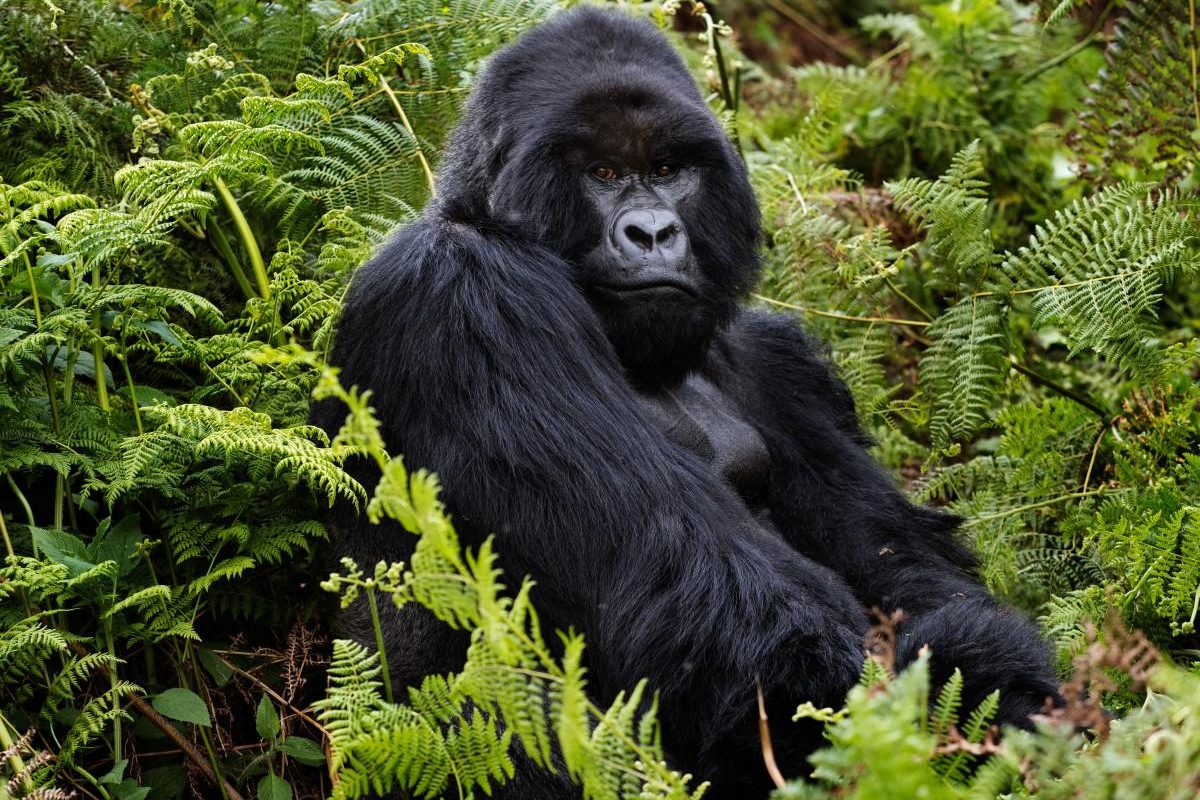
    A silverback at close range — and close range in gorilla trekking means 7 metres, the minimum permitted approach distance — is one of the most profound wildlife encounters a human being can have. The scale of the animal. The deep intelligence in the eyes. The ease and authority with which a 200-kilogram silverback moves through dense forest. The casual curiosity of a juvenile investigating a new group of strange, upright visitors.

    You have 60 minutes with the family. Your guide will manage time and distance. Flash photography is strictly prohibited. Eating, drinking, and smoking near the gorillas is prohibited. If a gorilla approaches closer than 7 metres — and juveniles sometimes do, out of curiosity — crouch, look down, and do not run. Follow your guide’s signals.

    The hour will feel like ten minutes.

    After the Trek

    Return to park headquarters. Certificates are issued to every trekker as a memento of the experience. Take the afternoon gently — the descent is often harder on the legs than the ascent, and altitude fatigue is real. Most Volcanoes-area lodges are set up perfectly for a quiet afternoon recovery: open fires, steam rooms, cold drinks, and views across the volcanoes.

    The 12 Habituated Gorilla Families

    Each habituated gorilla family in Volcanoes National Park has a name, a history, and a distinct personality shaped by decades of interaction with researchers and trackers. Some of the most visited and well-known families include:

    Susa Group — One of the largest and most studied families, made famous by Dian Fossey’s research. Located at higher altitude (4,200m+), making this trek longer and more demanding. Rewards: exceptional family size and extraordinary photographic opportunities.

    Amahoro Group — “Amahoro” means peace in Kinyarwanda, and this family lives up to the name. Calm, relaxed with human presence, and accessible at moderate altitude. Frequently recommended for older or less physically confident trekkers.

    Sabyinyo Group — Lives in relatively accessible terrain near the base of Mount Sabyinyo. One of the shorter treks on average, with a charismatic silverback known for his relaxed temperament around visitors.

    Kwitonda Group — A larger family that originally migrated from the DRC. Located in lower-altitude forest, making treks generally manageable. The name means “humble one” — the silverback is known for his composed, dignified presence.

    Hirwa Group — A younger family formed when individuals split from other groups. Contains twins — a rarity in mountain gorillas and a genuine privilege to witness.

    Family assignment is made by RDB rangers on the morning of your trek based on family location, group fitness, and balancing visitor numbers. You cannot specifically request a family at time of booking, though operators with established RDB relationships sometimes facilitate preferences for guests with specific physical needs.

    Beyond the Trek: What Else Rwanda Offers

    A gorilla permit covers one hour in one forest on one morning. Rwanda, if you let it, offers far more.

    Kigali — An Underrated City

    Rwanda’s capital is clean, ordered, green, and surprisingly sophisticated. The Kigali Genocide Memorial is a deeply important and moving experience — visiting it before your gorilla trek adds context to Rwanda’s extraordinary modern story. The city’s restaurant scene, craft market, and art galleries have developed rapidly over the past decade. Spend at least one night here.

    Golden Monkey Trekking

    Volcanoes National Park is home to a second primate experience: golden monkey trekking. These vivid, gregarious primates move in large, fast groups through the lower-altitude bamboo forest. A golden monkey permit costs $100 per person and can be combined with gorilla trekking on consecutive days or even on the same day (morning gorilla trek, afternoon golden monkey). It is frequently underbooked relative to gorilla trekking and represents outstanding value.

    Dian Fossey’s Karisoke Research Centre

    For those with a deep interest in gorilla conservation, the hike to Dian Fossey’s grave and the original Karisoke Research Centre site is one of Rwanda’s most powerful experiences. The Dian Fossey Gorilla Fund operates the centre and offers guided hikes to the site. This is not a tourist attraction — it is a place of pilgrimage for anyone who cares about wildlife and conservation.

    Lake Kivu

    A two-hour drive south of Volcanoes National Park, Lake Kivu is one of Africa’s Great Lakes — a vast, calm expanse of blue water fringed by steep green hills and small fishing villages. Lakeside lodges at Kibuye (now Karongi) and Gisenyi offer a gentle end to a Rwanda trip. Kayaking, boat trips, and simply sitting watching the light change across the water are the activities here. It is a perfect decompression after the intensity of the forest.

    Rwanda–Kenya or Rwanda–Uganda Combined Itineraries

    Rwanda combines naturally with Kenya and Uganda for a comprehensive East Africa journey. The most popular combination:

    Classic East Africa: Nairobi → Maasai Mara (3–4 nights) → Kigali → Volcanoes National Park (2–3 nights) → Kigali departure. Total: 8–10 days. Two of the continent’s greatest wildlife experiences in a single logical circuit.

    Practical Information

    Getting to Volcanoes National Park

    Fly into Kigali International Airport (KGL). Multiple airlines serve Kigali: RwandAir, Ethiopian Airlines, Kenya Airways, Brussels Airlines, Qatar Airways, and KLM among them.

    From Kigali, Volcanoes National Park is a 2.5–3 hour drive northwest via Musanze (formerly Ruhengeri). The road is well-surfaced and straightforward. Most visitors hire a vehicle and driver through their operator — self-drive is possible but less practical given the early trek departures.

    Alternatively, some operators offer a domestic flight from Kigali to an airstrip near Musanze, cutting travel time significantly. Confirm availability at time of booking.

    Accommodation Near Volcanoes National Park

    The lodge scene around Volcanoes National Park has grown dramatically in quality over the past decade. Options range from comfortable mid-range to genuinely world-class:

    Mid-range: Mountain Gorilla View Lodge, Le Bambou Gorilla Lodge, Virunga Lodge (mid-tier rooms)

    Luxury: Bisate Lodge (andBeyond — extraordinary eco-design, exceptional service), Singita Kwitonda Lodge (ultra-luxury, six suites), Virunga Lodge (classic views across the volcanoes), One&Only Gorilla’s Nest

    Most lodges include dinner and breakfast; confirm inclusions at time of booking.

    Health and Entry Requirements

    • Visa: Rwanda offers visa on arrival for most nationalities, or an e-visa at visas.gov.rw ($50 per person for most nationalities). East African citizens enter visa-free.
    • Yellow Fever: Vaccination certificate required for travellers arriving from yellow fever endemic countries
    • Malaria: Rwanda is a malaria zone; take antimalarial prophylaxis as prescribed by your doctor
    • Gorilla health protocol: Visitors with colds, flu, or any respiratory illness should not trek — mountain gorillas are highly susceptible to human respiratory diseases. If you are unwell on trek day, RDB rangers will prevent you from entering the forest. Travel insurance covering permit cost in event of illness is strongly recommended.
    • Minimum age: 15 years for gorilla trekking

    Tipping

    • RDB guide: $20–$30 per person
    • Porter: $10–$15 per person
    • Trackers (if present): $5–$10 per person
    • Budget approximately $40–$55 per person in tips for a gorilla trekking day

    The Numbers That Put Everything in Context

    1,000 mountain gorillas remain on earth. That is the entire global population — every individual, in a single forest range. The population was closer to 250 in the 1980s; it has grown back from the edge of extinction through exactly the kind of conservation funding that gorilla tourism permits generate.

    When you pay $1,500 for a Rwanda gorilla permit, approximately 10% goes directly to local communities surrounding the park — in the form of schools, health clinics, and infrastructure. Rangers, trackers, guides, lodge staff, porters, drivers: an entire local economy is built on the continued existence of 1,000 mountain gorillas in three countries’ forests.

    The hour you spend with a gorilla family is not a transaction. It is participation in something larger than a holiday.

    That is the honest reason this experience is worth what it costs.

    Plan Your Rwanda Gorilla Trek With Pride of Africa

    We arrange Rwanda gorilla trekking permits as part of combined East Africa itineraries — typically paired with a Kenya safari, a Uganda chimpanzee experience, or both. We handle permit procurement, lodge booking, airport transfers, and every logistical detail between destinations.

    If you know your travel dates, contact us now. Permit availability moves quickly, and the best lodges fill months ahead of the dry season windows.

    Gorilla permit prices are set by the Rwanda Development Board and subject to change without notice — always confirm current rates before booking. All permits are non-refundable once issued; travel insurance covering permit cost in event of illness or cancellation is strongly recommended.

    Written by the Pride of Africa Adventures & Safaris travel team — East Africa safari specialists operating across Kenya, Tanzania, Rwanda, and Uganda.

    Book a Rwanda Gorilla Trekking Permit
    Request a Combined Kenya & Rwanda Itinerary
    Speak to an East Africa Safari Specialist

  • Private Guided Safari in Amboseli: The Complete Guide

    Private Guided Safari in Amboseli: The Complete Guide

    There is a moment that happens on nearly every private guided safari in Amboseli. Your vehicle has stopped on the open pan, engine off. A family of elephants — fourteen, perhaps fifteen individuals — moves in a slow diagonal across the cracked earth thirty metres away. The matriarch leads. A calf, days old, stumbles close to its mother’s legs. Behind them, framed so perfectly it feels staged, Kilimanjaro fills the horizon from base to summit, the snow catching the early light.

    Your guide says nothing. There is nothing to say.

    That moment — unhurried, unshared, unscheduled — is what a private guided safari in Amboseli delivers that no group tour can replicate. Not because the wildlife is different. Not because the park changes. But because you are there on your own terms, in your own vehicle, with a guide whose entire focus is your experience and no one else’s.

    This is the guide to planning that experience.

    Why Amboseli for a Private Safari?

    Amboseli National Park sits in southern Kenya, on the border with Tanzania, at the foot of Africa’s highest mountain. It covers approximately 392 km², compact by East African standards, which matters. In Amboseli, you are never far from wildlife. There are no vast empty stretches to cross before the action starts.

    What Amboseli offers, specifically and uniquely, is this:

    The elephant population. Amboseli’s elephants are among the most studied in the world — the long-term Amboseli Elephant Research Project, begun in 1972 by Cynthia Moss, has documented every individual and every family across more than five decades. The elephants here are not merely present; they are known. Your guide can introduce them by family, by matriarch, by the calves born in the last season. That depth of knowledge transforms a wildlife encounter into something closer to an introduction.

    The Kilimanjaro backdrop. No other park in Kenya — possibly no other park in Africa — offers wildlife viewing against a backdrop of this scale. On clear mornings (and Amboseli mornings are frequently clear, particularly between June and October), Kilimanjaro dominates the southern horizon with an authority that photographers and non-photographers alike find genuinely disorienting. The mountain is so large, so close, and so unexpected that it takes time to accept as real.

    The open terrain. Amboseli’s landscape is a mosaic of open pan, dust bowl, acacia woodland, and permanent papyrus swamp — all within a small, navigable area. The openness delivers exceptional wildlife visibility. No vegetation barrier between you and the animals. What happens, happens in full view.

    The intimacy. Amboseli is not the Maasai Mara in terms of sheer wildlife volume. It is quieter, more contemplative, and — particularly on a private safari — remarkably uncrowded outside the main lodge areas. You can spend a morning with an elephant family and see no other vehicle.

    Private vs Group Safari: What Is the Actual Difference?

    This is worth addressing directly because the gap is larger than most first-time safari visitors anticipate.

    A group safari (shared vehicle):

    • 6–8 passengers per vehicle, often from different countries with different interests and photography requirements
    • Game drives depart and return on fixed schedules; the vehicle returns when the majority want to leave, not when you do
    • Stops are determined by group consensus — the couple in the back who have seen enough lions want to move on; you want to stay
    • Your guide manages multiple guests with different levels of knowledge, different questions, and different expectations simultaneously
    • Seating position in the vehicle is shared and rotated — window access varies
    • Cost per person is lower

    A private guided safari:

    • You, your travel companion(s), and your guide — no one else
    • Game drive timing is entirely your own: leave earlier, stay later, extend a sighting for as long as you want
    • Your guide is focused entirely on you — your interests, your photography setup, your questions, your pace
    • You stop where you want, for as long as you want, and move when you are ready
    • The vehicle is yours: every window seat, every roof hatch, every angle is accessible
    • Your guide can explain, teach, interpret, and narrate without managing competing interests
    • Cost per person is higher — but split between two or four people, the gap narrows considerably

    The practical result: private safari game drives routinely produce richer sightings, more relaxed encounters, and more complete experiences than shared vehicles covering identical terrain. The guide’s undivided attention is the multiplier.

    What a Private Guided Safari in Amboseli Actually Looks Like

    Day One: Arrival

    Your charter flight from Wilson Airport, Nairobi lands at Amboseli’s airstrip in approximately 45–50 minutes. Your private guide meets you at the strip — this is the first meeting, and it matters. A good private guide introduces themselves not with a script but with a question: What are you hoping to see? What would make this trip extraordinary for you?

    That conversation shapes everything that follows.

    The drive from the airstrip to your camp is your first game drive, even if no one calls it that. Your guide is already reading the landscape — the direction a dust column is moving, the posture of a giraffe on the tree line, the particular quality of the light on the pan. They are already working.

    After settling in, a late lunch and a short rest before your first proper game drive — departing around 3:30 PM and running until the park’s closing time near dusk.

    The Dawn Drive

    The alarm sounds at 5:15 AM. The Amboseli dawn is cold — genuinely cold, particularly between June and September — and the sky is that specific deep blue that exists only in the twenty minutes before sunrise. Your guide has the vehicle warm and waiting.

    You drive into the park in near-darkness, arriving at the areas your guide scouted the previous evening before the light fully breaks. When it does — when the first horizontal light catches the dust raised by an elephant herd moving from the swamp to the open pan, and Kilimanjaro appears above the mist in the south — you understand immediately why you set the alarm.

    The first two hours of a private dawn drive in Amboseli are the finest two hours the park offers. Lions finishing a night, cheetah scanning from termite mounds, elephants in the golden light, a thousand birds beginning to call across the swamp. Your guide is narrating softly — not performing, but sharing knowledge in the way that a person who genuinely loves a place shares it with someone they want to understand it.

    The Extended Elephant Encounter

    On a shared game drive, a thirty-minute elephant sighting is generous. On a private safari, your guide can sit with a family for as long as the encounter rewards it — which, in Amboseli, is often very long indeed.

    Your guide knows these families. They can tell you which matriarch leads this group, what her history is, whether the calf running between the adults is male or female, how old it is, and what the rumbling vocalization you can feel as much as hear actually means in elephant communication. The encounter moves from observation to understanding. That is the difference a private guide makes.

    Bush Breakfast

    One of the signature private safari moments in Amboseli: your guide pulls the vehicle to a stop on a rise overlooking the swamp, kills the engine, and produces a breakfast — flasks of coffee and tea, fruit, fresh bread, eggs — laid on the vehicle bonnet or a portable table in the bush. No camp dining room. No other guests. Just the swamp, the elephants, the birds, and the mountain.

    This is not a logistical detail. It is the kind of experience that people talk about for years.

    Observation Hill

    Amboseli’s Observation Hill is the only point in the park where your vehicle stops and you get out. A short walk to the summit delivers a 360° panorama — the swamps, the open pan, the elephant herds below moving like slow ships through still water, Kilimanjaro above. Your guide walks with you and explains what you are looking at: the hydrology of the swamp system fed by underground water from Kilimanjaro’s glaciers, the territories of the resident lion prides, the direction the wind is carrying the herds.

    The view from Observation Hill at first light or late afternoon is one of the finest in Kenya.

    Afternoon: Predator Focus

    Amboseli’s predator population — lions, cheetahs, and the occasional leopard — concentrates in the western areas of the park and along the swamp edges. Your private guide uses the afternoon drive for a focused search, drawing on the morning’s radio network reports from other guides and rangers.

    On a private safari, if a cheetah is located and your guide knows the terrain, you can position the vehicle for optimal light before other vehicles arrive — because you set your own schedule. This is not a trivial advantage for wildlife photographers.

    Sundowner in the Bush

    Your guide finds a spot. Engine off. A cold drink appears from the vehicle’s cool box. The sky performs.

    Amboseli sunsets, with the mountain turning shades of pink and orange above the darkening plain, are among the most reliably spectacular in East Africa. On a private safari, the sundowner stop is wherever your guide judges the view and the light to be best that evening — not a fixed location shared with three other vehicles.

    Night at Camp

    Return to camp as dark falls. Dinner under canvas or on an open deck, a fire, the sounds of the bush at night — the hippos moving from the swamp, the distant whoop of a hyena, the extraordinary silence between. An early night. The alarm is set for 5:15 again. You will not resent it.

    Choosing Your Private Guide

    On a private Amboseli safari, your guide is the experience. Everything else — the camp, the vehicle, the food — sets the stage. The guide delivers the performance.

    What separates an exceptional private guide from a merely competent one:

    Depth of knowledge: An expert guide does not just identify species. They understand behaviour, ecology, territory, family history, and the interconnections between species that make a landscape live. They see things you do not — the subtle freezing of an impala that signals a predator nearby, the alarm calls of birds that tell a story from 300 metres away.

    Silence: The finest guides know when not to speak. They read the moment and understand that sometimes the most powerful thing a guide can do is let the encounter happen without narration. Novice guides fill silence; expert guides inhabit it.

    Adaptability: A private guide adjusts to you — your pace, your interest, your energy levels. They remember that you mentioned leopards at breakfast and spend the afternoon systematically working the riverine woodland where leopard are occasionally seen. They notice when you are photographically frustrated and reposition the vehicle without being asked.

    Local relationships: A guide who has worked Amboseli for years knows the rangers, the trackers, and the other guides. That network delivers real-time intelligence about wildlife movements that no app or radio scanner can replicate.

    At Pride of Africa Adventures & Safaris, every private guide we assign has extensive Amboseli experience and is personally known to our team. We do not assign guides from a pool we have never worked with.

    Best Lodges for a Private Safari in Amboseli

    Your camp is your base, your refuge between drives, and part of the experience itself. These are Amboseli’s finest properties for a private safari, at two tiers:

    Luxury

    Tortilis Camp — One of Amboseli’s most celebrated properties. Fourteen spacious tents set among yellow-barked acacia trees, with extraordinary Kilimanjaro views from the main area and most tents. The camp’s elevated position delivers one of the finest sunrise views in the park. All-inclusive options available. Exceptional guiding team.

    Elewana Tortilis Camp — Sister property managed under the Elewana Collection. Beautiful design, intimate scale, and an outstanding position in the private Kitirua Conservancy adjacent to the national park — providing after-dark driving rights and walking that the national park itself does not permit.

    ol Donyo Lodge — Technically in the Chyulu Hills rather than Amboseli proper but commands extraordinary views of both Kilimanjaro and the Amboseli ecosystem. Exceptionally designed, private plunge pools, and a riding safari option that is unique in the region. The wider Amboseli–Tsavo–Chyulu ecosystem visible from the lodge’s elevated position is one of Kenya’s most dramatic landscapes.

    Mid-Range

    Amboseli Serena Safari Lodge — Well-positioned within the park, consistently reliable service, and an excellent guiding team. The lodge’s waterhole attracts elephants regularly — sometimes at close range from the main terrace. Good value for the Amboseli circuit.

    Tawi Lodge — A family-owned property with a warm, personal feel that larger lodges cannot replicate. Set in its own private conservancy adjacent to Amboseli, with private game-viewing rights. The Tawi team has deep knowledge of the local elephant families.

    Ol Tukai Lodge — Centrally located within the park, offering excellent wildlife access and straightforward comfort. The main area’s views of Kilimanjaro are among the best of any lodge in Amboseli. A solid mid-range choice with good guide quality.

    When to Visit Amboseli on a Private Safari

    Amboseli rewards visits year-round, but two windows stand above the rest:

    June – October (Dry Season) — Best Overall

    The long dry season concentrates wildlife around the permanent swamps and water sources. Vegetation thins, making game viewing easier. Kilimanjaro is most reliably visible in the morning hours of this period. Dust in the afternoons can be significant — embrace it as part of the atmosphere rather than a frustration. This is Amboseli at its most cinematic.

    January – March (Short Dry Season) — Excellent

    The short rains finish in December, leaving the landscape lush and green into January and February. Wildlife is abundant, calves born in the wet season are still young, and the mountain can be clear in the mornings. February is one of the finest months in Amboseli, consistently underrated by travellers who concentrate on the Mara migration window.

    April – May (Long Rains)

    Rain makes the landscape beautiful but game viewing harder — thick vegetation reduces visibility, and some tracks become impassable after heavy rain. Elephant viewing remains excellent regardless. Permit availability is easy, lodge rates drop, and the park is nearly empty. A rewarding window for the experienced safari traveller.

    November – December (Short Rains)

    Unpredictable but often beautiful. Newborn wildlife, migrant birds arriving, and a landscape greening rapidly after the dry season. Rates are lower in November; December picks up again with holiday travellers.

    Combining Amboseli With Other Kenya Destinations

    Amboseli works best as part of a broader Kenya circuit. Here are the natural combinations:

    Amboseli + Maasai Mara (5–7 days): The classic Kenya safari. Amboseli delivers the elephant and mountain experience; the Mara delivers big cat density and the migration. These two parks complement each other perfectly and form the foundation of our most popular Kenya itinerary. See our 5-Day Kenya Safari Itinerary for a worked example.

    Amboseli + Tsavo East and West (5–6 days): Tsavo’s big red elephants, classic old-Africa feel, and enormous scale pair naturally with Amboseli’s intimacy and mountain backdrop. A road transfer between Amboseli and Tsavo takes approximately 2.5 hours on a good day — manageable and scenic.

    Amboseli + Chyulu Hills (4–5 days): The Chyulu Hills, rising between Amboseli and Tsavo, offer one of Kenya’s most atmospheric landscapes — ancient lava flows, cave systems, and private conservancy game viewing. Ol Donyo Lodge makes this combination seamless, sitting on the boundary between all three ecosystems.

    Amboseli + Diani Beach / Mombasa (6–8 days): Fly from Amboseli south to the coast. End the safari with three nights of Indian Ocean water and Swahili culture. This is the Kenya beach-and-bush combination at its most logical: the Amboseli–coast combination involves one charter flight and delivers two completely different Kenyas in a single trip.

    What a Private Guided Amboseli Safari Costs

    A private guided safari in Amboseli is priced per vehicle per day rather than per person — which means the cost per person drops significantly as your group grows.

    Group Size Per Person Per Day (Mid-Range) Per Person Per Day (Luxury)
    Solo traveller $600–$900 $1,200–$2,000+
    Couple (2 people) $380–$550 $750–$1,400
    Small family / group (4) $260–$380 $500–$900

    These figures are indicative for full-board accommodation, private 4WD vehicle and guide, park fees, and twice-daily game drives. Internal charter flights, international flights, visas, and gratuities are additional.

    For a detailed breakdown of every cost line in a Kenya safari, see our Kenya Safari Cost Guide.

    What to Bring on Your Amboseli Private Safari

    Your guide will brief you before every drive. The following items make a consistent difference:

    Non-negotiables:

    • Binoculars — 8×42 or 10×42; this is the single most important item after your camera
    • Sunscreen SPF 50+ and a wide-brimmed hat — the Amboseli sun is intense, even in a vehicle
    • Insect repellent — apply at dawn and dusk
    • Warm layers for early morning drives — Amboseli mornings between June and September are genuinely cold (12–16°C)
    • Dust-proof bag or dry bag for cameras and electronics

    Strongly recommended:

    • Camera with a 300mm+ telephoto lens for wildlife photography; a 70–200mm covers most situations well
    • Power bank — lodges charge devices but outlets vary
    • Neutral clothing (khaki, olive, sand) — not for camouflage but to avoid creating visual disruption for wildlife at close range
    • Personal medication including antimalarials, antihistamines, and any prescription drugs in carry-on luggage

    Leave behind:

    • Bright-coloured or white clothing
    • Heavy hard-sided luggage — charter flights enforce a 15 kg soft-bag limit strictly
    • Expectations about schedule — the best private safari moments are unplanned

    The Honest Case for Going Private

    Group safaris have their place. They are more affordable, they connect you with other travellers, and in terms of raw wildlife access, they cover the same ground.

    But a private guided safari in Amboseli is a different kind of experience. It is the difference between reading about a place and being present in it. When you are sitting in a vehicle with one guide whose only purpose is to show you this particular landscape as deeply as possible, something shifts. You stop being a tourist passing through. You start being a witness.

    The elephants in Amboseli have been studied for over fifty years. The matriarchs have names. The calves have histories. Your guide knows them. And in a private vehicle, with time and silence and no competing interests, they can share that knowledge in a way that changes how you see the animal in front of you.

    That is what you are paying for. That is what makes it worth it.

    Plan Your Private Amboseli Safari

    We have guided private safaris in Amboseli across all seasons and across all tiers of the market. We know the families by name, the guides by reputation, and the lodges by genuine experience rather than brochure copy.

    Tell us your dates, your group size, and what matters most to you. We will build the itinerary around it.

    All park fees quoted are indicative and subject to revision by Kenya Wildlife Service. Private vehicle rates vary by operator and season. All Pride of Africa itineraries are quoted individually based on travel dates, group size, and accommodation preferences.

    Written by the Pride of Africa Adventures & Safaris travel team — Kenya safari specialists with extensive Amboseli experience across all seasons.

    Request a Private Amboseli Safari Quote
    Browse Kenya Safari Packages
    Speak to a Safari Specialist

  • Balloon Safari Maasai Mara: Cost, What to Expect & Is It Worth It?

    Balloon Safari Maasai Mara: Cost, What to Expect & Is It Worth It?

    You are floating in silence 300 metres above the Maasai Mara at sunrise. Below you, a river of wildebeest moves across the plains in a slow dark column. The Mara River catches the first light and turns silver. A lion pride is visible — five, six animals — moving through the long grass toward the riverine forest. The pilot cuts the burner and the silence is total. No engine. No other voices. Just the plains of East Africa at the precise moment the sun breaks the horizon, seen from a perspective that no vehicle, no viewpoint, and no photograph has ever quite replicated.

    This is what a hot air balloon safari over the Maasai Mara is. It is also, at approximately $500–$600 per person, the most expensive single add-on in Kenya’s safari experience menu. And for the travellers who do it, it is almost universally described as the moment that defined the trip.

    This guide covers everything you need to know — cost, what is included, how to book, when to go, and the honest answer to whether it is worth it.

    How Much Does a Balloon Safari in the Maasai Mara Cost?

    The standard price for a hot air balloon safari over the Maasai Mara is $490–$600 per person, depending on the operator and the season.

    The two primary balloon operators in the Mara are:

    Governors’ Balloon Safaris — one of the oldest and most established operators in the Mara, running flights from their camp near the Mara River. Current rate: approximately $550–$600 per person.

    Angama Mara / Sky Safari — operates flights from the northern Mara escarpment area. Rates are comparable to Governors’ at $520–$580 per person.

    A small number of other operators run occasional flights — confirm with your safari operator which company is linked to your specific camp and location within the Mara.

    What Is Included in the Price?

    The balloon safari price is all-inclusive of:

    • Pre-dawn transfer from your camp to the balloon launch site
    • A safety briefing from your pilot
    • Approximately one hour in the air over the Maasai Mara
    • A full champagne bush breakfast on landing — served on tables in the bush, with white linen, hot food, and a glass of sparkling wine regardless of the hour
    • A flight certificate as a memento
    • Return transfer to your camp

    What Is Not Included

    • Maasai Mara conservancy or reserve entry fees on that day (usually already covered by your lodge rate)
    • Gratuity for the pilot and crew (standard: $20–$30 per person — always appreciated)
    • Travel insurance (non-negotiable for this activity — see below)

    Is the Balloon Safari Worth $500+?

    This is the question. Here is the honest answer.

    For most travellers — yes. Clearly, emphatically yes.

    Here is the reasoning: a Kenya safari at any tier involves significant investment. The international flights, the lodge rates, the park fees, the internal charters. The balloon safari adds approximately $550 to that total. Spread across the full cost of a safari trip, it is a relatively modest increment. But the experience it delivers is categorically different from anything available at ground level.

    The Maasai Mara from the air is not simply the Maasai Mara with altitude added. It is a completely different relationship with the landscape. The scale becomes comprehensible in a way it cannot be from a vehicle. You see the ecosystem — the river, the plains, the distant escarpment, the mass of the migration — as a whole rather than in fragments. The wildlife beneath you behaves as if you are not there, because from their perspective you are not — a balloon drifting silently overhead does not register as a threat. You watch behaviours that no game drive vehicle ever witnesses.

    And then there is the champagne breakfast in the bush, which sounds like a marketing flourish and turns out to be one of the more genuinely civilised experiences available on earth.

    Who should skip it:

    • Travellers with a significant fear of heights or confined spaces (the basket is relatively small and you stand throughout the flight)
    • Those on a strict budget where the $550 would require meaningful sacrifice elsewhere in the trip
    • Very young children — most operators set a minimum age of 7, some higher; confirm with your operator

    Who should absolutely do it:

    • Photographers — the aerial perspective and the quality of the dawn light produce images unavailable from any other position
    • Couples and honeymooners — the champagne breakfast alone earns its keep
    • First-time safari visitors who want the full spectrum of Mara experiences
    • Repeat visitors who have done the Mara by vehicle and want a new dimension
    • Anyone who finds themselves asking “should I?” — that question is usually answered by doing it

    What Happens on a Balloon Safari: Hour by Hour

    4:30 – 5:00 AM: Wake-Up Call

    Your camp will wake you before dawn — earlier than your usual game drive start. A light snack (tea, coffee, biscuits) is usually provided before departure. Dress warmly: the Mara at pre-dawn is cold, and the air at altitude is colder still.

    5:00 – 5:30 AM: Transfer to Launch Site

    A vehicle transfers you from your camp to the balloon launch site. Transfer time varies from 10 minutes to 45 minutes depending on your camp’s location within the Mara. Your operator will confirm the exact time for your specific camp the evening before.

    5:30 – 6:00 AM: Inflation and Briefing

    Arriving at the launch site, you watch the balloon inflate — a slow, extraordinary process as the envelope fills from horizontal to vertical, lit from inside by the burner. Your pilot conducts a safety briefing: how to board the basket, the brace position for landing, what to do during the flight. Listen carefully. The briefing is short and clear.

    Balloon baskets in the Mara are compartmentalised, typically carrying 12–16 passengers divided into sections of 3–4 people. You stand throughout the flight. The basket sides reach approximately chest height. There is nothing above you — just open sky.

    6:00 – 6:15 AM: Launch

    Lift-off happens gently — a gradual release from the ground, quieter than you expect. The burner fires in controlled intervals; between bursts, the silence is complete. The Mara drops away beneath you.

    Most passengers report a few minutes of adjustment as the height registers, followed by a complete relaxation into the experience. The vastness of the landscape below, and the silence above it, produce a calm that is genuinely unusual.

    6:15 – 7:15 AM: The Flight

    One hour at altitude. Your pilot navigates using wind currents at different heights, ascending and descending to catch favourable directions. The route is never identical twice — wind determines where you go, and that unpredictability is part of the experience rather than a limitation.

    What you might see from the air:

    Wildebeest herds moving in columns across the open plains — from altitude, the scale of the migration becomes fully comprehensible for the first time. Thousands of animals, not as a single mass but as a living, moving system with its own logic and direction.

    Elephant families moving through acacia woodland, visible from directly above in a way that reveals family structure and individual relationships.

    Lion prides at rest or in movement — the golden colour of lions against golden grass is extraordinary from altitude in the morning light.

    The Mara River in its full sinuous length, with hippo pools visible as dark clusters in the bends.

    Giraffe, zebra, buffalo, and the full cast of Mara wildlife going about their morning with complete indifference to the floating shape above them.

    The Mara escarpment to the north, rising dramatically above the plains and marking the edge of the ecosystem.

    And — if you are visiting between July and October — the wildebeest concentrations along the Mara River banks, massing for crossings that may happen below you during your flight.

    7:15 – 7:30 AM: Landing

    Balloon landings are controlled but not entirely predictable — wind and terrain determine the precise landing spot, and your pilot will give you a clear warning and instructions before touchdown. The brace position (hands on the basket rail, knees slightly bent) is used for landing. Most landings are smooth; some are more dramatic. Either way, the ground crew is waiting with the vehicle and the breakfast.

    7:30 – 9:00 AM: Champagne Bush Breakfast

    This is not a picnic. Tables are set on the open plains with white linen, proper cutlery, and hot food — eggs cooked to order, sausages, toast, fruit, yoghurt, juice. The champagne is poured regardless of the hour, and the toast — by long tradition — is proposed by your pilot.

    The breakfast lasts approximately 45 minutes to an hour and takes place surrounded by the Mara in the early morning light. Other wildlife frequently appears: vultures investigating, hyenas keeping a respectful distance, impala grazing nearby. It is an extraordinary place to eat breakfast.

    9:00 – 9:30 AM: Return to Camp

    Transfer back to your lodge for a rest before the afternoon game drive. Most guests find they want to sleep — the pre-dawn start, the altitude, and the emotional weight of the morning combine to make the midday rest the best sleep of the safari.

    When to Book a Balloon Safari in the Maasai Mara

    Peak Season: July – October

    The Great Migration is in the Mara from July through October, making this the most visually spectacular window for a balloon flight. The wildebeest herds visible from altitude during this period are genuinely staggering in scale. Book your balloon safari at the same time as your lodge — permits sell out months in advance during this window.

    Excellent: January – March

    The short dry season brings clear skies, good wildlife concentrations, and significantly easier balloon availability. The Mara in early year is underrated — the resident wildlife is exceptional and the crowds are a fraction of the July–October peak.

    Good: June and November

    Shoulder months with good wildlife and reasonable availability. June often delivers the best of both worlds — migration herds beginning to arrive, pre-peak crowd levels, and very good morning conditions for balloon flights.

    Manageable: April – May and December

    The long rains (April–May) bring lower cloud and occasional cancellations due to wind and visibility. Flights do operate in this period but with less reliability. December is busy with holiday travellers — book early.

    Cancellation policy: Balloon safaris are weather-dependent. Flights are cancelled when wind, visibility, or safety conditions require it. Most operators offer a rebooking for the following morning or a full refund if cancellation occurs. Confirm the specific cancellation policy with your operator at the time of booking.

    How to Book a Balloon Safari in the Maasai Mara

    There are three booking routes:

    Through your safari operator (recommended): The simplest and most reliable method. Your operator books the balloon slot at the same time as your lodge accommodation, ensuring the date, the transfer, and the logistics are all aligned. Most guests book through their operator as a matter of course.

    Through your lodge directly: Most Mara lodges and camps can arrange a balloon booking for guests. Confirm at the time of your lodge booking rather than waiting until arrival — availability on short notice in peak season is very limited.

    Directly with the balloon operator: Governors’ Balloon Safaris and other operators accept direct bookings. This works for independent travellers managing their own itinerary, but requires careful coordination with your accommodation and transport.

    Practical note: Always get written confirmation of your booking with a reference number. On a busy peak-season morning at the balloon launch site, your booking details need to be immediately verifiable.

    Safety: What You Should Know

    Hot air ballooning is a well-regulated activity with a strong safety record in the Maasai Mara. The operators who have been running Mara balloon safaris for decades have excellent histories and employ professionally licensed pilots with extensive local experience.

    That said, ballooning carries inherent risk and is not appropriate for everyone. The following apply:

    • Minimum age: Most operators set a minimum of 7 years; some require 12+. Confirm before booking with children.
    • Weight limits: Some operators apply maximum weight limits per passenger section — confirm if this is a concern.
    • Pregnancy: Balloon safaris are not recommended during pregnancy. Confirm with your medical provider.
    • Medical conditions: Heart conditions, recent surgery, and severe vertigo may be contraindicated. Consult your doctor if you have any concerns.
    • Travel insurance: Must include adventure activities cover. Standard travel insurance frequently excludes ballooning — check your policy specifically. If yours does not cover it, purchase a rider or a separate activity policy before departure.

    Flights operate at the pilot’s discretion. If conditions are not safe, flights do not proceed. Do not pressure operators or pilots on this point.

    Balloon Safari vs Dawn Game Drive: Do You Have to Choose?

    No — and you should not.

    The balloon safari replaces your morning game drive on the day of the flight. You land, have breakfast, return to camp, and rest. The afternoon game drive proceeds as normal. You lose nothing from your standard game drive schedule except the dawn drive on one morning.

    For guests staying three or more nights in the Mara, the balloon morning sits naturally within the schedule without feeling like a trade-off. For guests staying only two nights, consider whether the balloon morning or an additional dawn drive serves your specific priorities better — both are excellent, and only you know what you came for.

    What to Bring on Your Balloon Morning

    • Warm layers — temperatures at altitude can be 8–12°C even in the dry season; a fleece or light down jacket is essential
    • Camera with a wide-angle or standard zoom lens — telephoto is less useful from altitude; the landscape is the subject, not individual animals
    • Fully charged phone and camera battery — the morning will produce more photographs than almost any other experience in the Mara
    • Sunglasses — the morning sun at altitude is intense once it clears the horizon
    • A sense of occasion — not ironic; this particular morning genuinely earns it

    The Number That Matters

    In 35 years of hot air balloon safaris operating over the Maasai Mara, thousands of passengers have made the pre-dawn transfer to the launch site. An overwhelming majority of them, asked afterwards whether it was worth the cost, give the same answer.

    The number of people who have done a balloon safari over the Maasai Mara and wished they had not: vanishingly few.

    The number who have skipped it and wished, somewhere during the return flight home, that they had not: considerably more.

    That asymmetry is, ultimately, the honest case for booking the balloon.

    Book Your Maasai Mara Balloon Safari

    At Pride of Africa Adventures & Safaris, we include balloon safari options in all Maasai Mara itineraries and handle the booking as part of your trip logistics — ensuring your date, your lodge, and your balloon slot align seamlessly.

    Tell us your travel dates. We handle the rest.

    Balloon safari prices are set by individual operators and subject to seasonal variation. All bookings are confirmed in writing with a reference number. Cancellation policies vary by operator — confirm at time of booking. Travel insurance covering balloon activities is mandatory for all Pride of Africa bookings including this activity.

    Written by the Pride of Africa Adventures & Safaris travel team — Maasai Mara safari specialists.

    Add a Balloon Safari to Your Maasai Mara Trip
    Request a Kenya Safari Quote
    Browse Maasai Mara Safari Packages