



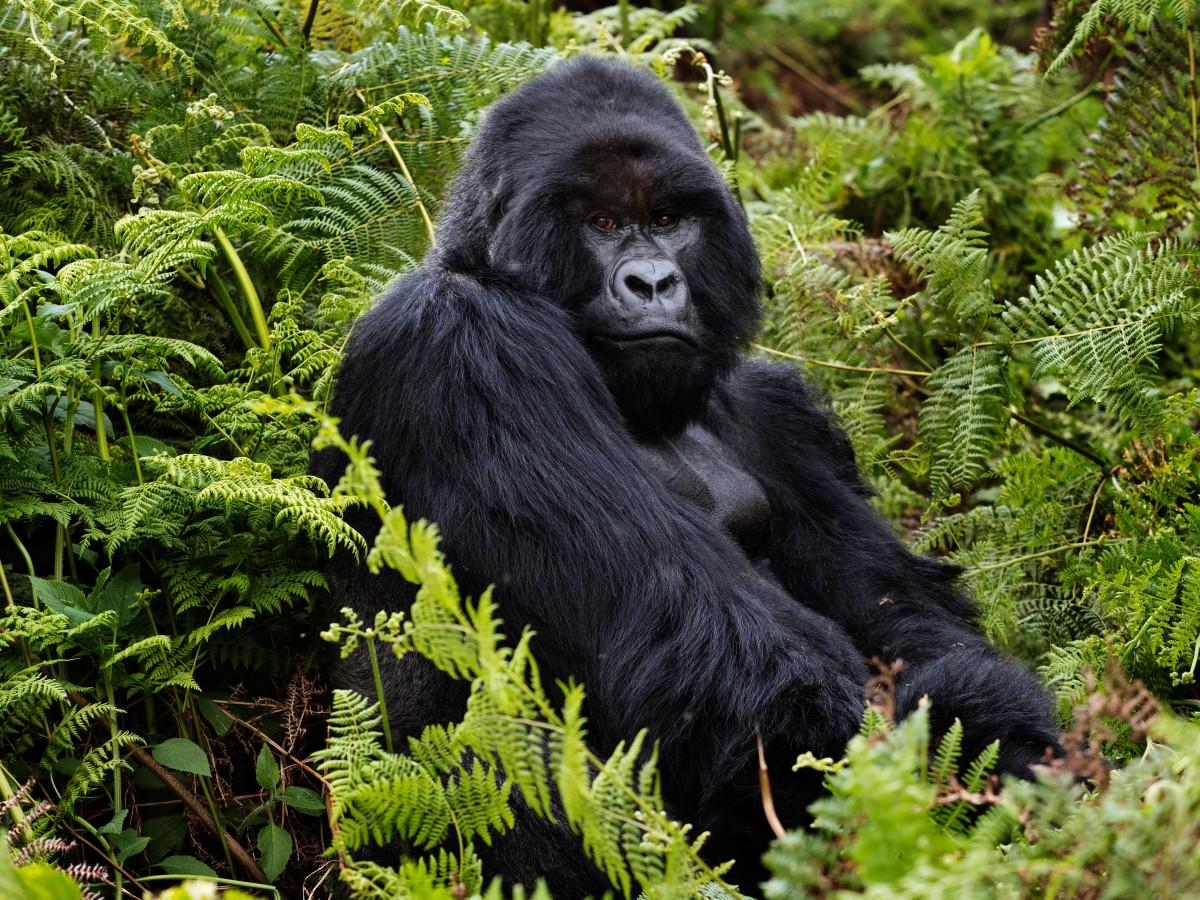
There are roughly 1,000 mountain gorillas left on earth. They exist in a single contiguous range straddling the borders of Rwanda, Uganda, and the Democratic Republic of Congo — and nowhere on the planet can you get closer to wild great apes than in the mist-draped volcanic forests of Rwanda’s Volcanoes National Park.
A gorilla trekking permit is the document that makes it possible. It is also, at $1,500 per person, one of the most expensive single-day wildlife experiences in Africa. And it is worth every dollar.
This guide tells you exactly what a gorilla trekking permit covers, how to get one, when to go, and how to plan a trek that goes far beyond the hour with the gorillas — because Rwanda, it turns out, is a country that rewards those who stay longer and look deeper.
What Is a Gorilla Trekking Permit?
A gorilla trekking permit is an official authorization issued by the Rwanda Development Board (RDB) that grants you access to one of the habituated gorilla families in Volcanoes National Park for a single trekking experience. It is the only legal way to visit mountain gorillas in Rwanda.
Each permit covers:
- Entry into Volcanoes National Park on your assigned date
- Assignment to a specific habituated gorilla family group
- A professional RDB guide for the duration of the trek
- One hour with the gorilla family once located — this is the internationally agreed limit, designed to protect the animals from prolonged human contact and stress
- An armed ranger escort for security in the forest
Each permit does not cover: accommodation, transport to the park, porters (recommended and hired separately), meals, or any other activity.
How Much Does a Rwanda Gorilla Permit Cost?
$1,500 USD per person per trek — this is the current Rwanda gorilla trekking permit price, set by the Rwanda Development Board and fixed regardless of nationality, season, or group size.
Rwanda’s permit is the most expensive gorilla permit in the region. Uganda’s Bwindi Impenetrable Forest permits cost $700 per person, and DRC permits are lower still. Rwanda made a deliberate decision to position itself as a premium, low-volume, high-conservation-value destination — and the strategy has worked. Revenue from permits funds anti-poaching operations, ranger salaries, community development programmes, and gorilla veterinary care directly.
When you buy a Rwanda gorilla permit, you are not paying for an experience. You are investing in the continued existence of one of the world’s most endangered primates. That framing shifts something when you hold the permit in your hand.
Is the Rwanda Permit Worth the Extra Cost Over Uganda?
Honestly — yes, for most travellers. Here is why:
Rwanda offers a dramatically shorter and better-organised trekking experience. Volcanoes National Park is small and well-managed; the habituated gorilla families are among the most researched in the world; the infrastructure around the park (roads, lodges, logistics) is exceptional; and Rwanda as a country is extraordinarily clean, safe, and easy to navigate. Kigali is one of Africa’s most pleasant capital cities.
Uganda’s Bwindi permit at $700 saves you $800 per person. But Uganda requires longer internal travel times, rougher roads, and a more remote logistical setup. For travellers who want to combine gorilla trekking with Uganda’s broader safari circuit (Queen Elizabeth, Murchison Falls, chimpanzee tracking), Uganda makes obvious sense. For travellers who want gorillas as the centrepiece of a short, high-quality East Africa trip, Rwanda is the superior choice.
Both are extraordinary. Neither is wrong.
How Many Gorilla Trekking Permits Are Available Each Day?
Volcanoes National Park currently has 12 habituated gorilla families open to tourism, with a maximum of 8 visitors per family per day. That gives a theoretical maximum of 96 permits per day — though in practice, not all families are available every day, and the number fluctuates based on family health, weather, and ranger assessments.
This is a deliberately small number. It is one of the reasons gorilla trekking in Rwanda feels so different from mass wildlife tourism. You will share your gorilla hour with seven other people maximum. In many cases, with fewer.
The scarcity also means permits sell out. Particularly between June–September and December–February (the two peak seasons), permits can be fully booked 6–12 months in advance. This is not marketing language. It is a practical reality that catches unprepared travellers out regularly.
Book your permit the moment your travel dates are confirmed. Everything else in your Rwanda itinerary can be arranged around it.
How to Book a Rwanda Gorilla Trekking Permit
There are two ways to secure a permit.
Option 1: Book Directly Through the Rwanda Development Board
The RDB operates an online booking platform where individuals can purchase permits directly:
- Website: booking.rdb.rw
- Payment accepted via credit card (Visa/Mastercard)
- Permits are issued as digital documents; print a copy and carry it on trek day
- You will need to specify your preferred date; family group assignment is done by RDB on the day of the trek based on group composition, physical ability, and availability
Direct booking works well for independent travellers who are managing their own Rwanda logistics end-to-end.
Option 2: Book Through a Licensed Tour Operator (Recommended)
For most international visitors — particularly those combining gorilla trekking with a broader Kenya, Tanzania, or Uganda safari — booking through a licensed East Africa tour operator is strongly recommended.
A reputable operator will:
- Secure your permit as part of the broader itinerary (removing the risk of date mismatches between your flights, accommodation, and trek date)
- Handle the full logistics: Kigali airport transfers, accommodation in and around Volcanoes National Park, internal flights or road transfers, and park entry
- Brief you thoroughly on what to expect, what to wear, and how to behave with the gorillas
- Provide a contingency plan if your trek date is affected by weather or family unavailability
- Ensure your porter is arranged and your guide briefed on any physical considerations
Operators typically add a service margin on top of the permit cost, which is standard and transparent in reputable operations.
When to Go: Best Time for Gorilla Trekking in Rwanda
Gorilla trekking in Volcanoes National Park operates year-round. Mountain gorillas do not migrate or hibernate; they are in the forest every day of the year. But conditions vary significantly by season.
June – September (Peak Dry Season) — Best Overall
The long dry season brings the most reliable trekking conditions — firm trails, clearer visibility through the forest, and the best light for photography. This is also when gorilla families tend to forage at lower altitudes, making treks shorter and less physically demanding on average.
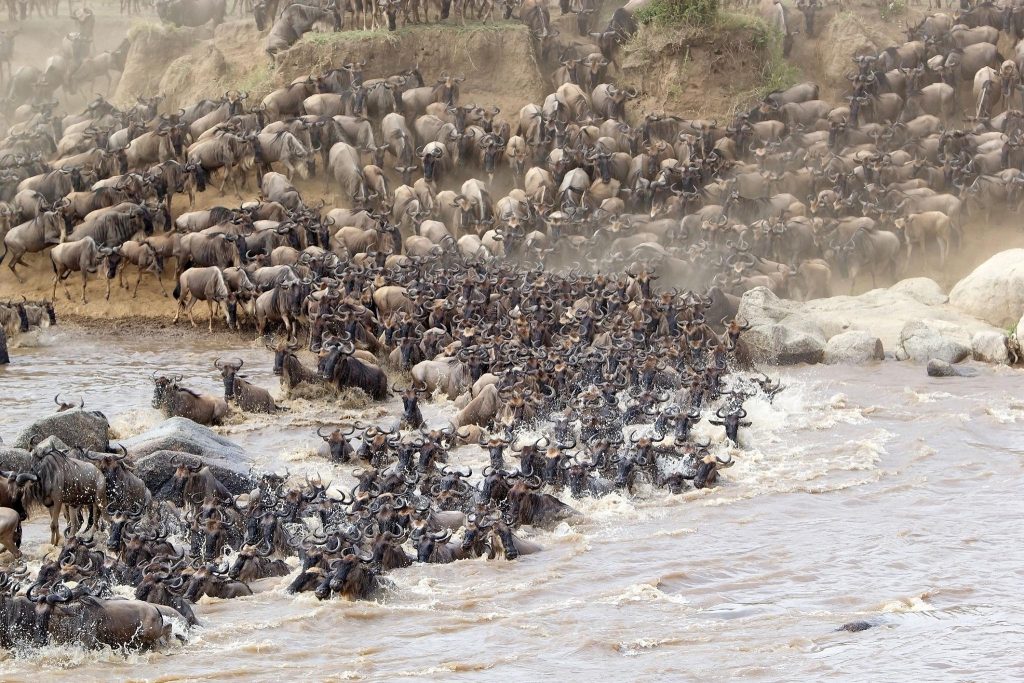
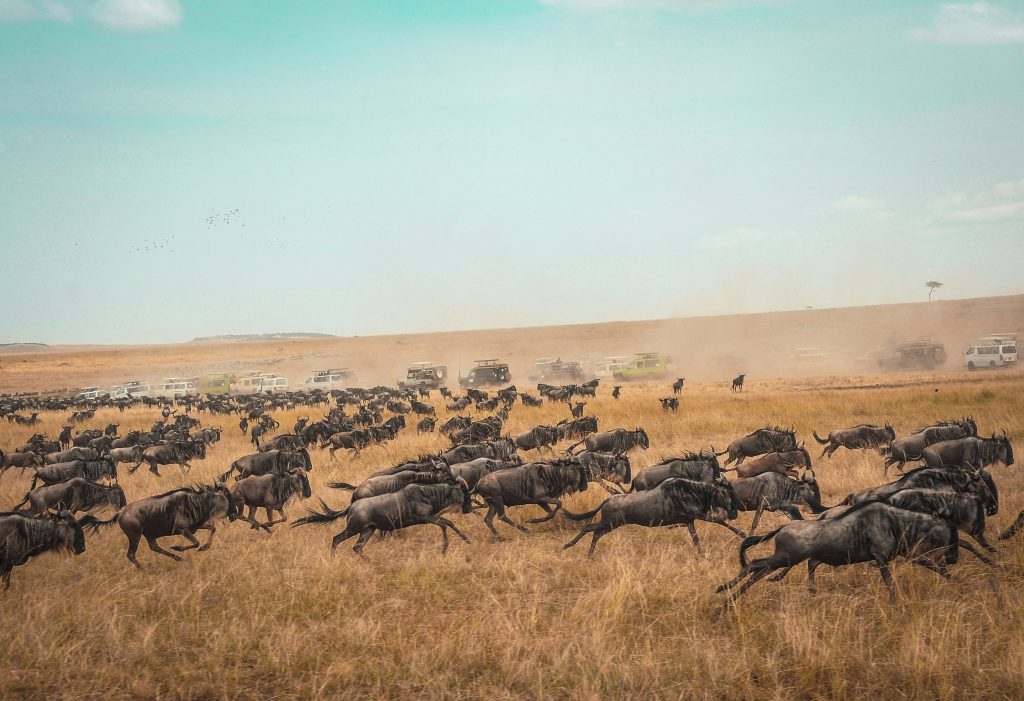
This window overlaps with Kenya’s Great Migration peak (July–October), making a Rwanda–Kenya combined itinerary in this period one of East Africa’s finest journeys.
Book permits 9–12 months in advance for June–September.
December – February (Short Dry Season) — Excellent
Rwanda’s shorter dry season brings similarly good conditions — firm trails, manageable weather, and gorilla families often found at accessible altitudes. December and January permit availability fills quickly because of the holiday travel surge.
Book permits 6–9 months in advance for December–February.
March – May (Long Rains)
The long rains bring lush, emerald-green forest and dramatically fewer tourists — permit availability is much easier in this window. The trade-offs: trails are muddy and slippery, vegetation is dense (reducing sightings slightly), and rain during the trek itself is likely. Gorilla encounters are still extraordinary; the conditions are simply more demanding.
Lodge rates in the Volcanoes area drop meaningfully during the long rains — potentially offering 20–30% savings on accommodation costs.
October – November (Short Rains)
Similar to the long rains in character but shorter and less intense. A reasonable shoulder season choice for travellers with flexibility and a tighter budget.
What to Expect on Trek Day
The Night Before
Gorilla trekking briefings are held the evening before your trek at the Kinigi Park Headquarters near Musanze town. Attendance is mandatory. Your guide will explain the rules, assign your family group, and give you a physical assessment to match trekking difficulty to ability. Confirm with your accommodation what time to depart for the briefing — allow at least 30 minutes’ drive from most Volcanoes-area lodges.
Trek Morning
Arrive at park headquarters by 7:00–7:30 AM. Trekking begins at approximately 8:00 AM after a final briefing and group assembly. Porter hire ($15–$20, strongly recommended) is arranged here.
The Trek Itself
Trekking time to the gorilla family varies enormously — from 30 minutes to 6 hours depending on where the family has moved and the terrain covered. The average is 2–4 hours of hiking each way. Trails climb through bamboo forest, hagenia woodland, and Afro-alpine heath across volcanic slopes that reach 4,500 metres at their highest points.
Physical demands: Moderate to strenuous. You do not need to be an athlete, but you should be comfortable hiking uphill on uneven terrain for several hours at altitude. A good level of general fitness and appropriate footwear (ankle-supporting hiking boots) make a significant difference. If you have any physical concerns, discuss them with your operator in advance — some family groups are accessible at lower altitudes than others.
What to wear:
- Long-sleeved shirt and long trousers (mandatory — protects against nettles, insects, and skin contact with vegetation)
- Waterproof jacket or poncho (conditions change rapidly in the Virungas)
- Ankle-supporting waterproof hiking boots — the single most important gear item
- Gardening gloves for grabbing vegetation on steep sections (optional but widely recommended)
- Gaiters if you own them
- Neutral or dark colours — gorillas are not disturbed by colour, but camouflage feels right
Meeting the Gorillas
When your guide signals, approach quietly and follow their instructions precisely. You will first hear the gorillas before you see them — a deep, rhythmic belch vocalization that gorillas use as a contact call, and the sound of vegetation moving.
Then you see them.
A silverback at close range — and close range in gorilla trekking means 7 metres, the minimum permitted approach distance — is one of the most profound wildlife encounters a human being can have. The scale of the animal. The deep intelligence in the eyes. The ease and authority with which a 200-kilogram silverback moves through dense forest. The casual curiosity of a juvenile investigating a new group of strange, upright visitors.
You have 60 minutes with the family. Your guide will manage time and distance. Flash photography is strictly prohibited. Eating, drinking, and smoking near the gorillas is prohibited. If a gorilla approaches closer than 7 metres — and juveniles sometimes do, out of curiosity — crouch, look down, and do not run. Follow your guide’s signals.
The hour will feel like ten minutes.
After the Trek
Return to park headquarters. Certificates are issued to every trekker as a memento of the experience. Take the afternoon gently — the descent is often harder on the legs than the ascent, and altitude fatigue is real. Most Volcanoes-area lodges are set up perfectly for a quiet afternoon recovery: open fires, steam rooms, cold drinks, and views across the volcanoes.
The 12 Habituated Gorilla Families
Each habituated gorilla family in Volcanoes National Park has a name, a history, and a distinct personality shaped by decades of interaction with researchers and trackers. Some of the most visited and well-known families include:
Susa Group — One of the largest and most studied families, made famous by Dian Fossey’s research. Located at higher altitude (4,200m+), making this trek longer and more demanding. Rewards: exceptional family size and extraordinary photographic opportunities.
Amahoro Group — “Amahoro” means peace in Kinyarwanda, and this family lives up to the name. Calm, relaxed with human presence, and accessible at moderate altitude. Frequently recommended for older or less physically confident trekkers.
Sabyinyo Group — Lives in relatively accessible terrain near the base of Mount Sabyinyo. One of the shorter treks on average, with a charismatic silverback known for his relaxed temperament around visitors.
Kwitonda Group — A larger family that originally migrated from the DRC. Located in lower-altitude forest, making treks generally manageable. The name means “humble one” — the silverback is known for his composed, dignified presence.
Hirwa Group — A younger family formed when individuals split from other groups. Contains twins — a rarity in mountain gorillas and a genuine privilege to witness.
Family assignment is made by RDB rangers on the morning of your trek based on family location, group fitness, and balancing visitor numbers. You cannot specifically request a family at time of booking, though operators with established RDB relationships sometimes facilitate preferences for guests with specific physical needs.
Beyond the Trek: What Else Rwanda Offers
A gorilla permit covers one hour in one forest on one morning. Rwanda, if you let it, offers far more.
Kigali — An Underrated City
Rwanda’s capital is clean, ordered, green, and surprisingly sophisticated. The Kigali Genocide Memorial is a deeply important and moving experience — visiting it before your gorilla trek adds context to Rwanda’s extraordinary modern story. The city’s restaurant scene, craft market, and art galleries have developed rapidly over the past decade. Spend at least one night here.
Golden Monkey Trekking
Volcanoes National Park is home to a second primate experience: golden monkey trekking. These vivid, gregarious primates move in large, fast groups through the lower-altitude bamboo forest. A golden monkey permit costs $100 per person and can be combined with gorilla trekking on consecutive days or even on the same day (morning gorilla trek, afternoon golden monkey). It is frequently underbooked relative to gorilla trekking and represents outstanding value.
Dian Fossey’s Karisoke Research Centre
For those with a deep interest in gorilla conservation, the hike to Dian Fossey’s grave and the original Karisoke Research Centre site is one of Rwanda’s most powerful experiences. The Dian Fossey Gorilla Fund operates the centre and offers guided hikes to the site. This is not a tourist attraction — it is a place of pilgrimage for anyone who cares about wildlife and conservation.
Lake Kivu
A two-hour drive south of Volcanoes National Park, Lake Kivu is one of Africa’s Great Lakes — a vast, calm expanse of blue water fringed by steep green hills and small fishing villages. Lakeside lodges at Kibuye (now Karongi) and Gisenyi offer a gentle end to a Rwanda trip. Kayaking, boat trips, and simply sitting watching the light change across the water are the activities here. It is a perfect decompression after the intensity of the forest.
Rwanda–Kenya or Rwanda–Uganda Combined Itineraries
Rwanda combines naturally with Kenya and Uganda for a comprehensive East Africa journey. The most popular combination:
Classic East Africa: Nairobi → Maasai Mara (3–4 nights) → Kigali → Volcanoes National Park (2–3 nights) → Kigali departure. Total: 8–10 days. Two of the continent’s greatest wildlife experiences in a single logical circuit.
Practical Information
Getting to Volcanoes National Park
Fly into Kigali International Airport (KGL). Multiple airlines serve Kigali: RwandAir, Ethiopian Airlines, Kenya Airways, Brussels Airlines, Qatar Airways, and KLM among them.
From Kigali, Volcanoes National Park is a 2.5–3 hour drive northwest via Musanze (formerly Ruhengeri). The road is well-surfaced and straightforward. Most visitors hire a vehicle and driver through their operator — self-drive is possible but less practical given the early trek departures.
Alternatively, some operators offer a domestic flight from Kigali to an airstrip near Musanze, cutting travel time significantly. Confirm availability at time of booking.
Accommodation Near Volcanoes National Park
The lodge scene around Volcanoes National Park has grown dramatically in quality over the past decade. Options range from comfortable mid-range to genuinely world-class:
Mid-range: Mountain Gorilla View Lodge, Le Bambou Gorilla Lodge, Virunga Lodge (mid-tier rooms)
Luxury: Bisate Lodge (andBeyond — extraordinary eco-design, exceptional service), Singita Kwitonda Lodge (ultra-luxury, six suites), Virunga Lodge (classic views across the volcanoes), One&Only Gorilla’s Nest
Most lodges include dinner and breakfast; confirm inclusions at time of booking.
Health and Entry Requirements
- Visa: Rwanda offers visa on arrival for most nationalities, or an e-visa at visas.gov.rw ($50 per person for most nationalities). East African citizens enter visa-free.
- Yellow Fever: Vaccination certificate required for travellers arriving from yellow fever endemic countries
- Malaria: Rwanda is a malaria zone; take antimalarial prophylaxis as prescribed by your doctor
- Gorilla health protocol: Visitors with colds, flu, or any respiratory illness should not trek — mountain gorillas are highly susceptible to human respiratory diseases. If you are unwell on trek day, RDB rangers will prevent you from entering the forest. Travel insurance covering permit cost in event of illness is strongly recommended.
- Minimum age: 15 years for gorilla trekking
Tipping
- RDB guide: $20–$30 per person
- Porter: $10–$15 per person
- Trackers (if present): $5–$10 per person
- Budget approximately $40–$55 per person in tips for a gorilla trekking day
The Numbers That Put Everything in Context
1,000 mountain gorillas remain on earth. That is the entire global population — every individual, in a single forest range. The population was closer to 250 in the 1980s; it has grown back from the edge of extinction through exactly the kind of conservation funding that gorilla tourism permits generate.
When you pay $1,500 for a Rwanda gorilla permit, approximately 10% goes directly to local communities surrounding the park — in the form of schools, health clinics, and infrastructure. Rangers, trackers, guides, lodge staff, porters, drivers: an entire local economy is built on the continued existence of 1,000 mountain gorillas in three countries’ forests.
The hour you spend with a gorilla family is not a transaction. It is participation in something larger than a holiday.
That is the honest reason this experience is worth what it costs.
Plan Your Rwanda Gorilla Trek With Pride of Africa
We arrange Rwanda gorilla trekking permits as part of combined East Africa itineraries — typically paired with a Kenya safari, a Uganda chimpanzee experience, or both. We handle permit procurement, lodge booking, airport transfers, and every logistical detail between destinations.
If you know your travel dates, contact us now. Permit availability moves quickly, and the best lodges fill months ahead of the dry season windows.
Gorilla permit prices are set by the Rwanda Development Board and subject to change without notice — always confirm current rates before booking. All permits are non-refundable once issued; travel insurance covering permit cost in event of illness or cancellation is strongly recommended.
Written by the Pride of Africa Adventures & Safaris travel team — East Africa safari specialists operating across Kenya, Tanzania, Rwanda, and Uganda.
Book a Rwanda Gorilla Trekking Permit
Request a Combined Kenya & Rwanda Itinerary
Speak to an East Africa Safari Specialist
Comments
No comments yet. Be the first to share your experience.
Leave a Comment
Your comment will appear after it has been reviewed by our team.