Tag: Kenya Safari

  • Kenya Safari and Ethiopia in One Holiday: Danakil, Lalibela and the Simien Mountains

    Kenya Safari and Ethiopia in One Holiday: Danakil, Lalibela and the Simien Mountains

    In the morning you are watching lions in the Masai Mara. A week later you are standing on the rim of a volcano in the Danakil Depression, then walking through churches carved out of solid rock in Lalibela. Few holidays move between two worlds as completely as a Kenya safari combined with Ethiopia.

    Our 14-day Kenya and Ethiopia journey pairs Kenya’s classic wildlife parks with northern Ethiopia’s extraordinary landscapes and ancient history. This guide explains what each part of the trip involves and who it suits.

    Part One: Five Days of Kenyan Safari

    The trip begins in Nairobi and heads straight into the wildlife:

    • Masai Mara — an afternoon game drive on arrival, then a full day in the reserve with a packed lunch by the Mara River.
    • Lake Naivasha — a boat trip among hippos and water birds.
    • Hell’s Gate National Park — an early morning game drive in one of the few parks where you can cycle and walk among wildlife.
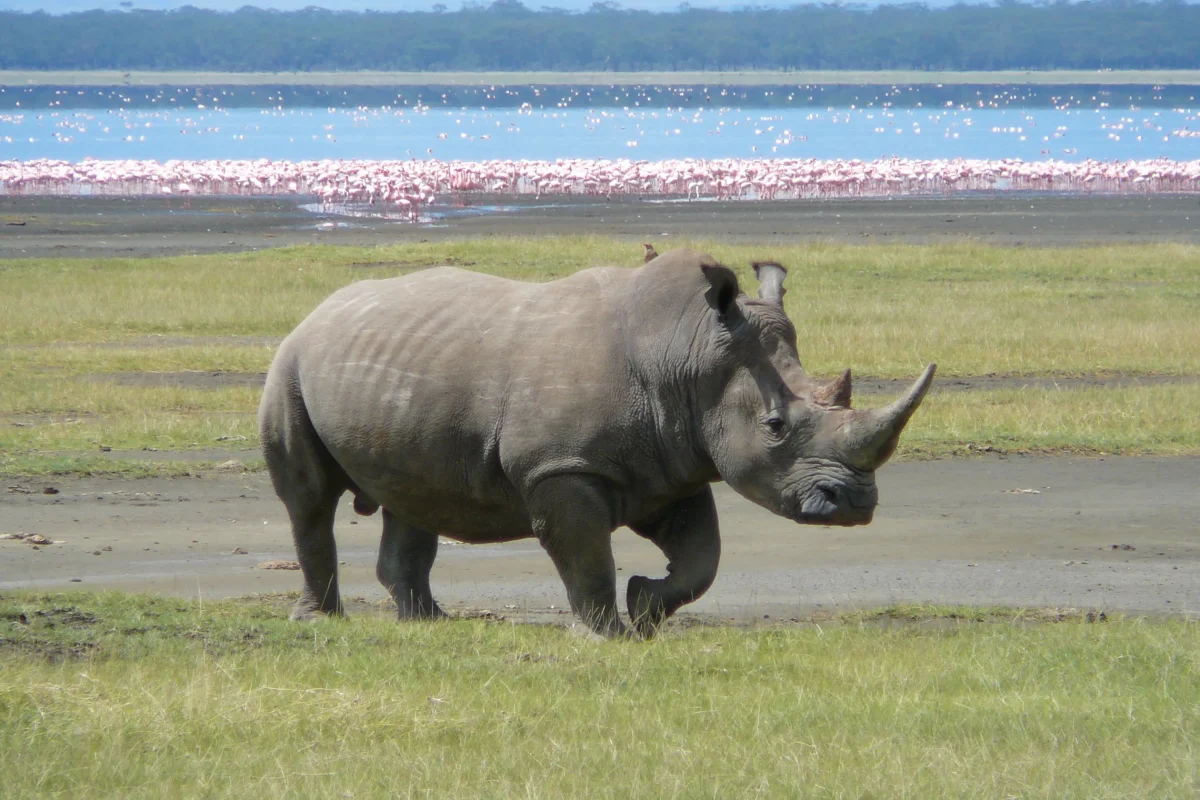
    • Lake Nakuru — leopard, both black and white rhino, Rothschild’s giraffe and the birdlife of the lake, with lunch at the cliff viewpoint.

    On the evening of day five you fly from Nairobi to Addis Ababa — and the second half of the holiday begins.

    Part Two: The Danakil Depression

    From Addis Ababa you fly north to Mekele and drive into the Danakil Depression, one of the lowest and hottest places on Earth. This is the most adventurous part of the trip, and it is not for everyone — but for travellers who want something truly different, it is unforgettable.

    • Erta Ale. You trek up the volcano in the evening to see its crater, one of the few places in the world where a lava lake has been visible. Volcanic activity changes over time, so what you see on the night varies.
    • Hamad Ela and Lake Assale. Camel caravans, salt flats and a sunset over the shallow salt lake.
    • Salt mining. Watch local miners cut slabs of salt from the ground and load them onto camels, as they have done for centuries.
    • Dallol. A surreal landscape of coloured mineral pools, salt formations and volcanic features unlike anywhere else on the planet.

    Be prepared: the roads are rough, the heat is intense and the camping is basic. Good health and a sense of adventure matter more here than anywhere else on the trip.

    Part Three: Ethiopia’s Historic North

    The final days follow some of Ethiopia’s most remarkable historic and natural sites:

    • The rock-hewn churches of Tigray. Including Abune Yemata, reached by footholds and handholds in a cliff face, with a sheer drop beside the entrance ledge — and Mariam Korkor and Daniel Korkor in the afternoon.
    • Axum. A short visit to see the ancient obelisks before the flight to Lalibela.
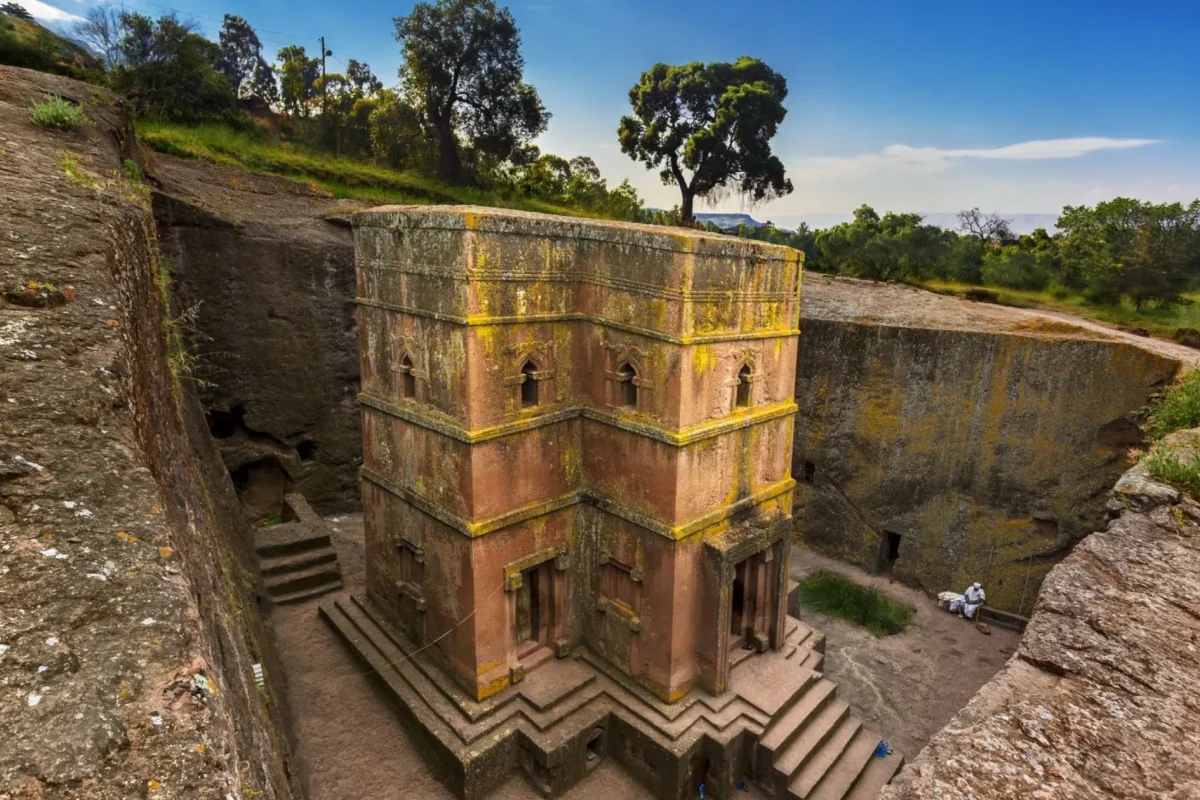
    • Lalibela. A full day among the rock-hewn churches, carved downward into the rock, finishing with Bet Giyorgis, the cross-shaped church dedicated to Saint George. Lalibela is a UNESCO World Heritage Site and still an active place of worship.
    • Gondar. The Royal Enclosure and its castles, Fasilidas’ Pool and the famous painted ceiling of Debre Birhan Selassie church.
    • The Simien Mountains. A day trip into the national park for dramatic escarpment views, a walk to see Jinbar Waterfall and the chance to see gelada monkeys.
    • Lake Tana and the Blue Nile Falls. A boat trip to island monasteries, then a short hike at the falls and sunset over the lake in Bahir Dar.

    On the final day you fly from Bahir Dar to Addis Ababa to connect with your flight home.

    Who Is This Trip For?

    This itinerary suits travellers who want more than a wildlife holiday: people who enjoy history and culture, are comfortable with early starts and long travel days, and are excited rather than put off by the idea of camping in the desert. If the Danakil section sounds too demanding, tell us — we can tailor the Ethiopian part of the journey around the historic sites.

    Safety and Travel Advice

    Parts of northern Ethiopia have been affected by unrest in recent years, and government travel advice for the Afar and Tigray regions changes. Before confirming any Ethiopia itinerary we check the current situation and official advisories, and we will discuss them openly with you. Please also check your own government’s travel advice and make sure your travel insurance covers the regions you will visit — see our travel insurance information page.

    Plan Your Kenya and Ethiopia Holiday

    See the full day-by-day plan in our 14 Days Kenya and Ethiopia Combine itinerary. Send us your dates and group size and we will prepare a free, tailor-made quote — prices are on request.

  • Lake Nakuru National Park: Flamingos, Rhinos and What to Expect

    Lake Nakuru National Park: Flamingos, Rhinos and What to Expect

    The game drive at Lake Nakuru starts almost before you are through the gate. Colobus monkeys watch from the yellow fever trees, a waterbuck lifts its head from the grass, and somewhere beyond the woodland a pink shimmer on the water tells you the birds are in. Within the hour your guide may be pointing out the broad, square-lipped shape of a white rhino grazing in the open — the reason so many travellers say Nakuru surprised them more than any other park on their safari.

    Lake Nakuru is small, easy to reach and remarkably rich. This guide explains what makes it special, what you are likely to see, and how it fits into a Kenya safari.

    Where Lake Nakuru Is — and Why It Is So Easy to Include

    Lake Nakuru National Park lies on the floor of the Great Rift Valley, a few hours’ drive north-west of Nairobi. It sits neatly between the capital and the Masai Mara, which is why it appears in so many Kenyan itineraries: it breaks up the long drive and adds a completely different landscape to your trip.

    The park wraps around an alkaline lake ringed by acacia woodland, grassy plains, rocky escarpments and forest. Because it is compact, you cover a lot of ground in a single game drive, and you rarely spend long stretches without seeing wildlife.

    The Flamingos: What to Expect

    Nakuru made its name as one of the great flamingo lakes of the Rift Valley. Lesser and greater flamingos feed on the algae and small crustaceans of its alkaline water, and at times the shoreline turns pink with birds.

    It is worth being honest about one thing: flamingo numbers at Nakuru rise and fall. The birds move between the Rift Valley lakes depending on water levels and food, so the size of the flocks varies from season to season and even month to month. Some visits bring thousands; others bring smaller groups along the shore. Your guide will know where the birds have been feeding recently and will take you to the best viewpoints.

    Flamingos are only part of the picture. Lake Nakuru is home to more than 400 recorded bird species, including pelicans, fish eagles, kingfishers, storks and herons — a real highlight even if birdwatching was never on your list.

    A Sanctuary for Rhinos

    For many travellers, the rhinos are the main event. Lake Nakuru is a fenced rhino sanctuary and one of the best places in Kenya to see both black and white rhinos. White rhinos graze in the open grassland and are often seen at close range; the more secretive black rhino browses in thicker bush and takes more patience.

    Seeing rhinos in the wild is a privilege. Both species were driven close to extinction by poaching, and sanctuaries like Nakuru have been central to their recovery in Kenya.

    Other Wildlife to Look Out For

    • Rothschild’s giraffe — one of the rarest giraffe subspecies, identified by its pale legs that look as if it is wearing white stockings.
    • Leopard — Nakuru’s woodlands are known for leopard sightings, and our itineraries include game drives timed to look for them.
    • Lion — prides move through the acacia woodland and are sometimes seen resting in the trees.
    • Buffalo, waterbuck, zebra, impala and baboons — the everyday cast of a Nakuru game drive.

    The View from the Cliff

    Ask your guide to stop at the viewpoints on the escarpment above the lake. From the cliff top you look down over the whole park — the woodland, the plains, the lake edge and, when the birds are in, the pink line of flamingos along the shore. On our itineraries this is often where we stop for lunch, and it is one of the best photographs of the whole safari.

    How Lake Nakuru Fits into a Kenya Safari

    Nakuru works best as part of a circuit rather than on its own. In our itineraries it is paired with:

    • The Masai Mara — big cats, vast herds and, in season, the Great Migration.
    • Lake Naivasha and Hell’s Gate — a boat trip among hippos and a park where you can walk and cycle among wildlife.
    • Amboseli — elephants beneath Mount Kilimanjaro.

    Our 4 Days Mara / Nakuru Safari is the classic short combination: two days in the Masai Mara, then an afternoon game drive at Nakuru and a full day in the park before returning to Nairobi. If you have longer, our 9 Days Sweet Waters / Mara / Nakuru / Naivasha / Amboseli Private Safari includes Nakuru as part of a wider journey through Kenya’s highlights.

    Practical Tips for Your Visit

    • Bring binoculars. They make a huge difference for birds and for spotting rhinos at a distance.
    • Do not feed the monkeys. Baboons and monkeys near the gate are used to people — keep windows up when your guide advises it.
    • Pack a warm layer. Mornings in the Rift Valley can be cool, especially on early game drives.
    • Be patient with the rhinos. The black rhino in particular can take time — a good guide reads the landscape and the tracks.

    Plan Your Lake Nakuru Safari

    Every one of our safaris is tailor-made. Tell us your travel dates, group size and the kind of accommodation you prefer, and we will prepare a free quote — prices are always on request, so you only pay for the safari you actually want.

  • Serengeti vs Maasai Mara: Which Safari Destination Is Right for You?

    Serengeti vs Maasai Mara: Which Safari Destination Is Right for You?

    Two plains. One legendary migration. A decision that has kept safari lovers awake at night for decades.

    The Serengeti and the Maasai Mara are arguably the two greatest wildlife destinations on earth — and they share the same sweeping grassland ecosystem, separated only by the Kenya–Tanzania border. Yet choosing between them is anything but a coin toss. The right answer depends on when you travel, what wildlife moments you want, how you like to experience the bush, and the kind of journey that genuinely moves you.

    This guide breaks it all down — honestly, and in detail — so you can arrive at the decision that suits your safari perfectly.

    The Big Picture: What Are We Comparing?

    The Serengeti National Park sits in northern Tanzania and covers approximately 14,763 km². It is one of the oldest and most celebrated ecosystems on the planet, a UNESCO World Heritage Site, and the stage for the longest overland wildlife migration on earth.

    The Maasai Mara National Reserve lies in southwestern Kenya, covering around 1,510 km². Smaller, more concentrated, and exceptionally rich in wildlife density, the Mara forms the northern tip of the same Serengeti–Mara ecosystem. The two parks are ecologically inseparable — the wildebeest don’t recognise the border, and neither should you when planning your trip.

    What does set them apart is everything else: experience, access, timing, cost, and feel.

    Wildlife: Who Has the Edge?

    Both destinations deliver some of the most spectacular wildlife viewing in Africa. But there are real differences.

    The Serengeti

    The Serengeti is vast, which means game drives feel wild and unhurried. Wildlife is spread across different zones — the Seronera Valley in the central Serengeti is one of Africa’s most reliable year-round game-viewing areas, famous for its resident leopards and lion prides. The northern Serengeti (Lamai and Kogatende) and the western corridor each offer distinctive ecosystems and seasonal wildlife concentrations.

    You’re virtually guaranteed sightings of: lion, leopard, cheetah, elephant, buffalo, giraffe, hippo, crocodile, zebra, wildebeest, and a staggering diversity of bird life across more than 500 species.

    The Maasai Mara

    The Mara punches well above its weight for its size. Wildlife density is exceptional — the resident big cat population is one of the highest in Africa, and the open savannah makes for outstanding visibility. Big Five sightings are nearly guaranteed on most game drives. The Mara River itself is a permanent feature of the landscape, supporting year-round hippo and crocodile populations.

    The Mara is also home to large Maasai communities whose cattle have coexisted with wildlife for generations — adding a cultural dimension that is uniquely compelling.

    Verdict: Both are world-class. The Serengeti wins on scale and variety of ecosystems; the Mara wins on wildlife density and accessibility within a smaller area.

    The Great Migration: Timing Is Everything

    This is the centrepiece of both destinations — and the single biggest factor in your decision.

    The Great Migration involves approximately 1.5 million wildebeest, 200,000 zebra, and 500,000 Thomson’s gazelle moving in a continuous loop across the Serengeti–Mara ecosystem, driven by rainfall and the growth of fresh grass.

    Here is where each destination shines by season:

    January – March: Serengeti (Southern)

    The calving season unfolds in the southern Serengeti, near Ndutu. Around 500,000 calves are born in a matter of weeks — a jaw-dropping spectacle. Predator activity is extraordinary, with cheetah, lion, and hyena following the herds closely. This is one of the most underrated migration experiences of the year.

    April – May: Serengeti (Western Corridor)

    The herds move northwest through the western corridor, crossing the Grumeti River. The Grumeti crocodiles are formidable, and the crossings here are intense, though less photographed than the Mara crossings. The green season brings lush landscapes and very few tourists.

    June – July: Serengeti (Northern) — The Migration Arrives

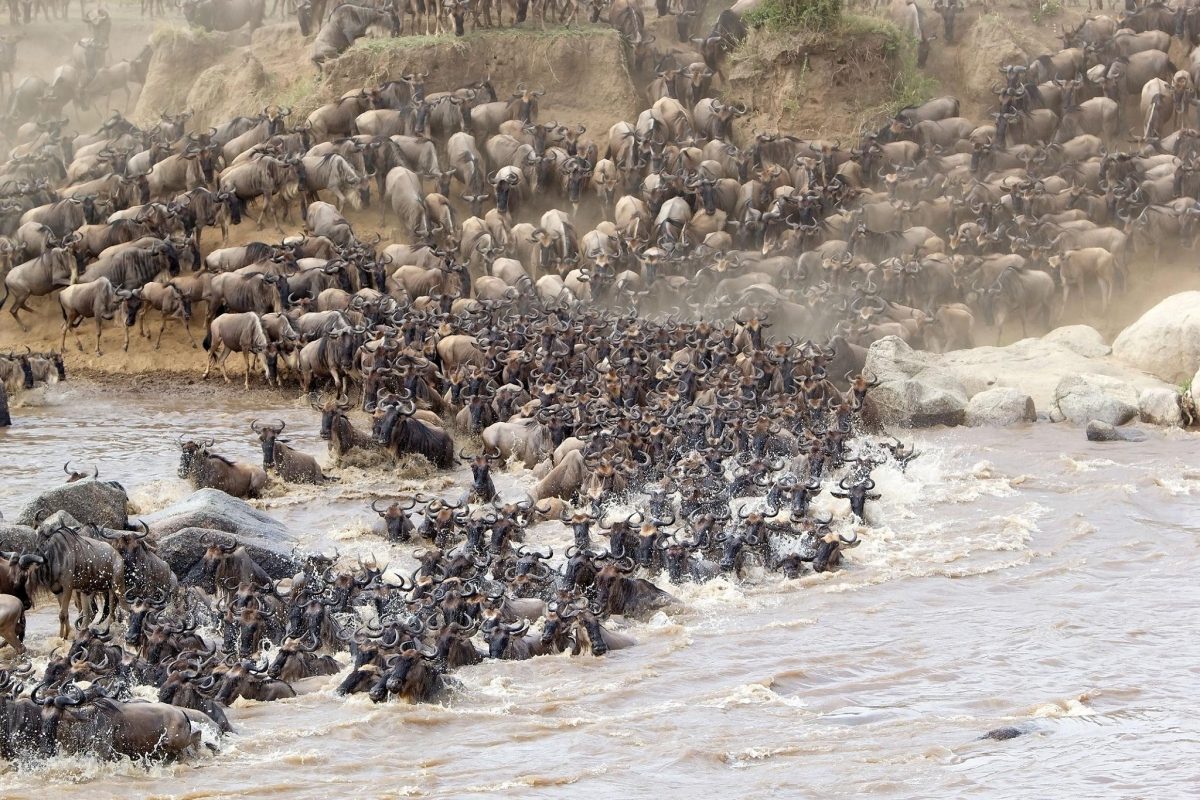
    By June, the herds have moved north. Game viewing in the northern Serengeti reaches fever pitch as the wildebeest mass along the Mara River, and the first dramatic river crossings begin.

    July – October: Maasai Mara — Peak River Crossings

    This is the window that defines the Maasai Mara globally. Between July and October, the wildebeest pour across the Mara River in their millions — sometimes in a single explosive crossing, sometimes in a hesitant trickle that suddenly explodes into chaos. The crocodiles are waiting. The lion prides are positioned. The whole drama plays out at the river’s edge, and no wildlife experience on earth quite matches it.

    October brings the return journey south, with another round of crossings.

    November – December: Serengeti (Eastern & Southern)

    The herds move back south through the eastern Serengeti toward the Ndutu plains, where the cycle begins again.

    Verdict: If witnessing the river crossings is your primary goal, travel to the Maasai Mara between July and October. For calving season or a less crowded migration experience, the southern Serengeti from January to March is extraordinary.

    Crowds and Exclusivity

    This is where the two destinations diverge most sharply.

    The Maasai Mara, being a national reserve rather than a national park, allows private conservancies to operate on community land surrounding the reserve itself. These conservancies — including Naboisho, Olare Motorogi, Ol Kinyei, and others — offer exclusive game viewing with far lower visitor numbers, night game drives, off-road driving, and walking safaris. They are among the finest safari experiences in Africa and a compelling reason to choose the Mara.

    Inside the reserve itself, peak season (July–October) can feel busy around the most popular river crossing points, particularly with minibus game-viewing vehicles. This is the trade-off for accessibility and world-class wildlife.

    The Serengeti offers more space by sheer size — 14,763 km² absorbs visitors differently. The northern Serengeti camps in particular are remote and uncrowded even during peak season, delivering a wilderness experience that feels genuinely untouched.

    Verdict: For exclusivity and solitude, the northern Serengeti and the Mara conservancies are both exceptional. The Mara conservancies edge ahead for the combination of exclusivity and proximity to the river crossings.

    Safari Lodges and Accommodation

    Serengeti

    The Serengeti has some of Africa’s most celebrated properties — from mobile tented camps that follow the migration to permanent lodges with spectacular views across the plains. Styles range from intimate six-tent bush camps to grand lodges with infinity pools overlooking the savannah. The northern Serengeti in particular has seen a wave of exceptional, sensitively designed properties open in recent years.

    Maasai Mara

    The Mara and its conservancies host some of the continent’s most lauded luxury camps — intimate, owner-operated, deeply knowledgeable about their landscape. Many conservancy camps offer all-inclusive rates with twice-daily game drives, walking, and night drives included. The level of personalised guiding in the Mara’s best properties is hard to match anywhere in Africa.

    Verdict: Both are outstanding. Your choice will depend on whether you prefer the bold scale of Serengeti lodges or the intimate, conservancy-style hosting of the Mara’s finest camps.

    Getting There: Logistics and Access

    Maasai Mara

    Fly into Nairobi’s Jomo Kenyatta International Airport (NBO), then connect via a 45-minute charter flight to one of several bush airstrips inside the Mara or the surrounding conservancies. Alternatively, a road transfer from Nairobi takes approximately 5–6 hours, passing through the Great Rift Valley — scenic but long.

    Serengeti

    Fly into Kilimanjaro International Airport (JRO) or Julius Nyerere International Airport in Dar es Salaam (DAR), then connect to Arusha before a charter flight to one of the Serengeti’s many airstrips (Seronera, Kogatende, Grumeti, and others). The Serengeti is generally a longer, more involved journey to reach — but the remoteness is part of the experience.

    Verdict: The Maasai Mara is logistically easier to reach, especially on shorter itineraries. The Serengeti rewards those with more time.

    Cost Comparison

    Both destinations sit in the premium tier of African safari travel, though with meaningful differences.

    • Tanzania levies higher park fees than Kenya — Serengeti fees for non-residents run significantly higher per person per day, which flows through into lodge pricing.
    • Serengeti mobile camps following the migration command premium rates, especially in July–October.
    • Maasai Mara conservancies often include all activities in the rate, which can make the all-in cost competitive once everything is counted.
    • Green season (April–June in the Mara; April–May in the Serengeti) offers meaningful savings at both destinations, often 20–30% below peak rates, with the added bonus of lush landscapes and very few other visitors.

    Verdict: The Serengeti tends to be marginally more expensive at comparable luxury tiers, primarily due to park fees. Both represent excellent value for the calibre of experience delivered. See our Kenya Safari Cost Guide for a full Kenya-side breakdown.

    The Honest Side-by-Side

    Factor Maasai Mara Serengeti
    Best migration window July – October (river crossings) Year-round (varies by zone)
    Wildlife density Very high High (varies by zone)
    Size ~1,510 km² ~14,763 km²
    Exclusivity options Private conservancies Remote northern camps
    Ease of access Easier (Nairobi hub) More involved (Arusha/JRO)
    Night drives Yes (in conservancies) Yes (in private concessions)
    Walking safaris Yes (conservancies) Yes (select camps)
    Peak season crowds Higher inside reserve Lower, spread over larger area
    Cost High High (marginally higher fees)
    Cultural experience Strong Maasai presence Maasai and other communities

    So, Which Should You Choose?

    Choose the Maasai Mara if:

    • You want to witness the dramatic Mara River crossings (travel July–October)
    • You have a shorter trip and want maximum impact quickly
    • You want exclusive conservancy guiding with night drives and walks included
    • You are flying in and out of Nairobi
    • Cultural immersion with Maasai communities matters to you

    Choose the Serengeti if:

    • You want the calving season (January–March in the south)
    • You want a vast, remote wilderness with multiple distinct ecosystems
    • You are combining your safari with Ngorongoro Crater, Tarangire, or Zanzibar
    • You want to experience the migration across its full annual cycle
    • You are travelling with more time and want to go deep

    Consider both if:

    • You have 10 or more days and want to experience the ecosystem from both sides of the border
    • You want a Tanzania–Kenya combined itinerary — crossing from the Serengeti into the Mara, or vice versa — an experience that is genuinely unmatched

    Our Recommendation

    At Pride of Africa Adventures & Safaris, we believe the best safari is the one built around your timeline, your interests, and the wildlife moments that matter most to you. We have guided families, honeymooners, photographers, and first-time safari goers across both the Serengeti and the Maasai Mara — and we have a deep, genuine knowledge of what each destination delivers in every season.

    If you’re unsure, tell us when you want to travel and what kind of experience you’re after. We’ll tell you exactly where to be and why — and we’ll build the itinerary around it.

    Written by the Pride of Africa travel team — East Africa safari specialists with years of field experience across Kenya, Tanzania, Uganda, and Rwanda.

    Request a Free Safari Quote
    Browse Our Kenya Safari Packages
    Browse Our Tanzania Safari Packages

  • Private Guided Safari in Amboseli: The Complete Guide

    Private Guided Safari in Amboseli: The Complete Guide

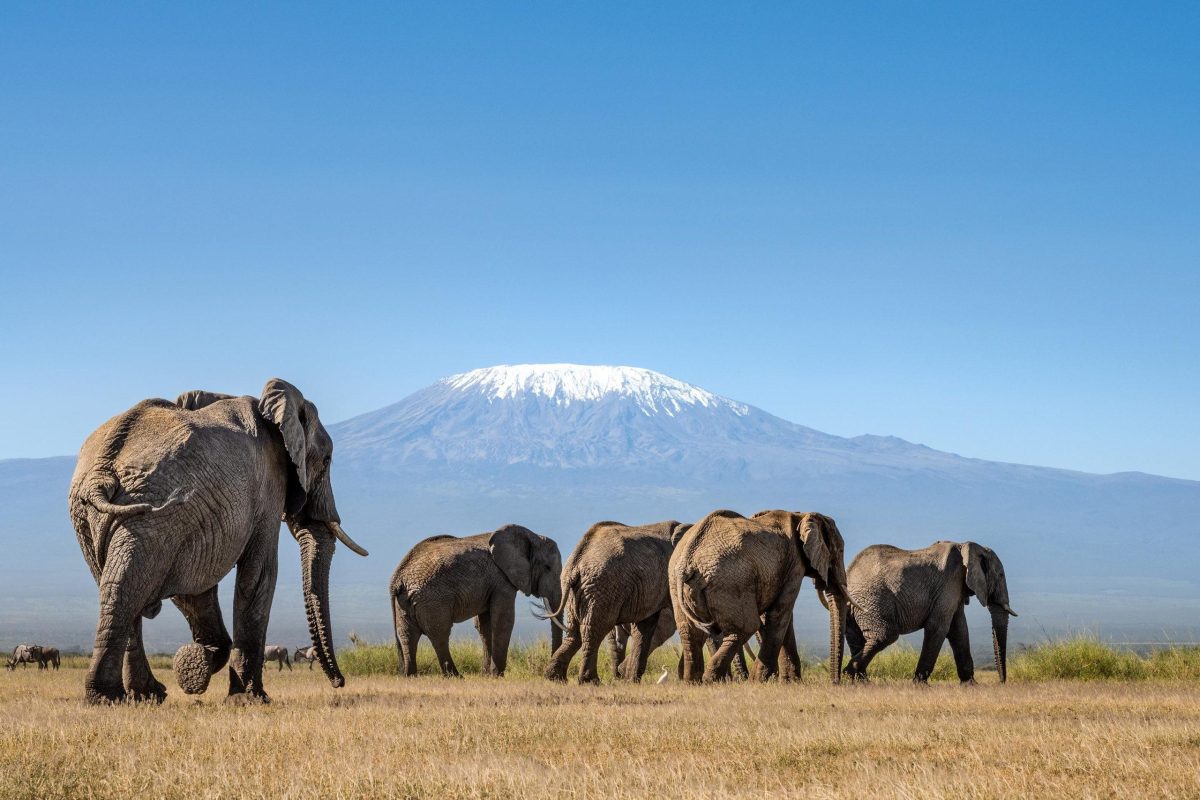
    There is a moment that happens on nearly every private guided safari in Amboseli. Your vehicle has stopped on the open pan, engine off. A family of elephants — fourteen, perhaps fifteen individuals — moves in a slow diagonal across the cracked earth thirty metres away. The matriarch leads. A calf, days old, stumbles close to its mother’s legs. Behind them, framed so perfectly it feels staged, Kilimanjaro fills the horizon from base to summit, the snow catching the early light.

    Your guide says nothing. There is nothing to say.

    That moment — unhurried, unshared, unscheduled — is what a private guided safari in Amboseli delivers that no group tour can replicate. Not because the wildlife is different. Not because the park changes. But because you are there on your own terms, in your own vehicle, with a guide whose entire focus is your experience and no one else’s.

    This is the guide to planning that experience.

    Why Amboseli for a Private Safari?

    Amboseli National Park sits in southern Kenya, on the border with Tanzania, at the foot of Africa’s highest mountain. It covers approximately 392 km², compact by East African standards, which matters. In Amboseli, you are never far from wildlife. There are no vast empty stretches to cross before the action starts.

    What Amboseli offers, specifically and uniquely, is this:

    The elephant population. Amboseli’s elephants are among the most studied in the world — the long-term Amboseli Elephant Research Project, begun in 1972 by Cynthia Moss, has documented every individual and every family across more than five decades. The elephants here are not merely present; they are known. Your guide can introduce them by family, by matriarch, by the calves born in the last season. That depth of knowledge transforms a wildlife encounter into something closer to an introduction.

    The Kilimanjaro backdrop. No other park in Kenya — possibly no other park in Africa — offers wildlife viewing against a backdrop of this scale. On clear mornings (and Amboseli mornings are frequently clear, particularly between June and October), Kilimanjaro dominates the southern horizon with an authority that photographers and non-photographers alike find genuinely disorienting. The mountain is so large, so close, and so unexpected that it takes time to accept as real.

    The open terrain. Amboseli’s landscape is a mosaic of open pan, dust bowl, acacia woodland, and permanent papyrus swamp — all within a small, navigable area. The openness delivers exceptional wildlife visibility. No vegetation barrier between you and the animals. What happens, happens in full view.

    The intimacy. Amboseli is not the Maasai Mara in terms of sheer wildlife volume. It is quieter, more contemplative, and — particularly on a private safari — remarkably uncrowded outside the main lodge areas. You can spend a morning with an elephant family and see no other vehicle.

    Private vs Group Safari: What Is the Actual Difference?

    This is worth addressing directly because the gap is larger than most first-time safari visitors anticipate.

    A group safari (shared vehicle):

    • 6–8 passengers per vehicle, often from different countries with different interests and photography requirements
    • Game drives depart and return on fixed schedules; the vehicle returns when the majority want to leave, not when you do
    • Stops are determined by group consensus — the couple in the back who have seen enough lions want to move on; you want to stay
    • Your guide manages multiple guests with different levels of knowledge, different questions, and different expectations simultaneously
    • Seating position in the vehicle is shared and rotated — window access varies
    • Cost per person is lower

    A private guided safari:

    • You, your travel companion(s), and your guide — no one else
    • Game drive timing is entirely your own: leave earlier, stay later, extend a sighting for as long as you want
    • Your guide is focused entirely on you — your interests, your photography setup, your questions, your pace
    • You stop where you want, for as long as you want, and move when you are ready
    • The vehicle is yours: every window seat, every roof hatch, every angle is accessible
    • Your guide can explain, teach, interpret, and narrate without managing competing interests
    • Cost per person is higher — but split between two or four people, the gap narrows considerably

    The practical result: private safari game drives routinely produce richer sightings, more relaxed encounters, and more complete experiences than shared vehicles covering identical terrain. The guide’s undivided attention is the multiplier.

    What a Private Guided Safari in Amboseli Actually Looks Like

    Day One: Arrival

    Your charter flight from Wilson Airport, Nairobi lands at Amboseli’s airstrip in approximately 45–50 minutes. Your private guide meets you at the strip — this is the first meeting, and it matters. A good private guide introduces themselves not with a script but with a question: What are you hoping to see? What would make this trip extraordinary for you?

    That conversation shapes everything that follows.

    The drive from the airstrip to your camp is your first game drive, even if no one calls it that. Your guide is already reading the landscape — the direction a dust column is moving, the posture of a giraffe on the tree line, the particular quality of the light on the pan. They are already working.

    After settling in, a late lunch and a short rest before your first proper game drive — departing around 3:30 PM and running until the park’s closing time near dusk.

    The Dawn Drive

    The alarm sounds at 5:15 AM. The Amboseli dawn is cold — genuinely cold, particularly between June and September — and the sky is that specific deep blue that exists only in the twenty minutes before sunrise. Your guide has the vehicle warm and waiting.

    You drive into the park in near-darkness, arriving at the areas your guide scouted the previous evening before the light fully breaks. When it does — when the first horizontal light catches the dust raised by an elephant herd moving from the swamp to the open pan, and Kilimanjaro appears above the mist in the south — you understand immediately why you set the alarm.

    The first two hours of a private dawn drive in Amboseli are the finest two hours the park offers. Lions finishing a night, cheetah scanning from termite mounds, elephants in the golden light, a thousand birds beginning to call across the swamp. Your guide is narrating softly — not performing, but sharing knowledge in the way that a person who genuinely loves a place shares it with someone they want to understand it.

    The Extended Elephant Encounter

    On a shared game drive, a thirty-minute elephant sighting is generous. On a private safari, your guide can sit with a family for as long as the encounter rewards it — which, in Amboseli, is often very long indeed.

    Your guide knows these families. They can tell you which matriarch leads this group, what her history is, whether the calf running between the adults is male or female, how old it is, and what the rumbling vocalization you can feel as much as hear actually means in elephant communication. The encounter moves from observation to understanding. That is the difference a private guide makes.

    Bush Breakfast

    One of the signature private safari moments in Amboseli: your guide pulls the vehicle to a stop on a rise overlooking the swamp, kills the engine, and produces a breakfast — flasks of coffee and tea, fruit, fresh bread, eggs — laid on the vehicle bonnet or a portable table in the bush. No camp dining room. No other guests. Just the swamp, the elephants, the birds, and the mountain.

    This is not a logistical detail. It is the kind of experience that people talk about for years.

    Observation Hill

    Amboseli’s Observation Hill is the only point in the park where your vehicle stops and you get out. A short walk to the summit delivers a 360° panorama — the swamps, the open pan, the elephant herds below moving like slow ships through still water, Kilimanjaro above. Your guide walks with you and explains what you are looking at: the hydrology of the swamp system fed by underground water from Kilimanjaro’s glaciers, the territories of the resident lion prides, the direction the wind is carrying the herds.

    The view from Observation Hill at first light or late afternoon is one of the finest in Kenya.

    Afternoon: Predator Focus

    Amboseli’s predator population — lions, cheetahs, and the occasional leopard — concentrates in the western areas of the park and along the swamp edges. Your private guide uses the afternoon drive for a focused search, drawing on the morning’s radio network reports from other guides and rangers.

    On a private safari, if a cheetah is located and your guide knows the terrain, you can position the vehicle for optimal light before other vehicles arrive — because you set your own schedule. This is not a trivial advantage for wildlife photographers.

    Sundowner in the Bush

    Your guide finds a spot. Engine off. A cold drink appears from the vehicle’s cool box. The sky performs.

    Amboseli sunsets, with the mountain turning shades of pink and orange above the darkening plain, are among the most reliably spectacular in East Africa. On a private safari, the sundowner stop is wherever your guide judges the view and the light to be best that evening — not a fixed location shared with three other vehicles.

    Night at Camp

    Return to camp as dark falls. Dinner under canvas or on an open deck, a fire, the sounds of the bush at night — the hippos moving from the swamp, the distant whoop of a hyena, the extraordinary silence between. An early night. The alarm is set for 5:15 again. You will not resent it.

    Choosing Your Private Guide

    On a private Amboseli safari, your guide is the experience. Everything else — the camp, the vehicle, the food — sets the stage. The guide delivers the performance.

    What separates an exceptional private guide from a merely competent one:

    Depth of knowledge: An expert guide does not just identify species. They understand behaviour, ecology, territory, family history, and the interconnections between species that make a landscape live. They see things you do not — the subtle freezing of an impala that signals a predator nearby, the alarm calls of birds that tell a story from 300 metres away.

    Silence: The finest guides know when not to speak. They read the moment and understand that sometimes the most powerful thing a guide can do is let the encounter happen without narration. Novice guides fill silence; expert guides inhabit it.

    Adaptability: A private guide adjusts to you — your pace, your interest, your energy levels. They remember that you mentioned leopards at breakfast and spend the afternoon systematically working the riverine woodland where leopard are occasionally seen. They notice when you are photographically frustrated and reposition the vehicle without being asked.

    Local relationships: A guide who has worked Amboseli for years knows the rangers, the trackers, and the other guides. That network delivers real-time intelligence about wildlife movements that no app or radio scanner can replicate.

    At Pride of Africa Adventures & Safaris, every private guide we assign has extensive Amboseli experience and is personally known to our team. We do not assign guides from a pool we have never worked with.

    Best Lodges for a Private Safari in Amboseli

    Your camp is your base, your refuge between drives, and part of the experience itself. These are Amboseli’s finest properties for a private safari, at two tiers:

    Luxury

    Tortilis Camp — One of Amboseli’s most celebrated properties. Fourteen spacious tents set among yellow-barked acacia trees, with extraordinary Kilimanjaro views from the main area and most tents. The camp’s elevated position delivers one of the finest sunrise views in the park. All-inclusive options available. Exceptional guiding team.

    Elewana Tortilis Camp — Sister property managed under the Elewana Collection. Beautiful design, intimate scale, and an outstanding position in the private Kitirua Conservancy adjacent to the national park — providing after-dark driving rights and walking that the national park itself does not permit.

    ol Donyo Lodge — Technically in the Chyulu Hills rather than Amboseli proper but commands extraordinary views of both Kilimanjaro and the Amboseli ecosystem. Exceptionally designed, private plunge pools, and a riding safari option that is unique in the region. The wider Amboseli–Tsavo–Chyulu ecosystem visible from the lodge’s elevated position is one of Kenya’s most dramatic landscapes.

    Mid-Range

    Amboseli Serena Safari Lodge — Well-positioned within the park, consistently reliable service, and an excellent guiding team. The lodge’s waterhole attracts elephants regularly — sometimes at close range from the main terrace. Good value for the Amboseli circuit.

    Tawi Lodge — A family-owned property with a warm, personal feel that larger lodges cannot replicate. Set in its own private conservancy adjacent to Amboseli, with private game-viewing rights. The Tawi team has deep knowledge of the local elephant families.

    Ol Tukai Lodge — Centrally located within the park, offering excellent wildlife access and straightforward comfort. The main area’s views of Kilimanjaro are among the best of any lodge in Amboseli. A solid mid-range choice with good guide quality.

    When to Visit Amboseli on a Private Safari

    Amboseli rewards visits year-round, but two windows stand above the rest:

    June – October (Dry Season) — Best Overall

    The long dry season concentrates wildlife around the permanent swamps and water sources. Vegetation thins, making game viewing easier. Kilimanjaro is most reliably visible in the morning hours of this period. Dust in the afternoons can be significant — embrace it as part of the atmosphere rather than a frustration. This is Amboseli at its most cinematic.

    January – March (Short Dry Season) — Excellent

    The short rains finish in December, leaving the landscape lush and green into January and February. Wildlife is abundant, calves born in the wet season are still young, and the mountain can be clear in the mornings. February is one of the finest months in Amboseli, consistently underrated by travellers who concentrate on the Mara migration window.

    April – May (Long Rains)

    Rain makes the landscape beautiful but game viewing harder — thick vegetation reduces visibility, and some tracks become impassable after heavy rain. Elephant viewing remains excellent regardless. Permit availability is easy, lodge rates drop, and the park is nearly empty. A rewarding window for the experienced safari traveller.

    November – December (Short Rains)

    Unpredictable but often beautiful. Newborn wildlife, migrant birds arriving, and a landscape greening rapidly after the dry season. Rates are lower in November; December picks up again with holiday travellers.

    Combining Amboseli With Other Kenya Destinations

    Amboseli works best as part of a broader Kenya circuit. Here are the natural combinations:

    Amboseli + Maasai Mara (5–7 days): The classic Kenya safari. Amboseli delivers the elephant and mountain experience; the Mara delivers big cat density and the migration. These two parks complement each other perfectly and form the foundation of our most popular Kenya itinerary. See our 5-Day Kenya Safari Itinerary for a worked example.

    Amboseli + Tsavo East and West (5–6 days): Tsavo’s big red elephants, classic old-Africa feel, and enormous scale pair naturally with Amboseli’s intimacy and mountain backdrop. A road transfer between Amboseli and Tsavo takes approximately 2.5 hours on a good day — manageable and scenic.

    Amboseli + Chyulu Hills (4–5 days): The Chyulu Hills, rising between Amboseli and Tsavo, offer one of Kenya’s most atmospheric landscapes — ancient lava flows, cave systems, and private conservancy game viewing. Ol Donyo Lodge makes this combination seamless, sitting on the boundary between all three ecosystems.

    Amboseli + Diani Beach / Mombasa (6–8 days): Fly from Amboseli south to the coast. End the safari with three nights of Indian Ocean water and Swahili culture. This is the Kenya beach-and-bush combination at its most logical: the Amboseli–coast combination involves one charter flight and delivers two completely different Kenyas in a single trip.

    What a Private Guided Amboseli Safari Costs

    A private guided safari in Amboseli is priced per vehicle per day rather than per person — which means the cost per person drops significantly as your group grows.

    Group Size Per Person Per Day (Mid-Range) Per Person Per Day (Luxury)
    Solo traveller $600–$900 $1,200–$2,000+
    Couple (2 people) $380–$550 $750–$1,400
    Small family / group (4) $260–$380 $500–$900

    These figures are indicative for full-board accommodation, private 4WD vehicle and guide, park fees, and twice-daily game drives. Internal charter flights, international flights, visas, and gratuities are additional.

    For a detailed breakdown of every cost line in a Kenya safari, see our Kenya Safari Cost Guide.

    What to Bring on Your Amboseli Private Safari

    Your guide will brief you before every drive. The following items make a consistent difference:

    Non-negotiables:

    • Binoculars — 8×42 or 10×42; this is the single most important item after your camera
    • Sunscreen SPF 50+ and a wide-brimmed hat — the Amboseli sun is intense, even in a vehicle
    • Insect repellent — apply at dawn and dusk
    • Warm layers for early morning drives — Amboseli mornings between June and September are genuinely cold (12–16°C)
    • Dust-proof bag or dry bag for cameras and electronics

    Strongly recommended:

    • Camera with a 300mm+ telephoto lens for wildlife photography; a 70–200mm covers most situations well
    • Power bank — lodges charge devices but outlets vary
    • Neutral clothing (khaki, olive, sand) — not for camouflage but to avoid creating visual disruption for wildlife at close range
    • Personal medication including antimalarials, antihistamines, and any prescription drugs in carry-on luggage

    Leave behind:

    • Bright-coloured or white clothing
    • Heavy hard-sided luggage — charter flights enforce a 15 kg soft-bag limit strictly
    • Expectations about schedule — the best private safari moments are unplanned

    The Honest Case for Going Private

    Group safaris have their place. They are more affordable, they connect you with other travellers, and in terms of raw wildlife access, they cover the same ground.

    But a private guided safari in Amboseli is a different kind of experience. It is the difference between reading about a place and being present in it. When you are sitting in a vehicle with one guide whose only purpose is to show you this particular landscape as deeply as possible, something shifts. You stop being a tourist passing through. You start being a witness.

    The elephants in Amboseli have been studied for over fifty years. The matriarchs have names. The calves have histories. Your guide knows them. And in a private vehicle, with time and silence and no competing interests, they can share that knowledge in a way that changes how you see the animal in front of you.

    That is what you are paying for. That is what makes it worth it.

    Plan Your Private Amboseli Safari

    We have guided private safaris in Amboseli across all seasons and across all tiers of the market. We know the families by name, the guides by reputation, and the lodges by genuine experience rather than brochure copy.

    Tell us your dates, your group size, and what matters most to you. We will build the itinerary around it.

    All park fees quoted are indicative and subject to revision by Kenya Wildlife Service. Private vehicle rates vary by operator and season. All Pride of Africa itineraries are quoted individually based on travel dates, group size, and accommodation preferences.

    Written by the Pride of Africa Adventures & Safaris travel team — Kenya safari specialists with extensive Amboseli experience across all seasons.

    Request a Private Amboseli Safari Quote
    Browse Kenya Safari Packages
    Speak to a Safari Specialist