



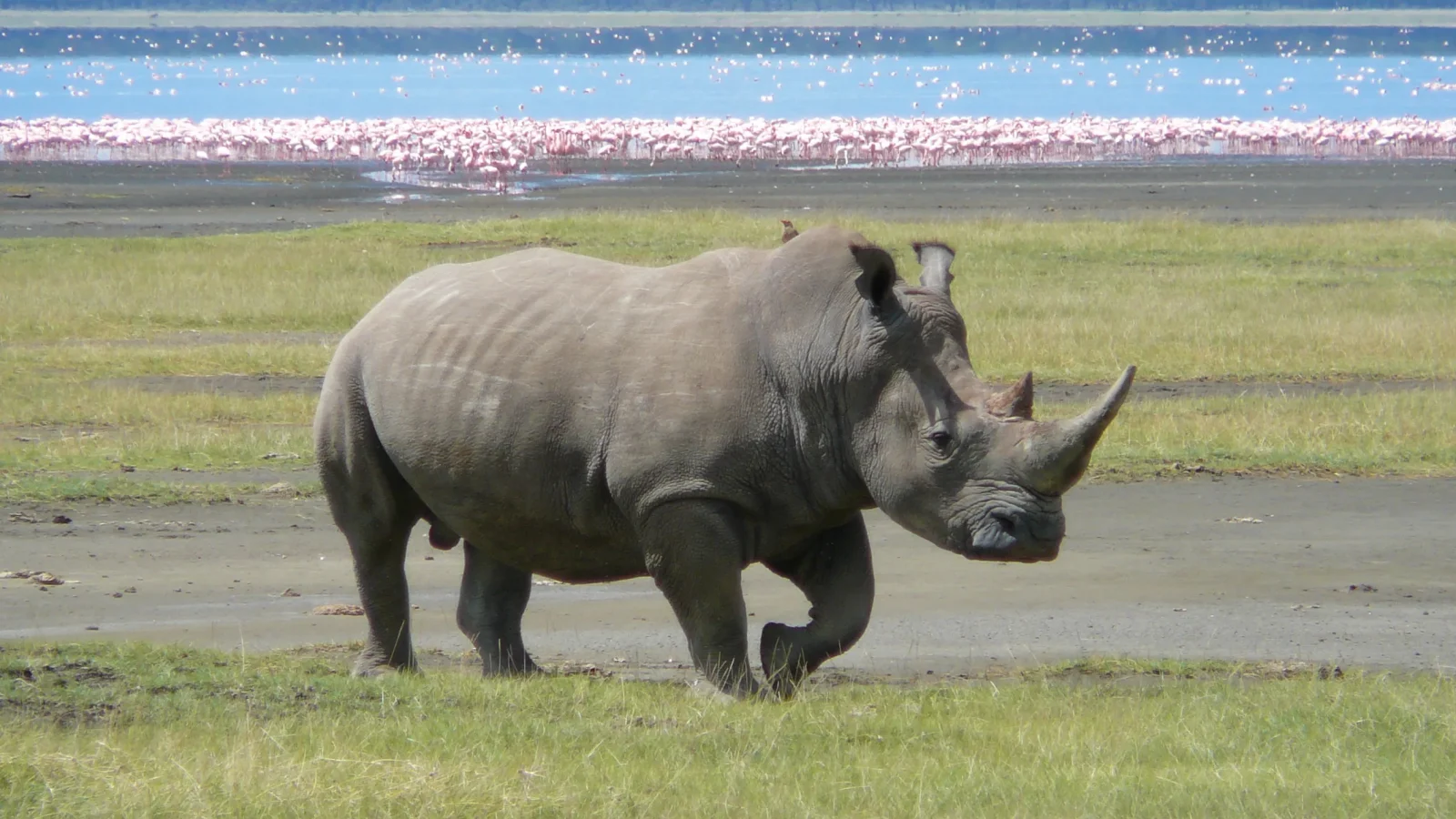
The game drive at Lake Nakuru starts almost before you are through the gate. Colobus monkeys watch from the yellow fever trees, a waterbuck lifts its head from the grass, and somewhere beyond the woodland a pink shimmer on the water tells you the birds are in. Within the hour your guide may be pointing out the broad, square-lipped shape of a white rhino grazing in the open — the reason so many travellers say Nakuru surprised them more than any other park on their safari.
Lake Nakuru is small, easy to reach and remarkably rich. This guide explains what makes it special, what you are likely to see, and how it fits into a Kenya safari.
Where Lake Nakuru Is — and Why It Is So Easy to Include
Lake Nakuru National Park lies on the floor of the Great Rift Valley, a few hours’ drive north-west of Nairobi. It sits neatly between the capital and the Masai Mara, which is why it appears in so many Kenyan itineraries: it breaks up the long drive and adds a completely different landscape to your trip.
The park wraps around an alkaline lake ringed by acacia woodland, grassy plains, rocky escarpments and forest. Because it is compact, you cover a lot of ground in a single game drive, and you rarely spend long stretches without seeing wildlife.
The Flamingos: What to Expect
Nakuru made its name as one of the great flamingo lakes of the Rift Valley. Lesser and greater flamingos feed on the algae and small crustaceans of its alkaline water, and at times the shoreline turns pink with birds.
It is worth being honest about one thing: flamingo numbers at Nakuru rise and fall. The birds move between the Rift Valley lakes depending on water levels and food, so the size of the flocks varies from season to season and even month to month. Some visits bring thousands; others bring smaller groups along the shore. Your guide will know where the birds have been feeding recently and will take you to the best viewpoints.
Flamingos are only part of the picture. Lake Nakuru is home to more than 400 recorded bird species, including pelicans, fish eagles, kingfishers, storks and herons — a real highlight even if birdwatching was never on your list.
A Sanctuary for Rhinos
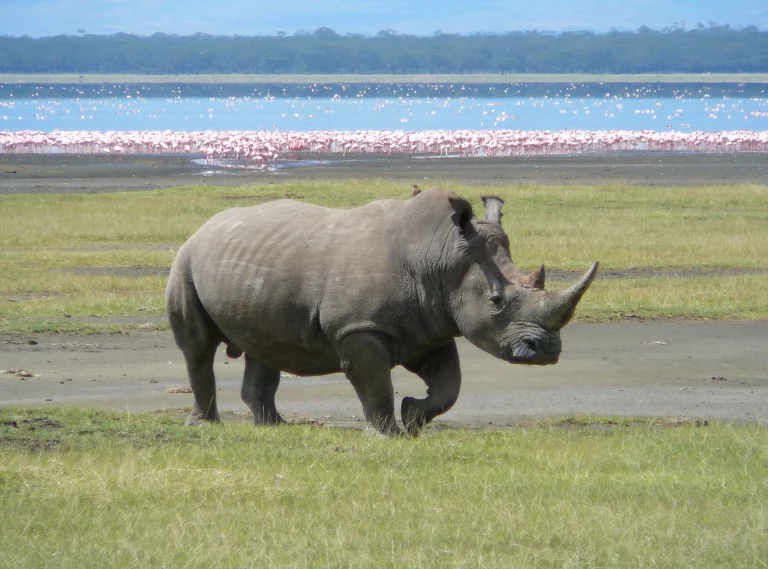
For many travellers, the rhinos are the main event. Lake Nakuru is a fenced rhino sanctuary and one of the best places in Kenya to see both black and white rhinos. White rhinos graze in the open grassland and are often seen at close range; the more secretive black rhino browses in thicker bush and takes more patience.
Seeing rhinos in the wild is a privilege. Both species were driven close to extinction by poaching, and sanctuaries like Nakuru have been central to their recovery in Kenya.
Other Wildlife to Look Out For
- Rothschild’s giraffe — one of the rarest giraffe subspecies, identified by its pale legs that look as if it is wearing white stockings.
- Leopard — Nakuru’s woodlands are known for leopard sightings, and our itineraries include game drives timed to look for them.
- Lion — prides move through the acacia woodland and are sometimes seen resting in the trees.
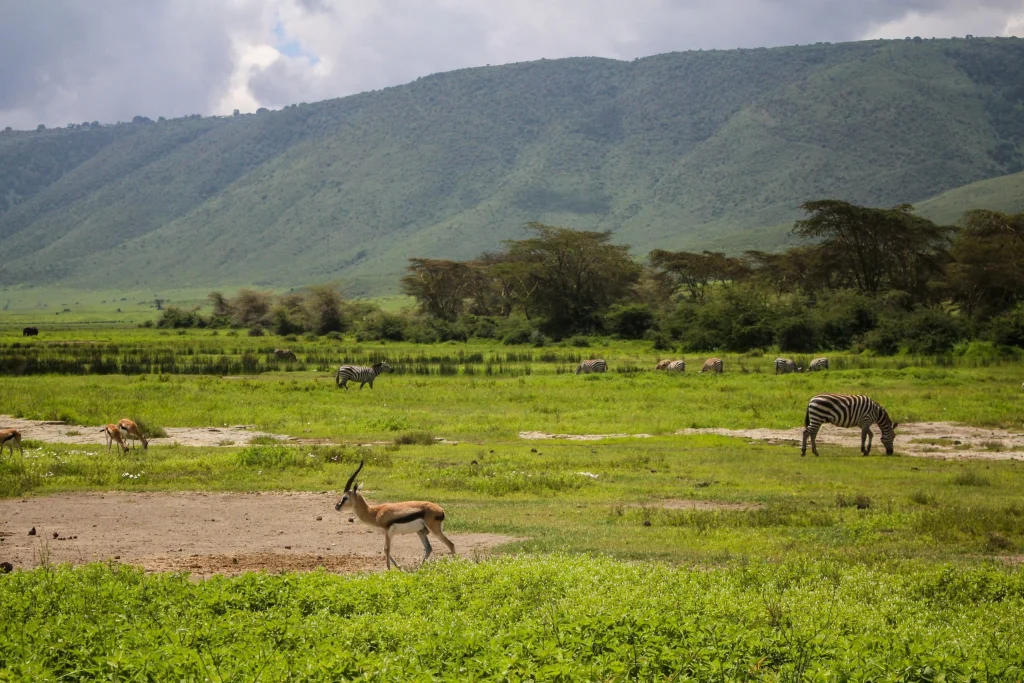
- Buffalo, waterbuck, zebra, impala and baboons — the everyday cast of a Nakuru game drive.
The View from the Cliff
Ask your guide to stop at the viewpoints on the escarpment above the lake. From the cliff top you look down over the whole park — the woodland, the plains, the lake edge and, when the birds are in, the pink line of flamingos along the shore. On our itineraries this is often where we stop for lunch, and it is one of the best photographs of the whole safari.
How Lake Nakuru Fits into a Kenya Safari
Nakuru works best as part of a circuit rather than on its own. In our itineraries it is paired with:
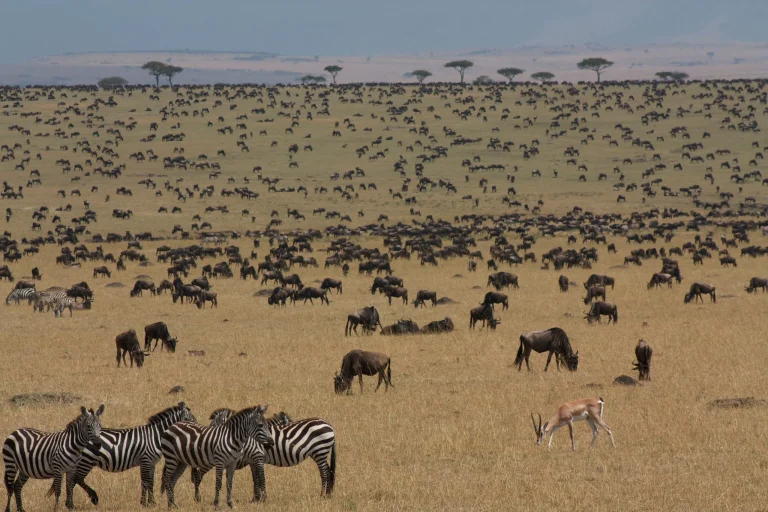
- The Masai Mara — big cats, vast herds and, in season, the Great Migration.
- Lake Naivasha and Hell’s Gate — a boat trip among hippos and a park where you can walk and cycle among wildlife.
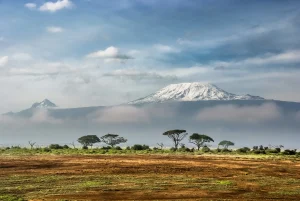
- Amboseli — elephants beneath Mount Kilimanjaro.
Our 4 Days Mara / Nakuru Safari is the classic short combination: two days in the Masai Mara, then an afternoon game drive at Nakuru and a full day in the park before returning to Nairobi. If you have longer, our 9 Days Sweet Waters / Mara / Nakuru / Naivasha / Amboseli Private Safari includes Nakuru as part of a wider journey through Kenya’s highlights.
Practical Tips for Your Visit
- Bring binoculars. They make a huge difference for birds and for spotting rhinos at a distance.
- Do not feed the monkeys. Baboons and monkeys near the gate are used to people — keep windows up when your guide advises it.
- Pack a warm layer. Mornings in the Rift Valley can be cool, especially on early game drives.
- Be patient with the rhinos. The black rhino in particular can take time — a good guide reads the landscape and the tracks.
Plan Your Lake Nakuru Safari
Every one of our safaris is tailor-made. Tell us your travel dates, group size and the kind of accommodation you prefer, and we will prepare a free quote — prices are always on request, so you only pay for the safari you actually want.

Comments
No comments yet. Be the first to share your experience.
Leave a Comment
Your comment will appear after it has been reviewed by our team.