



Two plains. One legendary migration. A decision that has kept safari lovers awake at night for decades.
The Serengeti and the Maasai Mara are arguably the two greatest wildlife destinations on earth — and they share the same sweeping grassland ecosystem, separated only by the Kenya–Tanzania border. Yet choosing between them is anything but a coin toss. The right answer depends on when you travel, what wildlife moments you want, how you like to experience the bush, and the kind of journey that genuinely moves you.
This guide breaks it all down — honestly, and in detail — so you can arrive at the decision that suits your safari perfectly.
The Big Picture: What Are We Comparing?
The Serengeti National Park sits in northern Tanzania and covers approximately 14,763 km². It is one of the oldest and most celebrated ecosystems on the planet, a UNESCO World Heritage Site, and the stage for the longest overland wildlife migration on earth.
The Maasai Mara National Reserve lies in southwestern Kenya, covering around 1,510 km². Smaller, more concentrated, and exceptionally rich in wildlife density, the Mara forms the northern tip of the same Serengeti–Mara ecosystem. The two parks are ecologically inseparable — the wildebeest don’t recognise the border, and neither should you when planning your trip.
What does set them apart is everything else: experience, access, timing, cost, and feel.
Wildlife: Who Has the Edge?
Both destinations deliver some of the most spectacular wildlife viewing in Africa. But there are real differences.
The Serengeti
The Serengeti is vast, which means game drives feel wild and unhurried. Wildlife is spread across different zones — the Seronera Valley in the central Serengeti is one of Africa’s most reliable year-round game-viewing areas, famous for its resident leopards and lion prides. The northern Serengeti (Lamai and Kogatende) and the western corridor each offer distinctive ecosystems and seasonal wildlife concentrations.
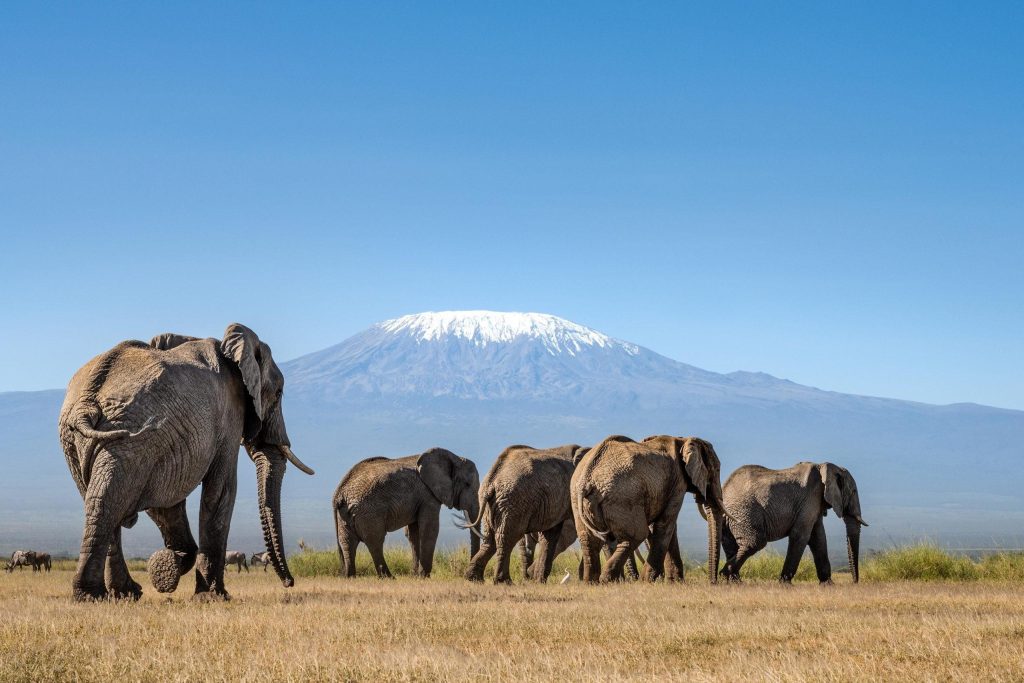
You’re virtually guaranteed sightings of: lion, leopard, cheetah, elephant, buffalo, giraffe, hippo, crocodile, zebra, wildebeest, and a staggering diversity of bird life across more than 500 species.
The Maasai Mara
The Mara punches well above its weight for its size. Wildlife density is exceptional — the resident big cat population is one of the highest in Africa, and the open savannah makes for outstanding visibility. Big Five sightings are nearly guaranteed on most game drives. The Mara River itself is a permanent feature of the landscape, supporting year-round hippo and crocodile populations.
The Mara is also home to large Maasai communities whose cattle have coexisted with wildlife for generations — adding a cultural dimension that is uniquely compelling.
Verdict: Both are world-class. The Serengeti wins on scale and variety of ecosystems; the Mara wins on wildlife density and accessibility within a smaller area.
The Great Migration: Timing Is Everything
This is the centrepiece of both destinations — and the single biggest factor in your decision.
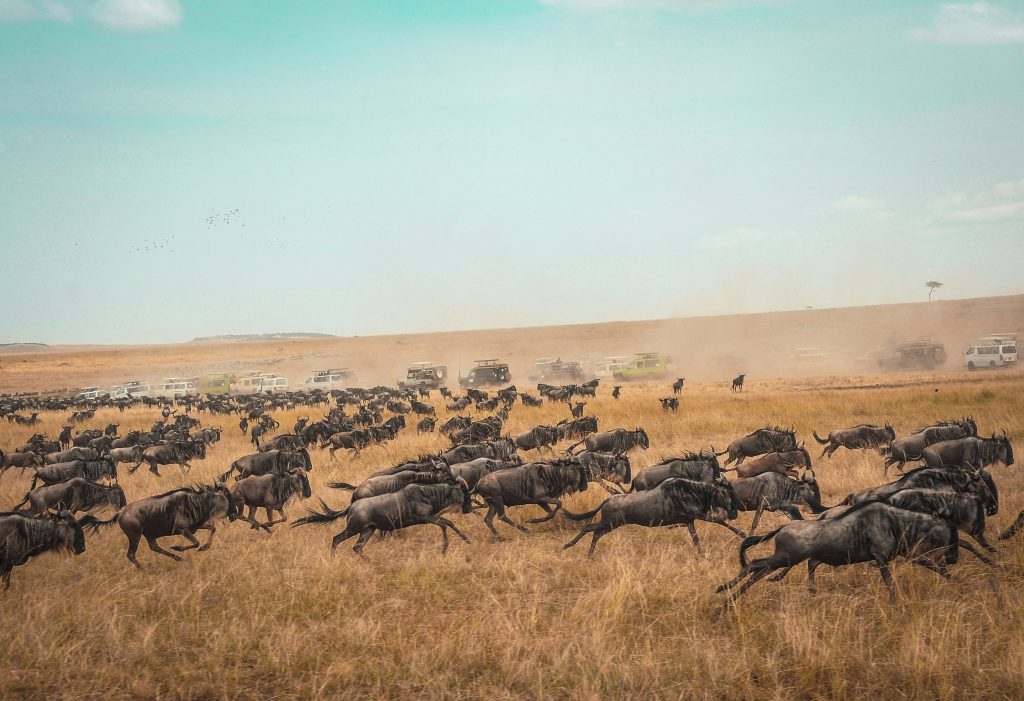
The Great Migration involves approximately 1.5 million wildebeest, 200,000 zebra, and 500,000 Thomson’s gazelle moving in a continuous loop across the Serengeti–Mara ecosystem, driven by rainfall and the growth of fresh grass.
Here is where each destination shines by season:
January – March: Serengeti (Southern)
The calving season unfolds in the southern Serengeti, near Ndutu. Around 500,000 calves are born in a matter of weeks — a jaw-dropping spectacle. Predator activity is extraordinary, with cheetah, lion, and hyena following the herds closely. This is one of the most underrated migration experiences of the year.
April – May: Serengeti (Western Corridor)
The herds move northwest through the western corridor, crossing the Grumeti River. The Grumeti crocodiles are formidable, and the crossings here are intense, though less photographed than the Mara crossings. The green season brings lush landscapes and very few tourists.
June – July: Serengeti (Northern) — The Migration Arrives
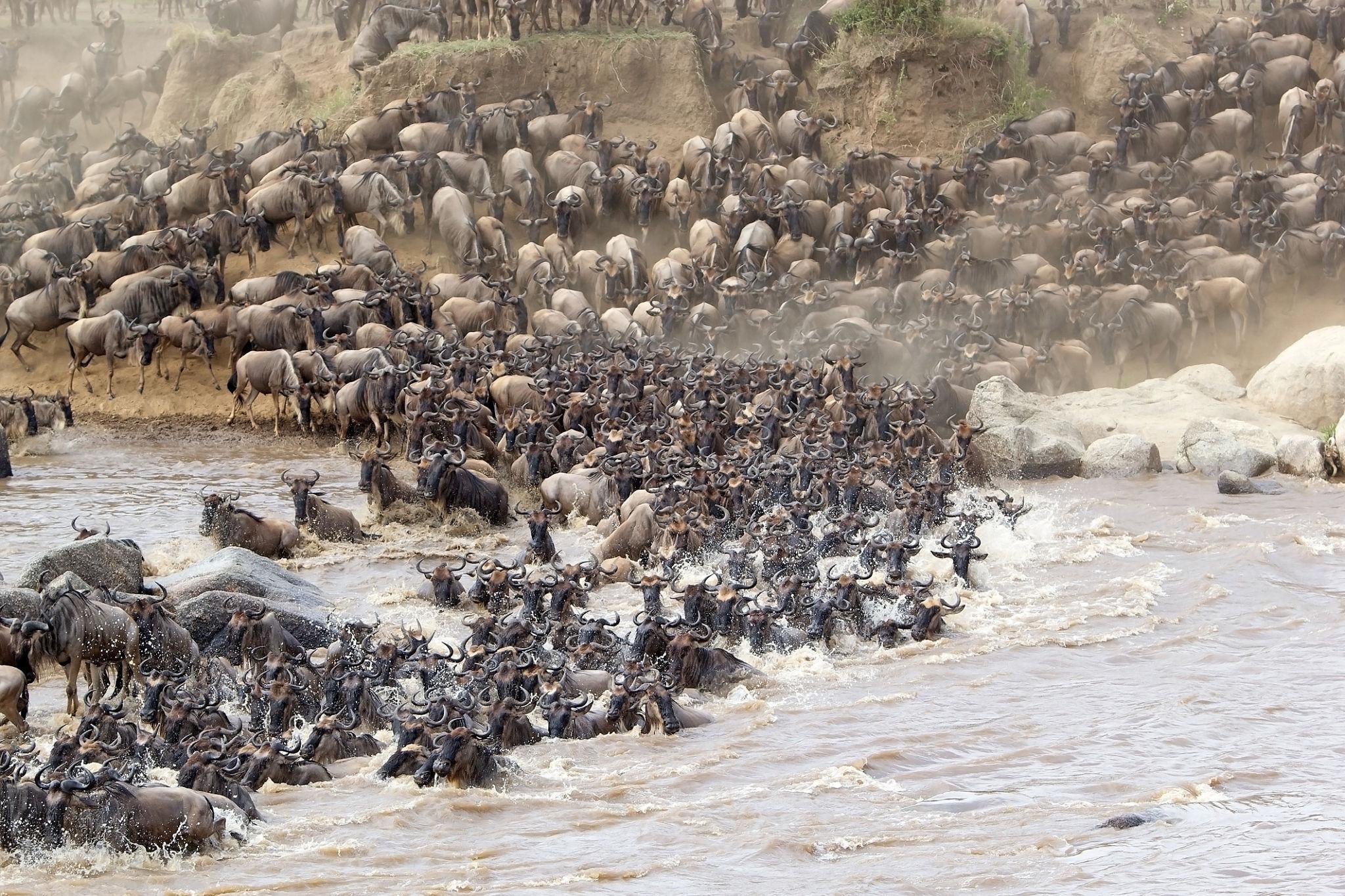
By June, the herds have moved north. Game viewing in the northern Serengeti reaches fever pitch as the wildebeest mass along the Mara River, and the first dramatic river crossings begin.
July – October: Maasai Mara — Peak River Crossings
This is the window that defines the Maasai Mara globally. Between July and October, the wildebeest pour across the Mara River in their millions — sometimes in a single explosive crossing, sometimes in a hesitant trickle that suddenly explodes into chaos. The crocodiles are waiting. The lion prides are positioned. The whole drama plays out at the river’s edge, and no wildlife experience on earth quite matches it.
October brings the return journey south, with another round of crossings.
November – December: Serengeti (Eastern & Southern)
The herds move back south through the eastern Serengeti toward the Ndutu plains, where the cycle begins again.
Verdict: If witnessing the river crossings is your primary goal, travel to the Maasai Mara between July and October. For calving season or a less crowded migration experience, the southern Serengeti from January to March is extraordinary.
Crowds and Exclusivity
This is where the two destinations diverge most sharply.
The Maasai Mara, being a national reserve rather than a national park, allows private conservancies to operate on community land surrounding the reserve itself. These conservancies — including Naboisho, Olare Motorogi, Ol Kinyei, and others — offer exclusive game viewing with far lower visitor numbers, night game drives, off-road driving, and walking safaris. They are among the finest safari experiences in Africa and a compelling reason to choose the Mara.
Inside the reserve itself, peak season (July–October) can feel busy around the most popular river crossing points, particularly with minibus game-viewing vehicles. This is the trade-off for accessibility and world-class wildlife.
The Serengeti offers more space by sheer size — 14,763 km² absorbs visitors differently. The northern Serengeti camps in particular are remote and uncrowded even during peak season, delivering a wilderness experience that feels genuinely untouched.
Verdict: For exclusivity and solitude, the northern Serengeti and the Mara conservancies are both exceptional. The Mara conservancies edge ahead for the combination of exclusivity and proximity to the river crossings.
Safari Lodges and Accommodation
Serengeti
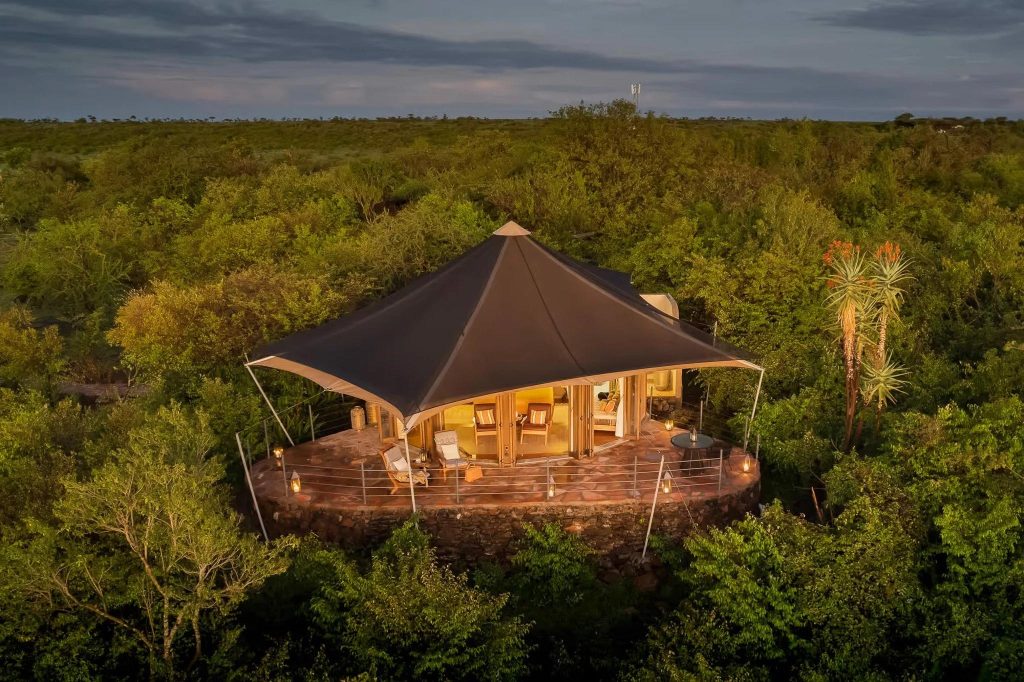
The Serengeti has some of Africa’s most celebrated properties — from mobile tented camps that follow the migration to permanent lodges with spectacular views across the plains. Styles range from intimate six-tent bush camps to grand lodges with infinity pools overlooking the savannah. The northern Serengeti in particular has seen a wave of exceptional, sensitively designed properties open in recent years.
Maasai Mara
The Mara and its conservancies host some of the continent’s most lauded luxury camps — intimate, owner-operated, deeply knowledgeable about their landscape. Many conservancy camps offer all-inclusive rates with twice-daily game drives, walking, and night drives included. The level of personalised guiding in the Mara’s best properties is hard to match anywhere in Africa.
Verdict: Both are outstanding. Your choice will depend on whether you prefer the bold scale of Serengeti lodges or the intimate, conservancy-style hosting of the Mara’s finest camps.
Getting There: Logistics and Access
Maasai Mara
Fly into Nairobi’s Jomo Kenyatta International Airport (NBO), then connect via a 45-minute charter flight to one of several bush airstrips inside the Mara or the surrounding conservancies. Alternatively, a road transfer from Nairobi takes approximately 5–6 hours, passing through the Great Rift Valley — scenic but long.
Serengeti
Fly into Kilimanjaro International Airport (JRO) or Julius Nyerere International Airport in Dar es Salaam (DAR), then connect to Arusha before a charter flight to one of the Serengeti’s many airstrips (Seronera, Kogatende, Grumeti, and others). The Serengeti is generally a longer, more involved journey to reach — but the remoteness is part of the experience.
Verdict: The Maasai Mara is logistically easier to reach, especially on shorter itineraries. The Serengeti rewards those with more time.
Cost Comparison
Both destinations sit in the premium tier of African safari travel, though with meaningful differences.
- Tanzania levies higher park fees than Kenya — Serengeti fees for non-residents run significantly higher per person per day, which flows through into lodge pricing.
- Serengeti mobile camps following the migration command premium rates, especially in July–October.
- Maasai Mara conservancies often include all activities in the rate, which can make the all-in cost competitive once everything is counted.
- Green season (April–June in the Mara; April–May in the Serengeti) offers meaningful savings at both destinations, often 20–30% below peak rates, with the added bonus of lush landscapes and very few other visitors.
Verdict: The Serengeti tends to be marginally more expensive at comparable luxury tiers, primarily due to park fees. Both represent excellent value for the calibre of experience delivered. See our Kenya Safari Cost Guide for a full Kenya-side breakdown.
The Honest Side-by-Side
| Factor | Maasai Mara | Serengeti |
|---|---|---|
| Best migration window | July – October (river crossings) | Year-round (varies by zone) |
| Wildlife density | Very high | High (varies by zone) |
| Size | ~1,510 km² | ~14,763 km² |
| Exclusivity options | Private conservancies | Remote northern camps |
| Ease of access | Easier (Nairobi hub) | More involved (Arusha/JRO) |
| Night drives | Yes (in conservancies) | Yes (in private concessions) |
| Walking safaris | Yes (conservancies) | Yes (select camps) |
| Peak season crowds | Higher inside reserve | Lower, spread over larger area |
| Cost | High | High (marginally higher fees) |
| Cultural experience | Strong Maasai presence | Maasai and other communities |
So, Which Should You Choose?
Choose the Maasai Mara if:
- You want to witness the dramatic Mara River crossings (travel July–October)
- You have a shorter trip and want maximum impact quickly
- You want exclusive conservancy guiding with night drives and walks included
- You are flying in and out of Nairobi
- Cultural immersion with Maasai communities matters to you
Choose the Serengeti if:
- You want the calving season (January–March in the south)
- You want a vast, remote wilderness with multiple distinct ecosystems
- You are combining your safari with Ngorongoro Crater, Tarangire, or Zanzibar
- You want to experience the migration across its full annual cycle
- You are travelling with more time and want to go deep
Consider both if:
- You have 10 or more days and want to experience the ecosystem from both sides of the border
- You want a Tanzania–Kenya combined itinerary — crossing from the Serengeti into the Mara, or vice versa — an experience that is genuinely unmatched
Our Recommendation
At Pride of Africa Adventures & Safaris, we believe the best safari is the one built around your timeline, your interests, and the wildlife moments that matter most to you. We have guided families, honeymooners, photographers, and first-time safari goers across both the Serengeti and the Maasai Mara — and we have a deep, genuine knowledge of what each destination delivers in every season.
If you’re unsure, tell us when you want to travel and what kind of experience you’re after. We’ll tell you exactly where to be and why — and we’ll build the itinerary around it.
Written by the Pride of Africa travel team — East Africa safari specialists with years of field experience across Kenya, Tanzania, Uganda, and Rwanda.
Request a Free Safari Quote
Browse Our Kenya Safari Packages
Browse Our Tanzania Safari Packages

Comments
No comments yet. Be the first to share your experience.
Leave a Comment
Your comment will appear after it has been reviewed by our team.